

For many years, the first word most foreign visitors learned upon moving to Jakarta was macet, traffic jam.
Jakarta’s Remarkable Urban Transit Transformation
English
Traffic was so bad that transport experts warned in 2013 that if nothing was done, the city could achieve total gridlock, with every part of the city experiencing a traffic jam. In 2014, Jakarta was crowned the world’s most congested city by the Stop-Start Index and a year later was ranked far below other Asian cities on livability by the Economist Intelligence Unit.
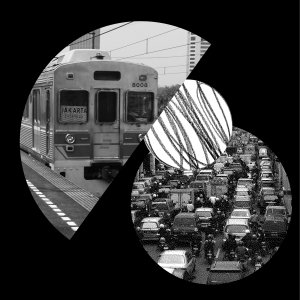
Ten years later, Jakarta has the world’s largest and one of the most used bus rapid transit (BRT) systems. The old, crowded diesel commuter trains, famous for allowing passengers to ride on the roofs, are now electrified, air conditioned, and run on regular schedules linking the suburbs to the city center. There are multiple subway and light rail lines crisscrossing the city. The transformation has been remarkable: in 2015, less than 20% of residents were within walking distance of transit. Now, nearly 90% of the city has access to BRT or trains.
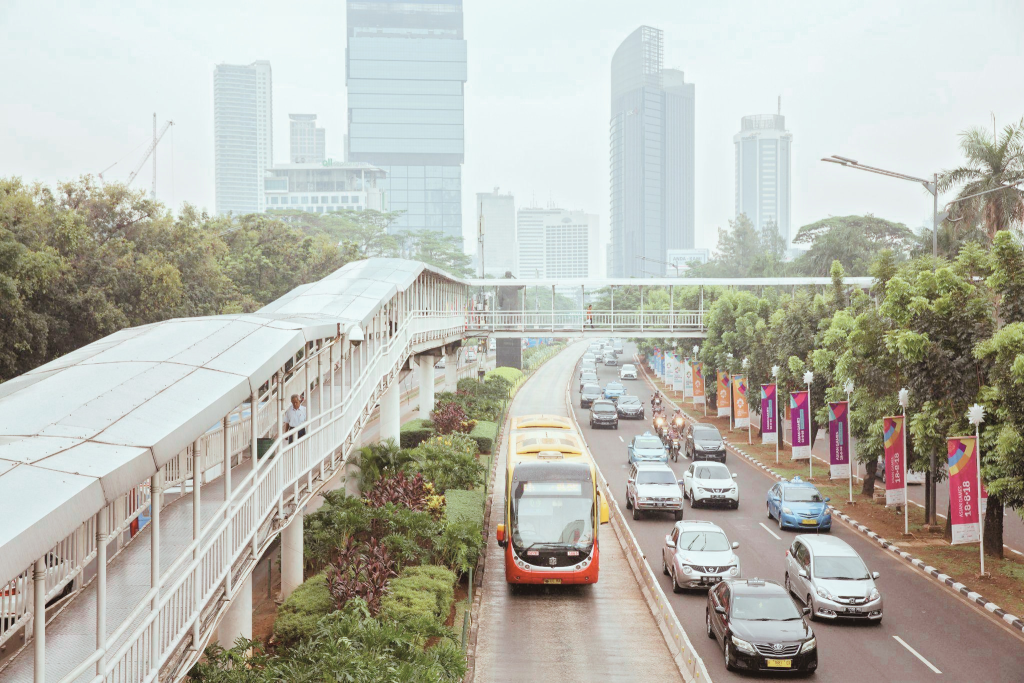
How did Jakarta go from the world’s most congested city to one that other rapidly growing cities seek to emulate? International investment, political will, and a bit of luck.
Fixing the World’s Most Congested City
It’s hard to overstate how challenging getting around Jakarta used to be. Back in the early 2000s, expats in Jakarta used to joke about taking trips to “more peaceful” cities — like New Delhi, Cairo, or Bangkok.
After all, those cities had urban transit systems. In Jakarta, the only certainty was traffic. During peak hours, it would often take more than an hour to travel just five kilometers. At that speed, walking would be faster, but with no sidewalks in most of the city, even that wasn’t really an option.
There were few buses and no urban rail. According to the Institute for Transportation and Development Policy, the city-run bus system covered only about 10% of the city, and seemed to mainly serve to get you stuck in traffic. Other minibuses were run by private companies or individuals. They took seemingly random routes, stopping on demand, and charged inconsistent fares based on distance and which company ran the bus.
Other options were bajaj (auto-rickshaws) and ojek (motorcycle taxis). There were dozens of companies offering such services and few were reliable. It was possible to be taken on a joyride, or worse. And, according to a 2016 Asian Development Bank report, it was only going to get worse over time — private vehicle ownership was rapidly increasing at some 10% per year. Every year, Jakarta was also adding some 400,000 new residents, and they too had to use the roads.
As a consequence, Jakarta had also become one of the world’s most polluted cities. By 2011, 58 percent of all illnesses among people living in the city were related to air pollution.
And there were few signs of change. A 2013 working paper by the International Monetary Fund (IMF) placed Indonesia as having the worst infrastructure in the region. In 2014, the World Bank blamed the traffic on a “rapidly growing population and poor planning processes,” alongside “one of the lowest percentages of GDP spent on infrastructure” in the world. Residents were resigned to spending an average of 16 days stuck in traffic each year.
What changed?
The then-president of Indonesia, Susilo Bambang Yudhoyono, saw traffic as a concern for city and local governments. In his mind, this was not a national problem; Jakarta would have to fix itself.
The next president, Joko Widodo, known as Jokowi, saw things quite differently. Elected in 2014 after serving two years as Jakarta governor, he began taking steps to improve existing commuter train lines and expand the BRT system. Upon taking office, he branded himself the “infrastructure” president. To him, addressing Jakarta’s congestion was central to making it a world class capital city, and foreign investment, via development loans and technology transfer, would be key.
Just over a year after Jokowi took office, Japan and Indonesia signed an agreement to provide a 77 billion Japanese yen (US$623 million) loan to build a mass rapid transit (MRT) line. While the groundwork had been laid over the previous decade, many credited Jokowi with brokering the agreement. The loan had an interest rate of just 0.1%. Japan would also provide technical expertise for the building process; Japanese train systems are built quickly and efficiently at low cost, and Indonesia hoped to learn from them. Having Japanese and central government oversight would also hopefully reduce corruption.
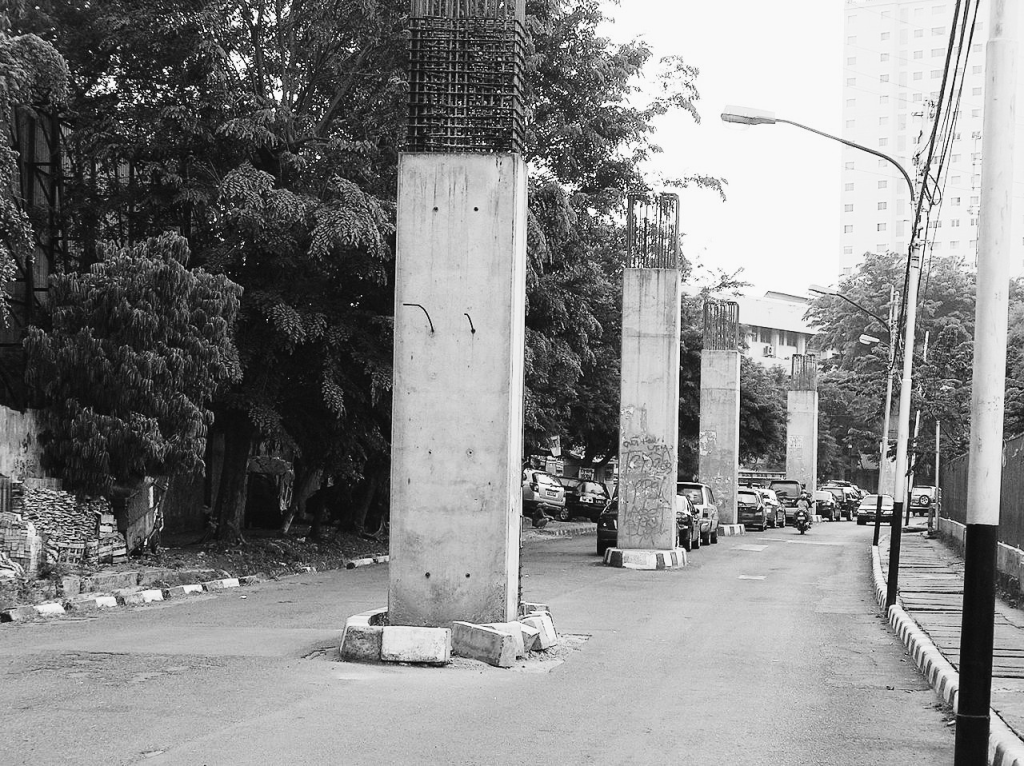
It was a big risk. Indonesia only had a decades-old colonial era domestic railway network and little rail or railway manufacturing capability. There was no evidence that the country had the capability to implement such a large-scale project, and many expected it to either go over budget, or be heavily delayed. After all, strange pillars still dotted the Jakarta skyline from the last time the city had attempted a similar project. In 2003, construction started on a monorail project in Kuningan business district. That project never got beyond basic pre-construction, the funding either wasted or, as many Indonesians believe, stolen.
This time, it would be different. Japan would play a role in basic design, construction, and introduction of transportation systems, including trains, signals, and gate systems, as well as their operation and maintenance.
But Japanese contractors were insistent that, while they might build the railway, it was up to Indonesia to run it. Much of the technology would come from Japanese companies like Sumitomo and Nippon Sharyo, but construction, operations, and maintenance would all have to be done by Indonesian companies or the government. “In the future, it will be the local staff of Jakarta MRT who will have to manage this railroad. The Japanese way of doing things will not always be applicable here. For these reasons, we placed an importance on their autonomy when transferring the technology and operation know-how to the local staff,” says Mariko Utsunomiya from Japan International Consultants for Transportation.
For the most part, the MRT was built underground or alongside existing large thoroughfares, minimizing the need for expensive land acquisition. When land was needed, the project used international standards to determine fair compensation and ensure fair process. Still, issues around some stations, particularly in South Jakarta, did result in the deadline being pushed back from 2018 to 2019.
Other than land acquisition issues, the MRT construction went smoothly, and the project stayed within budget. The first line opened in 2019, just in time for Jokowi’s re-election. According to a report in the Indonesia Journal of Social Sciences, the MRT project met most of the requirements of the Paris Declaration, which sets standards for mutually beneficial aid spending, and had a “positive impact on infrastructure development in Indonesia.”
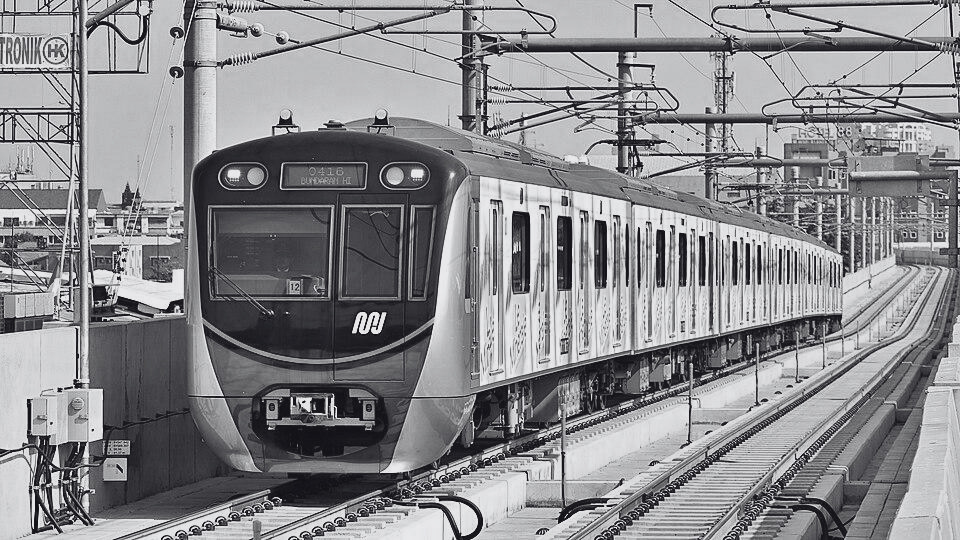
While the MRT was still being built, the central government also approved a plan to have the state railway operator build two Light Rapid Transit (LRT) lines using domestic trains and technology. With knowledge gained from working with Japan, the Indonesian government would try to build its own infrastructure. The first line opened in 2023, slightly delayed by the COVID-19 pandemic but on budget.
The success of the LRT and Phase 1 of the MRT has opened the door to more international investment. MRT Phase 2, also funded by Japan, is under construction and should open in late 2026.
JICA and ADB are funding the MRT Phase 3 East-West Line, and a South Korea consortium, led by the Korea Overseas Infrastructure & Urban Development Corporation, Korea National Railway and Samsung, will build Phase 4 for 21 trillion Indonesian rupiah (US$1.9 billion). By 2045, if all goes to plan, there will be 10 LRT and 4 MRT lines with over 100 miles (160 km) of track added to the network.
“The improvement is quite significant in terms of quantity and network,” says I Made Vikannanda, Senior Manager for Resilient Cities & Transport at the non-profit World Resources Institute (WRI) Indonesia.
The user experience has also been streamlined. All of the new lines are part of an integrated digital fare system. A journey from one end of Jakarta to another is capped at 10,000 rupiah (about 70 US cents). According to WRI Indonesia, as of 2024, 10 percent of trips in Greater Jakarta are now made by public transit, compared to just 2 percent in 2015.
While the JICA loans covered the cost of building the system and training local staff, the full cost of operation has now fallen to the city government. So far, this has worked reasonably well, with Jokowi arguing that the cost of running the system — at about 800 billion rupiah (US$50 million) a year — is justified by the estimated 65 trillion rupiah (US$3.5 billion) in annual economic losses due to traffic.
There are also plans to take what has worked in Jakarta and expand it to other large cities in Indonesia. In 2022, the World Bank approved US$224 million to expand mass transit in other Indonesian cities. It hopes to replicate the success of Jakarta’s system in the metropolitan areas of Medan and Bandung, Indonesia’s third and fourth largest cities. This comes alongside a loan from the French development agency, Agence Française de Développement, to support the development of a Jakarta-style BRT in Medan and Bandung.
Future Challenges and Lessons
Despite making remarkable improvements in the last decade, Jakarta’s public transit still isn’t enough. The city has recently overtaken Tokyo as the world’s largest city, with a metro population of over 41 million people, and it is still growing rapidly. It is projected to add another 10 million people in the next 25 years.
To serve this population, Greater Jakarta has only six train lines and under 250 miles (400 km) of track. Tokyo, by contrast, has an astounding 158 train lines and 2,930 miles (4,715 kilometers) of track connecting 2,210 stations throughout its massive metro area. If Jakarta wishes to serve its population as well as Japan serves its, it would need an order of magnitude more transit.
This has meant that despite the growth in transit ridership, there are still more cars in Greater Jakarta now than in 2019, when the MRT opened. Ride-hailing apps have also exploded in popularity; GoJek and Grab now provide on-demand motorcycle and rideshare to millions of Jakartans everyday. The sheer number of them means that fares are cheap — often just a little more than the train for a ride that requires no walking or transfers.
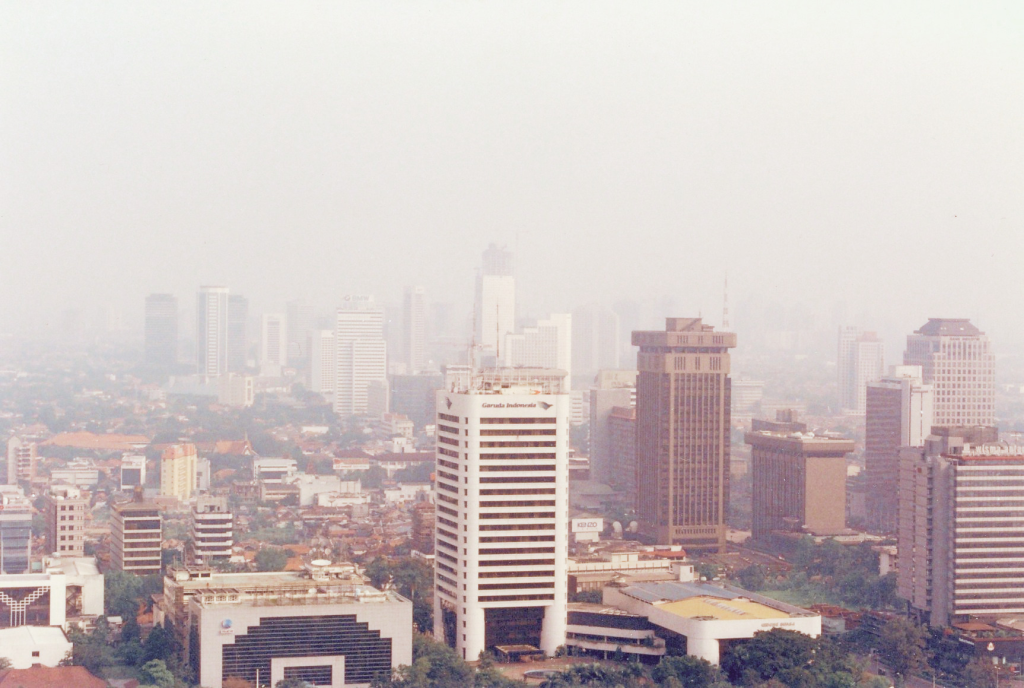
This means one of the core drivers of the transit development push — air pollution — has actually worsened. Danny Djarum, an Air Quality Senior Research Lead at WRI Indonesia says that PM 2.5, the measurement of inhalable airborne particulate matter, is now eight to ten times higher than World Health Organization guidelines. “We’re still one of the top 5 most polluted cities in the world,” he said.
Other infrastructure has also lagged behind investment in trains. “Sometimes the crucial things like the connectivity or accessibility around the stations, or the first mile/last mile problem, are often forgotten,” said Gonggomtua Eskanto Sitanggang, the Southeast Asia Director at the Institute for Transportation and Development Policy (ITDP), a think-tank . “Aid is good, but it needs more streamlined planning and coordination with the government, so it can take a broader perspective on how we can envision public transport in the future.”
While the city government has made progress on expanding sidewalks, it is limited by a lack of funding and capacity. Large projects, such as train lines, attract multiple foreign bids, but an overpass or better crossing signals do not. Convincing donors that these, too, are important might be the next frontier in improving Jakarta’s built environment.
There is also work to be done on getting people to drive less and use transit more. This could be accomplished through congestion pricing, making drivers pay a fee to enter certain areas. Mandatory car-pooling could also be a strategy. The strategy that WRI is calling for is the designation of Low Emissions Zones, LEZ, where access by private vehicles is restricted, green space is expanded and walkability improved. The city has, in fact, run a small-scale trial in the touristy “old town” (Kota Tua) neighborhood. While too small to have a measurable impact on air quality, residents and businesses observed improvements in safety and social inclusion, and reduced noise and air pollution.
“The best way that we can reduce the emissions emitted from the transportation sector is to have LEZs at a much larger scale,” says WRI’s Djarum.
Most cities that have embarked on demand reduction programs are in richer countries. Singapore has an electronic road pricing system, New York City has congestion pricing, and Paris has a highly regarded expansion of walk- and bike-only streets. It’s another chance for Jakarta to show a path forward for the tens of millions of people living in crowded, congested cities in Asia, Africa, and Latin America.
After all, Jakarta has already done the hardest part. Government and external donors have shown they can coordinate to improve the urban landscape. Jakartans are proud of the improvements and believe that their city can make even greater progress. In the latest TomTom traffic index, measuring average congestion—the percentage increase in travel time compared to free-flow conditions— the city ranked 24th, just ahead of the United States’ most famous traffic clogged city, Los Angeles.
Nithin Coca is an award-winning, Asia-focused freelance journalist who covers politics, technology, human rights, and environment, across the region, with a focus on cross-border, collaborative reporting. He is currently based in Japan, but was previously based in Jakarta, Indonesia.
If you have comments on this article, or wish to contribute to the discussion, please email them to letters@indevelopmentmag.com. Responses will be featured in a letters section.