

Who gets to decide development policy?

In 1992, India amended its constitution to create some 250,000 elected village governments covering roughly 800 million people — the largest exercise in democratic decentralization in human history. The effects of this 73rd Amendment have varied enormously across states. In Kerala, an extraordinary People’s Campaign in 1996 created a system of nested participatory planning. Street-level groups deliberate on their needs, which are passed on to a ward-level assembly, then percolate upward to a village assembly where all expressed needs are prioritized and matched with budgets. Over the course of the year, the agreed-upon projects are implemented and monitored in active collaboration with citizens.
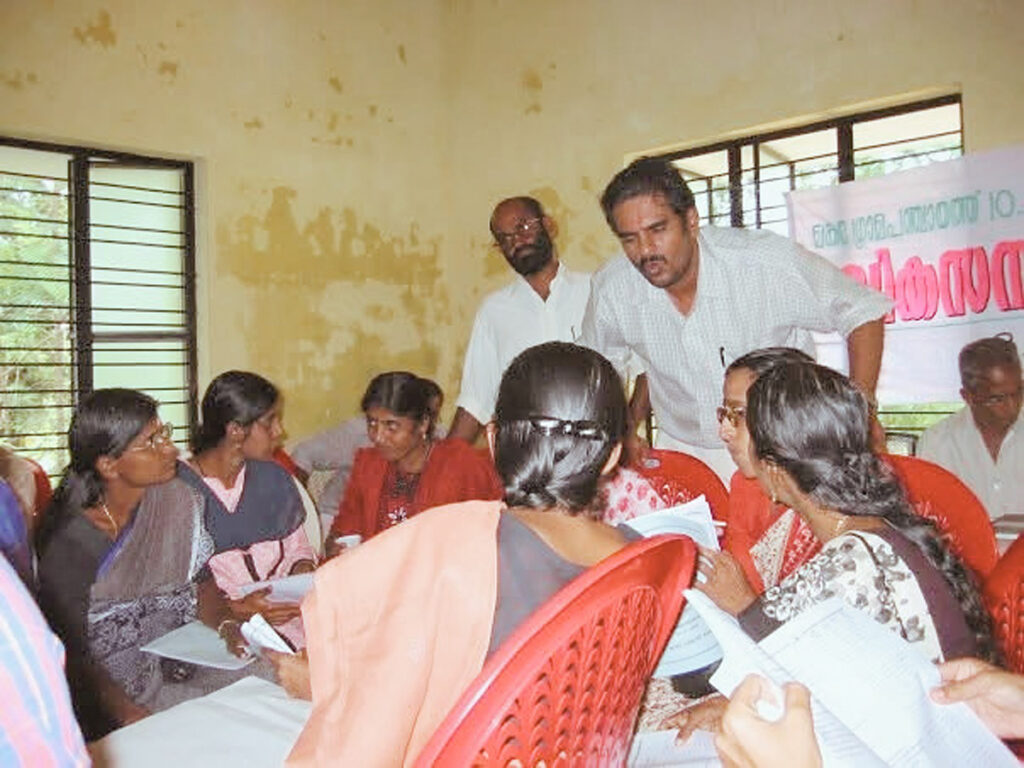
People discuss at a neighborhood meeting
Neighborhood meeting (Ward Sabha) in Kerala, 2003. Photo by Vijayendra Rao.

In other states, the same assemblies, created by the same amendment, are ceremonial rooms where nothing important is decided. In the 300 village-meeting transcripts that Paromita Sanyal and I analyzed for “Oral Democracy,” we found that differences in literacy, caste or wealth inequality did not explain how well these village assemblies worked. They were driven by whether the state government actually wanted decentralization to work – whether it devolved real money and real authority to the assemblies. The same constitutional amendment produced very divergent realities.
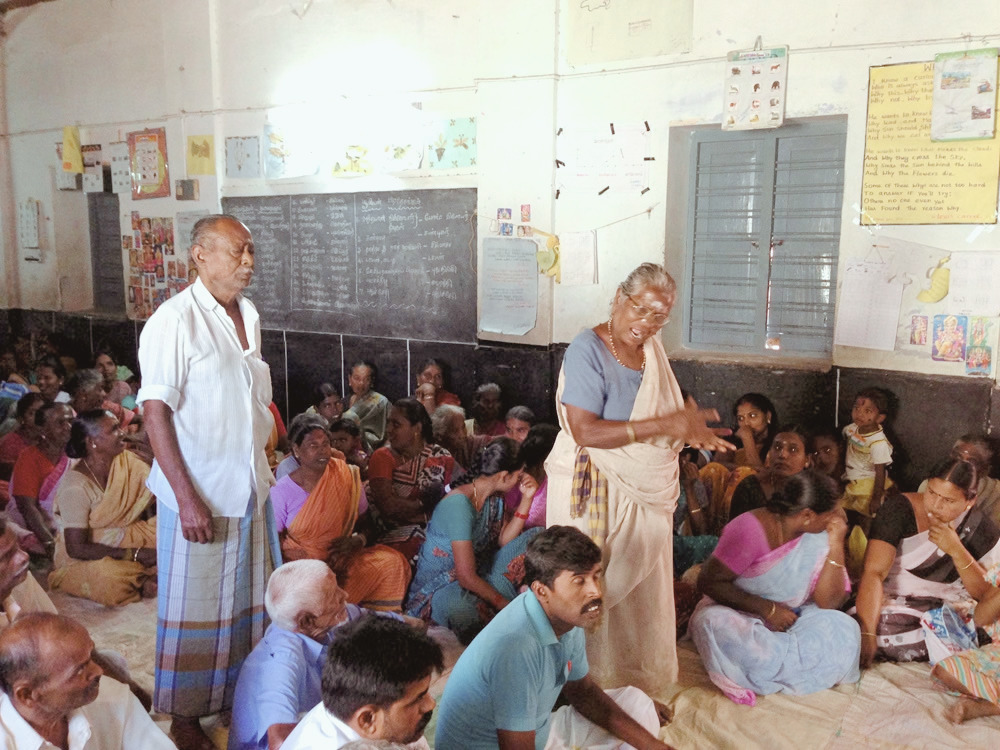
Woman stands at Gram Sabha
Gram Sabha in Tamil Nadu, 2012. Photo by Vijayendra Rao.

But understanding this divergence in the quality of deliberation has not been prioritized by mainstream economists and policymakers — because it would be a measure of process. Over the last century, the policy options on offer from economists for tackling poverty and inequality have overwhelmingly been focused on outcomes — resulting in what I call outcome-policies. 

An outcome-policy manipulates the levers of government — transfers, taxes, expenditures, regulations — to hit a target and is judged by whether it hits it. Conditional cash transfers are judged by whether children stay in school; estate taxes by whether they improve intergenerational mobility; health insurance by its effects on health and hardship. 

Outcome-policies are tied to metrics, which is much of their appeal. When the politics are favorable, they are relatively easy to enact by legislative or executive action. They are also easy to reverse.

A process-policy is a different animal. It tries to change how change happens: to equalize power in how decisions get made, each increment building on the last. Its proximate effects are subtle and hard to measure, and its full impact takes years to show. Precisely for those reasons, changes from process-policies tend to last longer than those from outcome-policies. Process policies change the machinery that produces outcomes rather than the outcomes themselves. Constitutionally protected deliberative bodies, participatory budgeting systems, adaptive systems of implementation — these are process-policies. 

In the essay that preceded this one, I argued that development economics research has built a wall between itself and the people it studies. Policy has the same distance problem that research does, but the stakes are higher, because policy can directly and substantially affect people’s lives at a scale that research cannot. The distance, though, is not just a matter of bad implementation. It is built into the frameworks we use to think about what policy is.

The Three Dominant Ways of Thinking About Policy

Policies for welfare, growth, inequality and poverty are conditioned by three broad paradigms, all mostly derived from economics.1 All three are outcome-oriented at heart.

The neoliberal paradigm starts from deep skepticism that social science can understand complex human interaction well enough to engineer a better world. So it falls back on first principles: laissez-faire markets, free trade, human rights, electoral democracy. Free markets deliver growth; elections keep governments honest. The proponents of this paradigm have some empirical evidence for this: over the long run, democracy may indeed cause growth, and there is evidence that growth is an important determinant of poverty reduction.

This is the view that underlay the Washington Consensus of the 1980s and 1990s. Its answer to poverty is to maximize growth and equalize access to human capital, and there is something to it — but the effect of growth on poverty depends on how unequal a place is to begin with, and there is strong reason to believe that neoliberal policies increase inequality and erode social support. This can be by, for instance, creating opportunity markets that commodify access to basic needs like education and housing. Also, note that the largest reduction in poverty happened in China, which is not a democracy and grew and reduced poverty by making policy adaptively and experimentally, adjusting as it went.

The deeper limitation of neoliberal policymaking is disciplinary. Rational-choice individualism has no comfortable place for social exclusion or cultural and political inequality, so every socially driven argument — for gender equality, for social cohesion — has to be smuggled in through a growth prism. (Hence the slew of 1990s papers arguing that women’s education is good for GDP.) Welfare gets measured in income and consumption and poverty becomes a line denominated in dollars and cents, and a large survey industry exists to determine it.

The neo-Keynesian paradigm is the counter. Markets fail — through externalities, information asymmetries, market power — and the social sciences can tell the state how to correct them. Growth still matters, but there is acute awareness that markets do not deliver basic services to the poor and that discrimination is systemic. Household surveys now collect data on gender, religion, race and caste; equality of opportunity is a stated goal, backed by law and affirmative action. 

The result is the intellectual justification for interventionist government — the London Consensus is the most recent comprehensive statement of this, with its slate of minimum wages, progressive property taxes and public investment in everything from infrastructure to nutrition. Along the way, the paradigm has developed a deep knowledge of government failure and clientelism. But even as it has sought to understand government failure, it does not seek to fix it through process. Instead, it builds on expert diagnoses by economists and social scientists — the state corrects, the citizen receives.

The third paradigm — neopaternalism2 — is arguably a more stringent extension of the second, and it has exploded in influence over the last two decades. It starts from the opposite end from neoliberalism: an abiding faith in the power of social science and data — behavioral experiments, randomized trials — to give direction to policy. 

It takes its cues from public health, with a firm commitment to “evidence-based” everything. Its behavioral foundation is the research on scarcity: the poor face such punishing constraints on time and attention that they are steered into suboptimal choices, so the freedom to choose means little when the ability to choose is itself constrained. That is the justification for the top-down push — the nudge — away from actions, norms and practices that the policymaker has determined are harmful.

I want to be fair to this world, because it is the one I have been surrounded by and worked in for decades, and its advantages are real. The trials generate vast amounts of data about the conditions of the poor, well beyond income and consumption. They create a culture in which policy has to be justified with evidence rather than hope or idealism. And they weed out the bad intervention ideas. 

But the disadvantages of this model of the world have been well catalogued, and two matter most here. 

The first is overreach: policy driven by the demands of scientific technique rather than technique driven by the needs of policy — the tail wagging the dog. If all evidence must pass through a randomized trial, interventions that cannot be randomized disappear from the menu. And because a good trial needs good implementation — a messy rollout contaminates the design — trials effectively assume away what Albert Hirschman argued 60 years ago is the central problem of development policy: the complicated process by which ideas become action on the ground. 

The second is context. An intervention that works in one place may fail in another. The randomizers’ answer is to run trials across many settings and at much larger scale, which works for simple interventions but breaks down for complex ones — the interventions tailored for, and especially by, communities, where designs vary too much for any sample to have adequate statistical power. 

So neopaternalism drifts, by the logic of its own tools, toward interventions that are simple, uniform and predictable. It is a paradigm far more comfortable with certainty than with reflexivity. Culture enters the analysis as a set of “traits” to be scored good or bad; the study of social life becomes part of the expert’s apparatus for nudging people toward welfare as the expert defines it. Nobody asks the poor what they want. And it is not a rhetorical flourish to say that. It is a fairly precise description of the method.

As I write, British and American aid budgets have been gutted, and two economists I respect — Rachel Glennerster and Dean Karlan, who served as chief economists of the two countries’ aid agencies — have jointly responded with a call for “radical simplification”: take what money is left and spend it on a short list of proven, cost-effective “smart buys” — malaria nets, nutrition supplements, structured lesson plans, cash transfers — at large scale, shorn of the complexity that makes programs “expensive to design, hard to manage, and almost impossible to evaluate.” They have a point, up to a point. 

Mission creep is real, and it is often driven by donors, as anyone who has watched a project buckle under the weight of a phalanx of consultants knows. Reducing mission creep and focusing on what you meant to do in the first place has value. But look at the third item on their charge sheet. “Almost impossible to evaluate” is a statement about the evaluator’s preferences and their expert-driven worldview; it prompts the question of “evaluable by whom?” 

When the menu of interventions is restricted to what a randomized trial can certify, it fills up with simple, uniform, predictable interventions, and the complex policies with subtle effects and unpredictable trajectories — which can displace the steady state and shift to a better development path — gradually fall off it. But many effective programs are not simple and they can take decades to bear fruit. Indeed, it would be impossible to price the net gain per unit. 

But consider who paid for these programs. The policy reforms of Kerala were not financed out of the bilateral aid budgets (now being gutted); they were political projects of Indian state governments, built (largely) with domestic money and domestic legitimacy. The principal financier of process-policy is (often) the national state, not the donor.

Radical simplification may be a good way to triage for shrunken bilateral aid budgets, but it can say much less about what governments and multilateral institutions should do with their own budgets. 

Seeing Like a Policymaker

Why do three paradigms that disagree about almost everything else converge on focusing on measurable outcomes? 

James Scott’s “Seeing Like a State” showed why: states can only govern what they can “see,” so they work hard to make society “legible” — standardized categories, uniform measures, administrative grids.

There is nothing inherently wrong with this. Without legibility, there is no taxation, no public health, no welfare state. But the categories are not just descriptions; they are instruments that remake the world in their own image. And what gets stripped out along the way is what Scott, borrowing from the Greeks, called métis (common sense). This is practical, local, experience-based knowledge, provided by those who know the area and the place.

His examples have become famous. German foresters replaced messy, diverse woodlands with neat rows of Norway spruce that could be counted and taxed. Brasília’s grid-based urban structure, shaped like an airplane, replaced the messy reality of settlements that grow organically.

Legibility is all over the policy world. A market price is legibility: it compresses a tangle of preferences and systems of production into a single number. A poverty line is a legible expression of poverty — which is a complex, multidimensional experience. Randomized control trials are also an exercise in legibility — making behavior legible by stripping away context and subjecting lives to a treatment variable.

None of the above paradigms disagree about legibility. They argue only about who should make the policy — the market, the ministry, the experimenter. 

And none of them ask the people, who are ostensibly the beneficiaries of the policy. The outcomes may be legible, but there is little effort to make them legible to those the policy affects. Seen from this angle, radical simplification is not radical at all — it is the neopaternalist paradigm’s default option made legible by a budget crisis. In some ways it represents a return to the expert-driven, top-down vision for policy that organizations like the World Bank were criticized for pushing on the world in the 1970s and 1980s.

Elections Are Not Enough

All three paradigms have the same problem — who checks the policymakers? All three paradigms also have the same answer: democratic electoral accountability.

Neoliberals and neo-Keynesians lean on universal franchise to keep governments aligned with citizens’ interests. Neopaternalism leans harder still: Cass Sunstein’s libertarian paternalism is explicitly premised on democratic constraints keeping the nudgers benign. 

But the electoral check is not perfect. Elite capture and clientelism are pervasive. Democratic backsliding is relatively common. And we now live in an age of surveillance capitalism, in which the capacity to track people with extremely precise data threatens to delegitimize democratic processes altogether. If the ballot box is the only check the three paradigms recognize, then as the ballot box weakens, so does the legitimacy of the entire policy edifice built on top of it.

Jeep used in an election campaign
Jeep used for a village council election campaign, Karnataka, 2003. Photo by Vijayendra Rao.

This is not a problem confined to poor countries. The question of who checks the policymakers is becoming urgent everywhere — from the United States to Hungary.

Meanwhile, civil society is not limited to the ballot box. Across the world, at every level, people have organized themselves into bodies that monitor power between elections — what John Keane calls monitory democracy: citizen committees, self-help groups, minipublics, social audits, watchdog NGOs. Such forums sometimes emerge organically, but they can also be created: development organizations have spent hundreds of billions of dollars inducing participation.3

These institutions exist even in authoritarian settings. In rural China, citizens’ groups working with sympathetic civil servants have built accountability without democracy inside systems of authoritarian deliberation. In other words: a paradigm of action that runs on process rather than outcomes already exists. It is time to give it a name and a description.

Reflexive Policy

I call the fourth paradigm reflexive policymaking. Reflexive is used in the sense the word carries in sociology and anthropology: a reflexive practice is one in which the professional treats the boundary between herself and the people affected as a problem to be worked on, not a wall to be maintained. 

The idea is a close cousin of Robert Goodin’s reflective democracy: an effective democracy has to cultivate its citizens’ capacity to “deliberate within,” to run other people’s situations through their own heads. Deliberating within is what makes cognitive empathy possible at all. The policy challenge is to produce it at scale: to redesign decision-making so that politicians, officials and citizens develop cognitive empathy for one another, horizontally and vertically.

Grand as that sounds, the practice is concrete, and pieces of it are operating all over the world. Four processes recur. 

The first fills in the blank space between elections with continuous dialogue between citizens and governments — deliberative systems anchored in some officially sanctioned civic space, a forum or a regularly scheduled public meeting, where an ordinary citizen can directly influence the decisions that bear on her life. Forums alone are not enough; they have to sit inside a culture of dialogue in which speaking and listening become everyday practice. That is what Kerala built, and its neighbors did not. 

The second equalizes power in decision-making directly, by giving voice to disadvantaged groups — and, more radically, by reserving seats for them, as India has done for women and lower castes in its village governments. Reservation is itself an admission that deliberation carries no automatic guarantee of equity — an all-male council can ignore women’s concerns, and a government run by upper castes may ignore the concerns of lower castes, no matter how many times they are brought before them.4

Process-based policy does not assume that people will always govern justly; rather, it claims that for a government to be legitimate, it must be more directly run by the governed. They are better placed than the experts to define the problems about which they have more information and are better placed to address them; having citizens determine foreign policy is obviously not optimal, but having them run local schools is.5
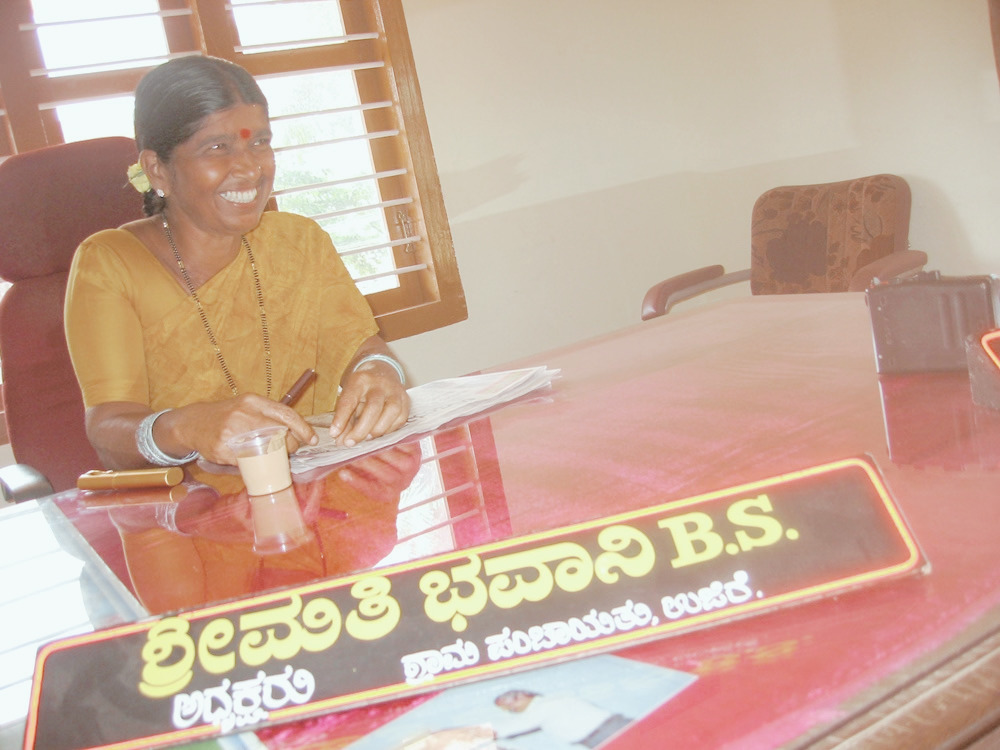
Indian woman at a desk
Village council president, Ujjire, Karnataka, 2003. Photo by Vijayendra Rao.

The third builds feedback loops, within government and between government and citizens, so that decision-making becomes adaptive: try, learn, adjust — instead of design, implement, evaluate, stop. 

The fourth uses technology to give people control over their own data, to strengthen collective action and equalize access to public services rather than to surveil. The current excitement about AI-mediated deliberation falls under this category too, with this caveat: use the machines to scale our ability to listen and learn, not substitute for it. 

The Sandwich

The capacity to participate is not something that communities alone can control. It is a political relationship spread across three layers. 

There has to be a responsive state at the top, with the political will to devolve real power and the fiscal capacity to back it with real money. There has to be a motivated and organized citizenry at the bottom — cohesive enough to act collectively and deliberative enough to work through disagreement. And there has to be a working middle: the district office, the field facilitator, the state ministry — an intermediary tier that translates citizens’ voice upward, and the state’s authority downward, thereby protecting local citizens from having their interests captured by local elites. Ghazala Mansuri and I, borrowing from Jonathan Fox, called this the “sandwich” in “Localizing Development.”

Every case of process-policy that works at scale has all three layers, and every visible failure has a hole in one of them. This is the pattern that Mansuri and I found in reviewing the evidence on participatory development, which has a large, mixed and often disappointing record. What was clear, however, was that the successes and failures could be explained — where the top was missing, participation degenerated into empty consultation, and the community meeting became a place for cheap talk. Where the bottom was thin, collective action became difficult to organize. Where the middle was broken — and in many countries the middle is the weakest layer — elite capture became much more likely and even well-designed policy harder to deliver. 

This, in retrospect, provides insight into why so much donor-induced participation has disappointed. Donors build the bottom — generally the cheap layer, the one you can deliver on a project cycle. But they skip the political work at the top and the institutional work in the middle. A sandwich with one layer is not a sandwich — and the whole thing fails.

Kerala, to return to the opening puzzle, is what it looks like when a state builds the whole sandwich. The People’s Campaign organized the bottom, while the ruling coalition supplied the political will and intellectual direction for the top layer. And it did one other thing: it staffed and funded the cadres in the middle. Participatory planning works in Kerala because the street-level groups feed into the ward-level assembly, which in turn informs the village assembly. Each layer of the sandwich is linked in a feedback loop with the others.

The sandwich applies everywhere. Indonesia’s Kecamatan Development Program (KDP) began in 1997 as a pilot in 48 villages, having been designed by the anthropologist Scott Guggenheim and colleagues in Bappenas, the Indonesian planning ministry. It grew out of an ethnographic study of how Indonesian villages organized themselves, which found that the culture of gotong royong (mutual assistance) in Indonesia created village-level institutions with a much greater capacity for durable collective action than the user groups that projects kept creating.

Mosque in Indonesia
Mosque built with gotong royong in Kalimantan, 2005. Photo by Vijayendra Rao.

Its design was not dissimilar to Kerala’s People’s Campaign. Block grants went directly from the central government to the kecamatan, the subdistrict. From the neighborhoods and hamlets up, villagers deliberated on proposals and sent a delegation of at least six representatives, three of them women, to an inter-village forum where they, drawing on gotong royong norms, deliberated and voted on which proposals to fund. Once the forum decided, nobody higher up could alter the decision. Facilitators recruited from NGOs and the private sector took the information and worked with village organizations to implement the agreed-upon plan, circumventing the village head’s tendency to capture such decisions. As Guggenheim puts it, the state’s job was to do less rather than more: keep the money moving, audit it and stay out of local decision-making.

That is the sandwich. Reform-minded bureaucrats in Bappenas and the Ministry of Finance at the top, with the World Bank supplying money and air cover. A tier of trained facilitators in the middle. And at the bottom, villages with long traditions of collective action and their own ways of managing and implementing a common fund. The layers of the sandwich held long enough for norms to shift. KDP reached 2,000 villages by 2002, 6,000 by 2006, when it was renamed PNPM Mandiri, and 60,000 by 2011. In 2014, Indonesia turned it into the Village Law, which made a block grant to all 75,000 villages a permanent entitlement in the national budget. A donor-supported experiment became a permanent part of the state.

Meanwhile, Brazil’s Porto Alegre is an example of the reverse. Its participatory budgeting was a celebrated case of citizens directly deciding how public money gets spent. But after the Workers’ Party (PT) lost the mayor’s office in 2004, the project was largely dismantled. The bottom was still there; the top lost interest, and the middle was rendered ineffective. This is why reflexive policy requires donors, organizers, politicians, bureaucrats and citizens working together long enough for norms and expectations to shift and reach a sustainable equilibrium.

A Revolution by Stealth

Consider Jeevika, the rural livelihoods program launched in 2006 in Bihar. The state was then, by almost any measure, the hardest place in India to attempt anything of the kind. Rural poverty stood at 55.7% against a national average of 41.8%. Per capita income was a third of the national average. Only 37% of women were literate, only 1% had access to microcredit and two-thirds of rural household loans came from moneylenders charging 100 to 200% a year.6 Alleviating rural poverty in this context would be a tall order. 

Furthermore, Bihar was a difficult, highly unequal, patriarchal and caste-ridden context. Into this, Jeevika introduced something deceptively modest: self-help groups (SHGs) of 10 to 15 women, meeting weekly to save and lend among themselves, subsequently federated into village organizations and cluster-level federations. Shruti Majumdar, Paromita Sanyal and I spent four years doing qualitative fieldwork (embedded with a randomized control trial that ran for 18 months) on how the project worked between 2010 and 2014. This fieldwork became our new book, “Revolution by Stealth”.

Jeevika offered cheap credit, insurance and income generation, with no language of women’s rights or resistance anywhere in sight.7 In a short period of 18 months, the program refinanced 28% of household debt into SHG loans that charged a much lower interest rate of 24%, undercutting the previously available interest rates by 150 percentage points or more. There were also “general equilibrium” effects — competition from Jeevika reduced the rate charged by moneylenders by 35%.

Jeevika did not present itself as a challenge to the local order. It did not name a villain. Its targets were two things: poverty and the moneylender. It explicitly brokered the acquiescence, if not the acceptance, of the village head (mukhiya) and the other local power brokers by offering the village a better life without creating a revolution. 
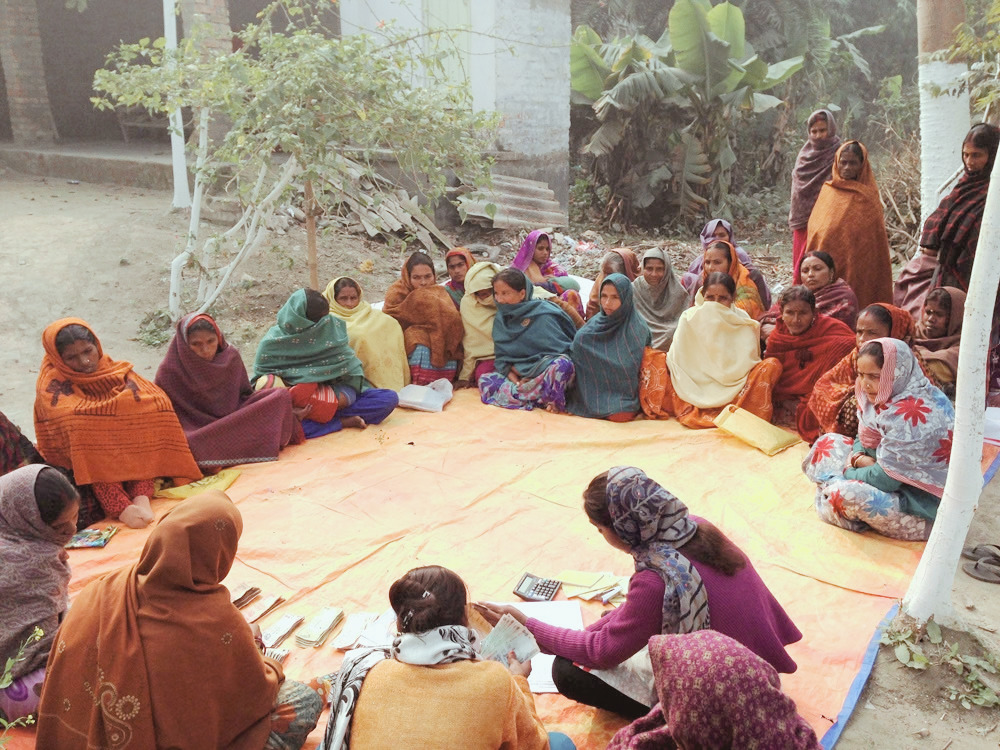
Women sitting in a circle
Women’s SHG, Muzaffarpur, Bihar, 2010. Photo by Vijayendra Rao.

The gender transformation came (much) later, and it came not from persuasion or an explicit effort to change norms, but from repeated practice that turned into ritual. Jeevika brought women together, regularly, in groups with rules. Week after week, they would meet, sing, save together; they’d lend to each other, deliberate, manage their accounts, bargain. Week after week, they’d meet. Participation built confidence and women’s voices. This repeated practice built radically new social roles and reworked relationships within households and communities.

As one bewildered male respondent quoted in our book put it: “(Chief Minister) Nitish (Kumar) has turned women into men.”
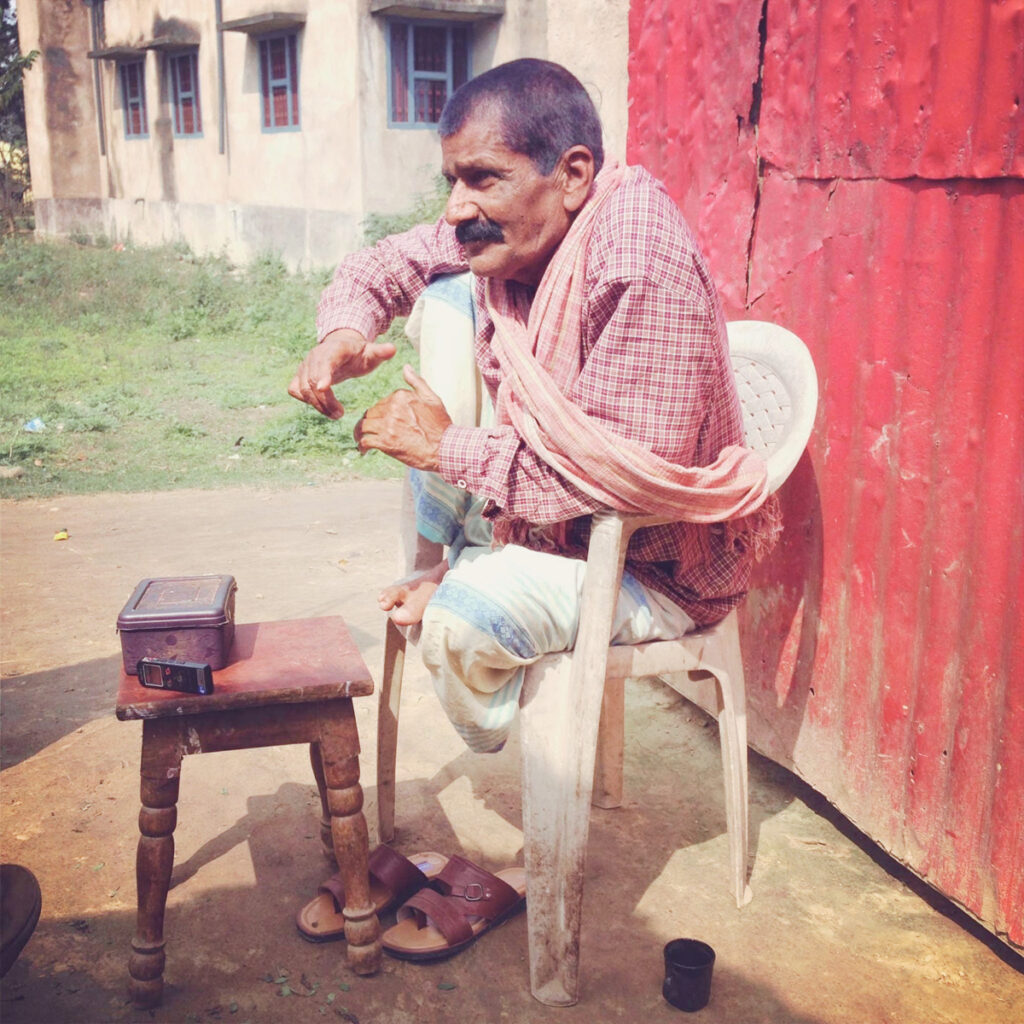
Indian man in a plastic chair
Village moneylender in Bihar, 2012. Photo by Shruti Majumdar.

That was the sandwich. The chief minister embraced Jeevika early and gave it sustained political protection from the top. It attracted the best young Indian Administrative Service (IAS) officers, professional staff and a network of facilitators to run the middle. And the didis themselves — the women of the SHGs, federated upward — became the organized bottom. 

Jeevika now reaches more than 14 million women in over a million SHGs across Bihar. It is part of a national program, which now serves some 86 million women across India. This is arguably the largest federation of women in the world.

There was some resistance, of course, and there still is. But over the four years we came to read the backlash differently: it is not a sign that things are failing; it is what change looks like when power and identity are being renegotiated. 

We also came to think differently about culture. It is not a set of cognitive biases to be nudged away. Culture can be changed, but it is a slow process; change requires protection from local elites and political interference.

Nothing about Jeevika looks like a radically simplified intervention. Almost everything about it is process-policy — no single outcome target, no lever pulled from the capital, just a rearrangement of when, how and how often people meet, who meets whom, who holds money and who gets to speak. And it produced cultural change in gender relations. Evaluations that revisited the original RCT sample almost 10 years later found that the program had caused 126% more low-caste women to run for political office and improved women’s ability to share risk, while radically transforming credit markets in one of the most patriarchal places on earth, on a timescale the standard paradigms would have said was impossible.

Doing by Learning

None of this is easy to do at scale, and much of it is not even easy to measure. That is rather the point, though. Process-policies shift trajectories in unpredictable ways, so evaluating them means watching processes move: how decisions get made, how power relations shift, how narratives and discourse change.

These things do not sit in administrative data and clean survey answers. They require qualitative work and narrative analysis coordinated with quantitative methods in genuinely mixed-method designs, which are not the norm in development economics.

For several years at the World Bank, colleagues and I tried to build this way of working into the machinery of Jeevika and its Tamil Nadu counterpart, through something we called the Social Observatory. 

The idea was to move researchers from being overqualified outsiders who fly in whenever a survey needs doing to something like the project’s own think tank, with the aim of improving implementation by creating a culture of doing-by-learning. A team of economists, sociologists, political scientists, public health specialists and data scientists embedded within the project helped build decision-support systems so that staff, from the village level up, could act on good, fast data. (This was instead of yet another management information system nobody paid attention to.) 

Qualitative process monitors visited a rotating random sample of villages every quarter and fed what they found back into design. Impact evaluations varied by how the answer would be used — quick impact evals when the project needed an answer soon, long mixed-method ones when it needed to understand outcomes and mechanisms.

The aim was to turn research from a tool for assessment into a tool for implementation. A paper that we originally wrote in 2015, drawing on the qualitative work, was critical of how the project’s second phase was being implemented, showing that the reflexive, co-produced process followed in the first phase was being neglected in the pursuit of higher enrollment numbers. The project responded with a concerted effort to give field staff more room to use their judgment. It improved the management information system and the process-monitoring system, strengthened the feedback loops between them and the facilitators, and created forums where facilitators could learn from and advise one another. The result was that facilitators moved away from an exclusive focus on the number of women enrolled toward a more adaptive and reflexive way of working with each village.

Policy, done this way, becomes constant adaptation rather than a one-shot deal. (Incidentally, this also protects against policy stasis: it kept the program responsive to changing conditions on the ground.)

What Would It Take To Do This? 

Now: the honest accounting of such policymaking. 

Reflexive policymaking requires very long time horizons. It is a “slow-cooked” way of doing policy, as opposed to the simple, easily scaled McDonaldization that pervades policy work. It requires a certain tolerance for mess, because reversing inequalities in power and agency is a contentious, uncertain business.

But the deepest obstacle to implementation of process-policies is that governments — and quasi-governments like the World Bank and donor agencies — are not set up for process-policies. The logic of bureaucracies, and of the political environments they answer to, pulls toward interventions that produce quick, measurable impact without threatening the status quo. Process-policies fail on all three counts: they are slow, they are hard to measure and they threaten the status quo more or less by definition.

Part of the problem may be how policy professionals are trained. (There are other equally important reasons.) Schools of public policy are generally staffed (with the occasional infusion of a “professor of practice”) by academics trained in economics or another social science discipline. Their knowledge of policy comes almost entirely from bringing academic expertise to implementers who choose to seek their advice, not from being embedded in the world of policy. So the courses that policy schools teach are, for the most part, variants of academic economics or political science, subject to the same fads as the academic departments and to the same pathology of belief: that to be a good policymaker you have to be an academically gifted expert immersed in the latest techniques and theories. There are very few courses that teach you how to sit through a village meeting, and only a small minority focus on the nitty-gritty of process issues.8

In practice, there is already some process-policy in place. Almost all policy in any country involves some amount of all four paradigms. Markets do coordinate dispersed knowledge; states do correct market failures; evidence can improve design. My claim is not that reflexive policymaking should replace all other types of policymaking. Rather, it is narrower: the three dominant paradigms would all benefit from more reflexivity. Reflexivity is neglected precisely because it is hard to measure, and in the current policy culture, what is hard to measure gets treated as unserious.

Process-policies mostly come into the world through years of unglamorous effort by activists working at a small scale in social movements and NGOs. Given what is happening to democratic institutions, and to inequality, it is time to bring them into the mainstream of the policy craft.

In concrete terms, every large program should budget for embedded learning. The structure of that learning should not be determined in advance; it should be process-oriented. It also does not suffice to only do randomized trials that give us a measure of outcome at the end of the project cycle.

Donors must also fund the middle tier — the facilitators, the district staff, the connective tissue — instead of mobilizing communities and walking away. Projects should be given time to evolve and adapt rather than be judged on whether they follow a predetermined trajectory of change. And schools of public policy should require — alongside the econometrics sequence — that their graduates actually spend time in the places where they will likely work. None of this is impossible, or even particularly difficult, to do. It is merely beyond current practices.

Whose policy counts? The three dominant paradigms answer, in effect: the market’s, the ministry’s, the expert’s. The people the policy is for appear as consumers, recipients and subjects, respectively; they are not shapers of policy.

There may be a different answer. Policy counts when the people it is meant to serve can shape it, contest it and correct it — when the woman who was dragged out of my focus group in Karnataka, whom I described in my previous essay, has somewhere to take what she knows. Research that does not listen produces papers about a world it has not understood. Policy that does not listen produces programs that are neither tailored to people’s needs nor able to adapt across place and time. Policy that listens can shift the political, social and cultural equilibrium — and that is what makes change last.
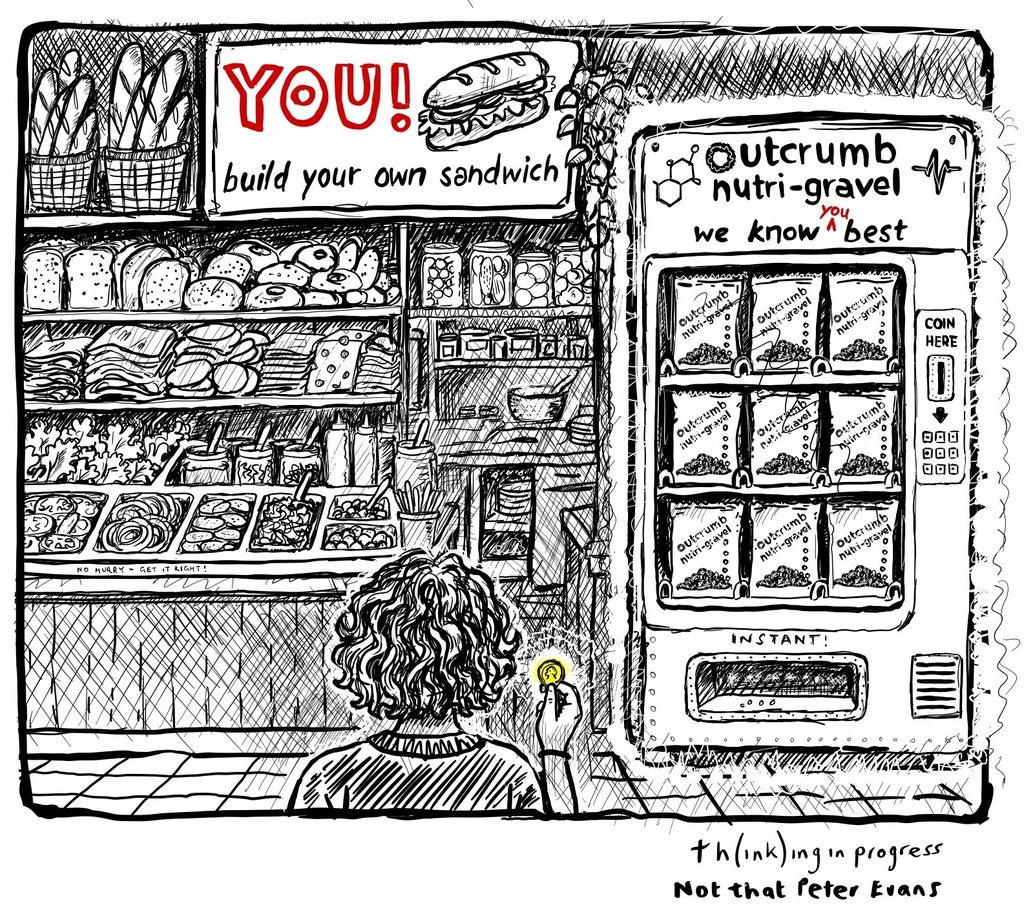
Cartoon about a build your own sandwich bar vs. a vending machine

Vijayendra Rao is a development economist who combines econometric methods with ethnography. He spent 27 years as a Lead Economist in the Development Research Group at the World Bank and is currently the Roberta Buffett Distinguished Scholar-Practitioner in Residence at Northwestern University and Distinguished University Fellow at National Law School of India University. His interests include gender, culture, participation, deliberative democracy, political economy and innovations in mixed methods. His latest book, “Revolution by Stealth: How Women’s Groups Catalyzed a Cultural Transformation in Bihar” (with Shruti Majumdar and Paromita Sanyal), was published by Cambridge University Press in 2026.

If you have comments on this article or wish to contribute to the discussion, please email letters@indevelopmentmag.com. Responses will be featured in a letters section.

  1. These are “ideal types” and may blur into each other in practice. ↩︎
  2. To quote Thaler and Sunstein, “a policy counts as ‘paternalistic’ if it is selected with the goal of influencing the choices of affected parties in a way that will make those parties better off.” ↩︎
  3. With admittedly mixed results. ↩︎
  4. There is a very large (and growing) literature on women’s and caste reservations in India that show that they are — on balance — equalizing both on policy choices and deliberation. This paper summarizes the literature. ↩︎
  5. Decision-making should, as much as is within the realm of feasibility, follow the principle of subsidiarity: “central authorities should perform only those tasks which cannot be performed effectively at a more intermediate or local level.” ↩︎
  6. See the first chapter of Revolution By Stealth for citations and broader discussion on conditions in Bihar in 2006. ↩︎
  7. Women’s SHG programs in India are government-run non-profits that should not be confused with microcredit or microfinance programs. As we document in Revolution by Stealth, group-based credit and savings are just the start, used as an initial incentive to develop a federated community of women — running into the millions — creating women’s social capital that is in turn used as a platform to run all manners of “vertical” interventions including nutrition, health, schooling, food security and income generation. ↩︎
  8. Some notable exceptions are courses taught by Matt Andrews, Erica Chenoweth, Archon Fung and Marshall Ganz at the Kennedy School, and Dan Honig at Georgetown’s McCourt School. ↩︎
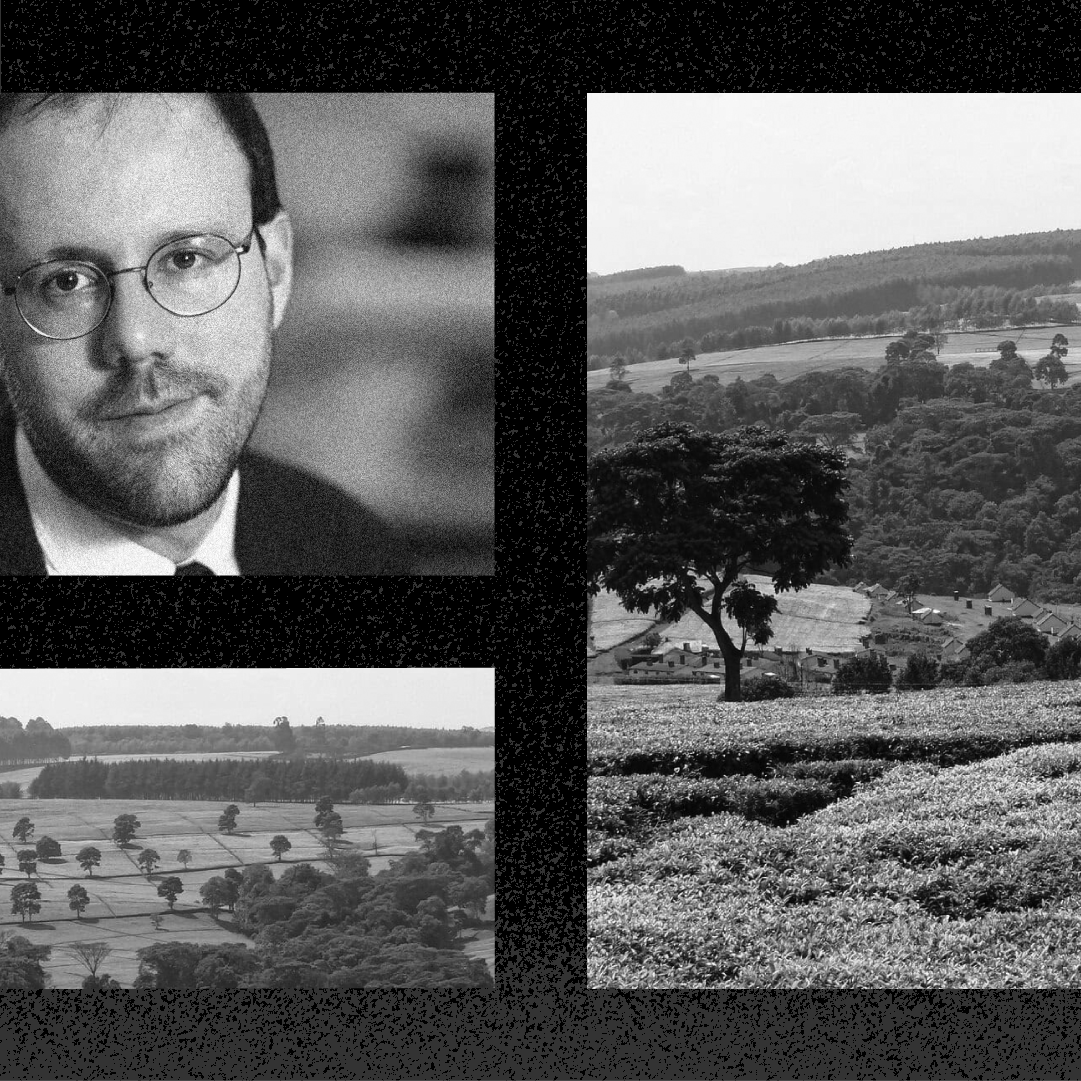

Michael Kremer has recently been named the new Chief Economist of the World Bank. On this occasion, we are rerunning this conversation between him and Timothy Ogden in which Kremer discusses his approach to economics, preceded by reflections from Timothy on what has changed in development in the decade since the original conversation.

Tim: The interview reprinted here is an edited version of a series of conversations that began at the end of 2014 and continued well into 2015. All of those conversations were long before a Nobel Prize (yes, yes, I know), the gutting of USAID, DFID and much of the official development assistance world, and, of course, before Kremer would have been considered for, much less appointed, Chief Economist at the World Bank. Perhaps the most jarring part of reading this interview again more than a decade later is how much value Michael put on building up infrastructure that would allow for the use of evidence in policy, when so much of that infrastructure is now destroyed or faces a highly uncertain future. 

It’s impossible for me now not to look at this interview, and the current state of international development aid and infrastructure, through the lens of Kremer’s O-Ring Theory. You can read Michael’s defense of RCTs against critics as flowing from the need to painstakingly investigate each crack and bottleneck in the development process and assess whether relieving this or that constraint will flow through to outcomes. But now we can also see how fragile the production chains of building and applying evidence in development turned out to be!

A decade ago I would probably have been more amused by, as opposed to inured to, the irony of the present situation: the context of the interview (and the book as a whole) was an “upstart” group of economists, NGOs and funders pushing against World Bank (among others) orthodoxy centering macroeconomic concerns and pointing toward measurable, implementable interventions like deworming, teaching at the right level, delivering bednets, or cash transfers to the poorest. It worked! AMCs, GiveDirectly, GiveWell, Deworm the World all can be tied to the work of those upstarts. Now as we see a cyclical return of industrial and energy policy to the top of global development agendas, one of those former “upstarts” is taking the post of Chief Economist. 

Still, my re-reading gives me some optimism. The key concerns in development policy that Michael describes in the interview—the importance of evidence, of getting incentives right, of innovation, of building institutions, of creating space to scale while recognizing that scale has its own unique challenges—could hardly be more important now. The need to confront uncertain new challenges while old challenges stubbornly linger (despite progress), the ability to combine theory and evidence, to apply judgment to resource allocation while thinking about longer-term and second- and third-order effects, to be realistic about what can be changed while being ambitious about what needs to change, all of these are desperately needed. Michael Kremer has been thinking about them, and doing something about them, for a long time. 

The following originally appeared in Experimental Conversations, published in 2017 by MIT Press.1


Tim: What was on your mind when you started doing randomized evaluations in Kenya? Why were you thinking about randomization and what impact did you think it would have at the time?

Michael: In the early 1990s, academic economists were paying increased attention to the issue of how to get reliable econometric identification. In other words, how to separate out the causal impact of a specific policy or factor from potential confounding factors. For example, researchers were using instrumental variables techniques.

I had gone on vacation to the rural community in Kenya where I had lived and taught high school after college and was speaking to Paul Lipeyah, a Kenyan friend of mine. He had gotten a job with an NGO and told me he needed to pick seven schools for a new child sponsorship program. It occurred to me that maybe it would be possible to choose 14 schools and randomize across them to evaluate the causal impact of the program. My friend took the idea to his boss [Chip Bury of International Child Support Africa] and they decided to go for it.2

Based on this initial work, it became clear to me that randomization could be made a practical tool for development economists, and that collaborations between researchers and NGOs could make it possible to test a variety of different approaches. Randomization was not just for very large-scale, multimillion-dollar evaluations of government programs with research questions determined by the government, but could be implemented through collaborations between academics and NGOs. It could shed light not just on child sponsorship programs but on broader questions. Within education, for example, it could shed light on drivers of human capital acquisition. How much of the poor learning outcomes in developing countries was the result of low levels of resources in schools, for example? What if we could use the fact that NGOs were putting large amounts of funding into some schools and not others, to try to understand whether low learning levels were due to lack of inputs, or whether it was due to teacher training, or poor child health or any number of other possible causes? It soon became clear that many important questions in development economics could be answered this way.

Getting involved in programs on the ground and tying one’s hands by using randomized evaluations forces researchers to confront realities of human behavior, even if they don’t correspond to our models. This can lead to the development of better models over time. When Ted Miguel and I did an evaluation of the deworming program of ICS, we found that deworming provided very substantial benefits—eventually leading to increased productivity in the labor force.3 But despite these benefits, demand for deworming pills fell away sharply when the NGO imposed even a small cost-sharing requirement. A series of RCTs later confirmed a high sensitivity of demand for non-acute health technologies with price.4 This accumulation of evidence helped us to refine our theories of health demand, showing that the human capital theory of investment in health needed to be adjusted. There’s been a very productive interaction between RCTs in development and behavioral economics. This series of results has also had an important impact on policy. The World Bank had been an important advocate of user fees for health, but the most recent World Development Report on behavioral economics signaled an important reversal, making the point that fees can deter usage more than might be expected under a rational model.5

Tim: I’m interested in the ideas that were circulating around you when you started working on field experiments. Was that the critiques of IV and looking for better identification? Were you thinking about lab experiments from Kahneman and others? Or the large-scale experiments in the US?

Michael: In 1994 when I started the work in Kenya, I was very much influenced by the movement for better identification in labor economics and public finance, but not by lab experiments. I see these traditions as independent, although there is now some convergence of the lab experiment and field experiment traditions. For instance, Nava Ashraf’s work combines elements of each in interesting ways.

I also was not reacting to the critics of instrumental variables. Indeed, I think those working on instrumental variables and those of us working on RCTs were motivated by the same impulse, the concern that a lot of empirical work in economics at the time was potentially subject to confounders and required a lot of fairly strong assumptions. That being said, it’s not like IV makes all the problems disappear, and neither does an RCT. I don’t think anybody thinks that RCTs are magical, but they are a really useful tool for getting at causal impact. So I would say I was trying to get at causal impact in a way that was part of a broader movement in the economics profession to get better identification.

My main impulse was practical—to get more believable answers to real-world questions. I have always been mainly interested in the underlying questions of what policies can address poverty and I realized that RCTs were a tool that could be adapted to help answer this question. I was motivated to make RCTs a more flexible and useful tool.

Tim: What, of the very many efforts you’ve been involved in—helping begin the RCT movement, Advance Market Commitments, Deworm the World, Development Innovation Ventures, the Global Innovation Fund—are you most proud of? What do you think will have had the largest impact looking back 20 years from now?

Michael: I see all these initiatives as very closely related. Advance Market Commitments are about finding new ways to promote innovation for development. The others are also about innovation for development. Demonstrating that RCTs could be done, working out the practicalities for how to do this work, training others in the technique, raising funding for others to do it, and helping governments and others use the results in developing their policies are all part of a package. Of course, DIV and GIF support not just RCTs but innovations in development more broadly.

People often underestimate the huge amount of practical R&D that went into finding ways to make it feasible to run randomized evaluations that answer both practical and important theoretical questions in developing countries. The field experiments in the US6 were being done with budgets of $40 million dollars or more. Such evaluations can clearly be very important, as the example of PROGRESA7 demonstrates.8 And by the way, as far as I know, PROGRESA, even though it was going on around the same time I was working on those first randomized evaluations, was also something that was separate. I don’t think they knew what I was doing and I don’t think I knew what they were doing. The initial randomized evaluations with ICS in Kenya were done on very small budgets, and we had to work things out from scratch. Working on small budgets in developing countries led to a lot of innovation about how to maximize power from limited samples, how to measure outcomes, and how to randomize. Another difference is that we were working with NGOs, as opposed to the large-scale government evaluations done in the US. This was true both in Kenya where I started, and then with Abhijit in India a few years later.

Working with NGOs, as opposed to big government evaluations, opened up the ability to answer a much wider range of questions, because NGOs are more nimble than governments and they’re used to trying different things. They’re used to not being able to serve everyone, so it’s more natural for them to be willing to try randomizing the order of phase-in. I helped set up a long-term partnership with ICS in Kenya, and the work Abhijit and I did with Seva Mandir9 also turned into a long-term partnership. Within those partnerships we were able to test all sorts of different ideas from education, to health, to women’s empowerment, to agriculture. Graduate students were able to come and join those partnerships and explore new ideas, and those graduate students became junior faculty and then senior faculty, transforming the field.

I’m also happy that I have been able to work with policy makers to use these results to inform policy. Sometimes this involves scaling of particular innovations—such as deworming or chlorine dispensers—and sometimes it involves developing more general lessons, such as on the impact of price on use of preventative health products or the importance of matching teaching to children’s current learning level.

It takes a ton of effort to scale. That became very clear in the experience of deworming. We presented our results to policy makers and I think they were very genuinely excited about them. But a Permanent Secretary in a Ministry of Education will have many things to deal with, so sustained engagement and support are needed. In the case of deworming, for instance, we co-founded an NGO, Deworm the World, to provide technical assistance to governments to introduce mass school-based deworming programs. It took a lot of work to get the NGO started and to get some large-scale programs going in Kenya and Bihar. But now Evidence Action, which took over the work of Deworm the World, is successfully supporting national programs in Kenya, Ethiopia, and India. They have already reached 140 million children in the first half of 2015 alone.

From my experience working on scaling up deworming, it became clear that there was a need for more institutional support to scale up the lessons coming out of RCTs. When Raj Shah became USAID Administrator and asked me to get involved, this is what I told him I wanted to work on. He was excited by the idea and suggested that I work with Maura O’Neill, who has a background in entrepreneurship. Together we co-founded Development Innovation Ventures within USAID to finance early-stage piloting of new ideas in development, rigorous testing of those ideas, and scaling of those that proved most successful. DIV has funded a lot of RCTs around the world and has helped organizations scale those that work. This is really quite a different model to much of development aid. Instead of aid agencies making top-down decisions about what to invest in and then issuing calls for proposals to implement the vision, this approach involves an open call for innovative ideas, provides resources to support rigorous testing, and then makes further support conditional on results. The DIV approach has influenced the creation of related funds in Peru and Tamil Nadu. DFID was interested in what we were doing, and so over the past few years I have been involved in setting up a new international venture, the Global Innovation Fund, which is supported by the US, the UK, Sweden, Australia, and the Omidyar Network. We just launched it this year, and I am very excited about it.

The modern movement for RCTs in development economics often gets put in the evaluation category, but in fact the movement is about innovation, as well as evaluation. It’s a dynamic process of learning about a context through painstaking on-the-ground work, trying out different approaches, collecting good data with good causal identification, finding out that results do not fit pre-conceived theoretical ideas, working on a better theoretical understanding that fits the facts on the ground, and developing new ideas and approaches based on theory and then testing the new approaches. The idea for DIV and GIF is very much about innovation, so if you need support to pilot your idea before you’re ready to rigorously evaluate impact, DIV and GIF will both pay for that. Then they’ll pay for a rigorous impact evaluation, and if it works, they also go on to the next stage, which is trying to help transition innovations to scale.

So I see getting the modern movement of randomized evaluations started, showing they were possible, working with NGOs, working to try to scale successful development approaches like deworming, drawing out lessons like the sensitivity of preventive healthcare to fees, and then trying to build institutions to keep doing these things as a package that I hope will have lots of impact.

Tim: There’s an implicit theory of change there about the problem being the lack of institutions to generate and use evidence.

Michael: I think that’s right. You can see a lot of what I have worked on as creating an institutional framework to allow ideas in development to be rigorously tested and scaled. Even my early work in Kenya was building the local infrastructure to allow people to run high-quality field experiments—from trained enumerators to systems people could run grants through. Many others have helped set up that infrastructure too and the world has come a long way in the last 20 years. There’s J-PAL, there’s IPA, there’s 3ie, there’s the SIEF program at the World Bank, there’s DIME, so tremendous progress has been made.

Tim: There’s a bit of irony in the “institutions matter” critique that RCTs are paying attention to things that are too small, but the movement has created institutions.

Michael: RCTs can’t be used to answer every issue, but they can shed light on many issues.

Deworming may seem like a small question but evaluations of deworming shed light on the interrelation of health and education, people’s sensitivity to small copays for non-acute health, responsiveness of behavior to health information, and information flow through social networks. It also helped shed light on methodological issues about measuring externalities.

There are now many good RCTs on political economy questions. Ben Olken has done a lot of good work on corruption using RCTs10 and there is a lot of work on making bureaucracies more responsive.11

Some of my work on education that initially started as an evaluation of a textbook program wound up being about institutions. As I mentioned earlier, one of the great things about randomized evaluations is that it forces researchers to get very in touch with the reality of what’s on the ground. Academics are not just sitting around theorizing about the challenges of development; they are getting their hands dirty. Very often in that process they realize their theories are wrong, and they come up with new theories. And then when you test those theories with an RCT, you are often surprised by the result. There is no room to tweak your result to fit your preconceived ideas, it is what it is. RCTs force you to confront reality.

I had taught in a school in Kenya, and seeing how few resources the schools had made me think it must be good to have more resources, including more textbooks. But we found that textbooks only improved test scores for those who were already performing well. That made me think about the issues of fit between the curriculum and where the students currently were. 

Textbooks were written at a level far from the level of many students. One of the big lessons from RCTs in education is the mismatch between where curricula are and where teaching is oriented and where the typical student is. There are institutional reasons for that. There are political economy reasons for that. I think we understand a lot more about one of the key institutional problems in education because of randomized evaluations. In that case it didn’t start out with an analysis of the institutional reasons for the mismatch, but the data brought us to it.

We’ve identified a number of very useful interventions, such as remedial education, to address that problem, but it remains a big political economy problem to get those interventions implemented. Those are useful policies to help address this problem, but we probably also need curricular reform, and that’s a harder task. But there’s no reason why if we do have curricular reform, we can’t understand the impact of that with randomized evaluations.

Some other critiques of RCTs, for example, about whether results from one context will generalize to others, are general points about empirical work, not about randomized evaluations.

Tim: I want to go back to the issue of AMCs that we set aside at the beginning of this discussion. There’s a reasonable argument that AMCs increase the number of vaccines and, combined with GAVI, gets a lot more kids vaccinated—and that one of the most important things to happen in development is keeping a bunch of kids from dying or being permanently handicapped physically or cognitively. How would you compare the potential impact of building institutions to generate evidence, versus “we saved a bunch of kids”?

Michael: Institutions to encourage R&D on health products for the developed world include both public biomedical research funding and intellectual property rights to encourage private sector R&D. The idea of AMCs was to expand the set of tools we had available for encouraging R&D. Intellectual property rights systems create R&D incentives but also involve some static distortions, and those can be quite costly. There can also be some dynamic distortions. I had written a paper on the idea of buying out patents—firms could voluntarily sell their patents to governments, which could put them in the public domain.12 That preserves the dynamic R&D incentives created by intellectual property rights but avoids some of the static distortions associated with intellectual property rights, as well as some of the dynamic distortions, like the incentive to develop “me-too” drugs just to get around the patent, and the disincentives to develop follow-on drugs.

AMCs for vaccines have a lot of the same properties as buying out a patent, but it seemed like they were institutionally and politically easier to do.13 There was a huge amount of work to move from an academic idea to something that could be implemented in policy.14 It was great that was done for the pneumococcus vaccine, and then that vaccine was developed.

I think the biggest potential benefit of AMCs would be to encourage R&D for diseases that are a little more distant. In the case of pneumococcus, there was already a vaccine for the strains that were common in the rich world, but there wasn’t one that covered all of the strains that are relevant to a lot of poorer countries. It was a technological challenge that I don’t want to minimize, but it was less of a technological challenge than developing a completely new vaccine. I haven’t spent time on this for a while, though I am writing an academic paper on vaccines and drugs right now. But, in general, I think there’s scope for institutional innovation to come up with new mechanisms to encourage R&D and to make the products accessible. I hope I’ll go back to doing some work on that at some point.

Tim: Do you think about your role in training either directly or indirectly so many of the people involved in doing randomized evaluations? At the risk of goading you into saying some not very humble things, what’s the counterfactual of a world without Michael Kremer?

Michael: It’s been great to work with some amazing graduate students and co-authors over the years, many of whom are now doing incredible things. One of the great things about setting up the operation at ICS in Busia has been seeing these incredibly talented people who are getting training in top-notch institutions and bringing that training face to face with life in Kenya and generating fantastic ideas.

I think that was very valuable for the students, but it’s also valuable for the world insofar as a lot of those students went on to do great things. I’m very happy about that.

Tim: One version of the impact of the field experiment movement is we’ve transitioned from a situation that, in general, serious economists didn’t go to the field to one where they do. Does that resonate with you?

Michael: The world needs all sorts of research.

We need field researchers, theorists, macroeconomists. There’s fantastic work going on in economic history. I think the idea of spending time in the field and being involved in randomized trials and other fieldwork is great, and that is one very important set of techniques and tools. I’m also open to other approaches. I do think that, in general, it is good for development economists to have spent time living and working in developing countries, but that does not mean that every project should be based on fieldwork.

Timothy Ogden is Managing Director of the Financial Access Initiative, a research initiative exploring how financial services can better meet the needs and improve the lives of poor households. He is the author of Experimental Conversations, a collection of interviews with economists conducting field experiments on poverty alleviation interventions. He also serves on the board of GiveWell and is a senior fellow of the Aspen Institute’s Economic Opportunities Program.

If you have comments on this article, or wish to contribute to the discussion, please email them to letters@indevelopmentmag.com. Responses will be featured in a letters section.

  1. Specifically: Ogden, Timothy N., Experimental Conversations: Perspectives on Randomized Trials in Development Economics, © 2017 Massachusetts Institute of Technology, by permission of The MIT Press. ↩︎
  2. This was published as Glewwe, Paul, Michael Kremer, and Sylvie Moulin. “Many Children Left Behind? Textbooks and Test Scores in Kenya.” American Economic Journal: Applied Economics 1 (1) (2009): 112–35. doi:10.1257/app.1.1.112.. While this work was seminal in launching the RCT movement, the paper was not officially published until 2009, well after many other influential RCT papers were published. ↩︎
  3. Miguel, Edward, and Michael Kremer. “Worms: Identifying Impacts on Education and Health in the Presence of Treatment Externalities.” Econometrica 72 (1) (2004): 159–217. doi:10.1111/j.1468-0262.2004.00481.x. ↩︎
  4. Pascaline Dupas has been involved in much of this work, and some of it is discussed in her interview in Experimental Conversations. J-PAL has an overview of the topic with links to many papers here. ↩︎
  5. See particularly chapter 8: “Health.” In World Development Report 2015: Mind, Society and Behavior. Washington, DC: World Bank, 2015. ↩︎
  6. These US field experiments of federal programs are discussed in the interview with Judy Gueron in Experimental Conversations. ↩︎
  7. PROGRESA is arguably the progenitor of modern conditional cash transfer programs, which provide social welfare payments conditional on recipients taking specific actions like keeping their children in school or getting vaccinations. PROGRESA was evaluated using a randomized trial which exploited the need to roll the program out over the course of several years and found significant impact on many measures of interest. The success of PROGRESA inspired the adoption of CCT programs in many countries around the world. ↩︎
  8. For an overview of the PROGRESA program and its impact, see: Skoufias, Emmanuel, and Bonnie McClafferty. “Is PROGRESA Working? Summary of the results of an evaluation by IFPRI.” FCND Discussion Paper 118. Washington, DC, 2001. http://ebrary.ifpri.org/cdm/ref/collection/p15738coll2/id/77118. ↩︎
  9. Seva Mandir is an NGO based in Rajasthan, India. It was involved in a number of the early education RCTs as well as the immunization promotion experiment (discussed in the interview with Esther Duflo and Abhijit Banerjee in Experimental Conversations). ↩︎
  10. This includes work in Indonesia on extortion of truck drivers and on corruption in road building and the gap between perceptions of corruption and actual corruption. For an overview, see Olken and Pande, “Corruption in Developing Countries” Annual Review of Economics (2012), Olken, Benjamin A., and Patrick Barron. “The Simple Economics of Extortion: Evidence from Trucking in Aceh.” Journal of Political Economy 117 (3) (2009): 417–52. doi: 10.1086/599707, Olken, Benjamin A. “Monitoring Corruption: Evidence from a Field Experiment in Indonesia.” Journal of Political Economy 115 (2) (2007): 200–49. doi: 10.1086/517935. ↩︎
  11. See, for instance, Banerjee et al.’s work with the Rajasthan police, and Olken’s work on performance pay for tax collectors in India. ↩︎
  12. Kremer, Michael. “Patent Buyouts: A Mechanism for Encouraging Innovation.” Quarterly Journal of Economics 113 (4) (1998): 1137–67. doi:10.1162/003355398555865. ↩︎
  13. Kremer, Michael, and Rachel Glennerster. Strong Medicine: Creating Incentives for Pharmaceutical Research on Neglected Diseases. Princeton: Princeton University Press, 2004. ↩︎
  14. This included not only the original economics papers, but a book (Strong Medicine) and a working group at the Center for Global Development before an organization was created and funded to manage AMCs. See: Levine, Ruth, Michael Kremer, and Alice Albright. Making Markets for Vaccines: Ideas to Action. Washington, DC: Center for Global Development, 2005. ↩︎

History remembers two Robert McNamaras.

Lingering in public memory is McNamara as US secretary of defense—the architect of America’s escalation in Vietnam and, for a time, one of the most vilified figures in the country. Then, for a thin slice of development specialists, Robert McNamara is remembered as president of the World Bank. From 1968 to 1981, he led a second war, the war against global poverty, a struggle to which he dedicated extraordinary personal effort—but a war which, for him, ended also in disillusionment.

It is tempting to try and separate the two McNamaras. His tenures at the Pentagon and the World Bank each deserve, and have received, the space of a full-length biography. The two chapters of his life—as head of the “greatest war machine in the history of the world,” then antipoverty crusader—clash like thesis and antithesis.1

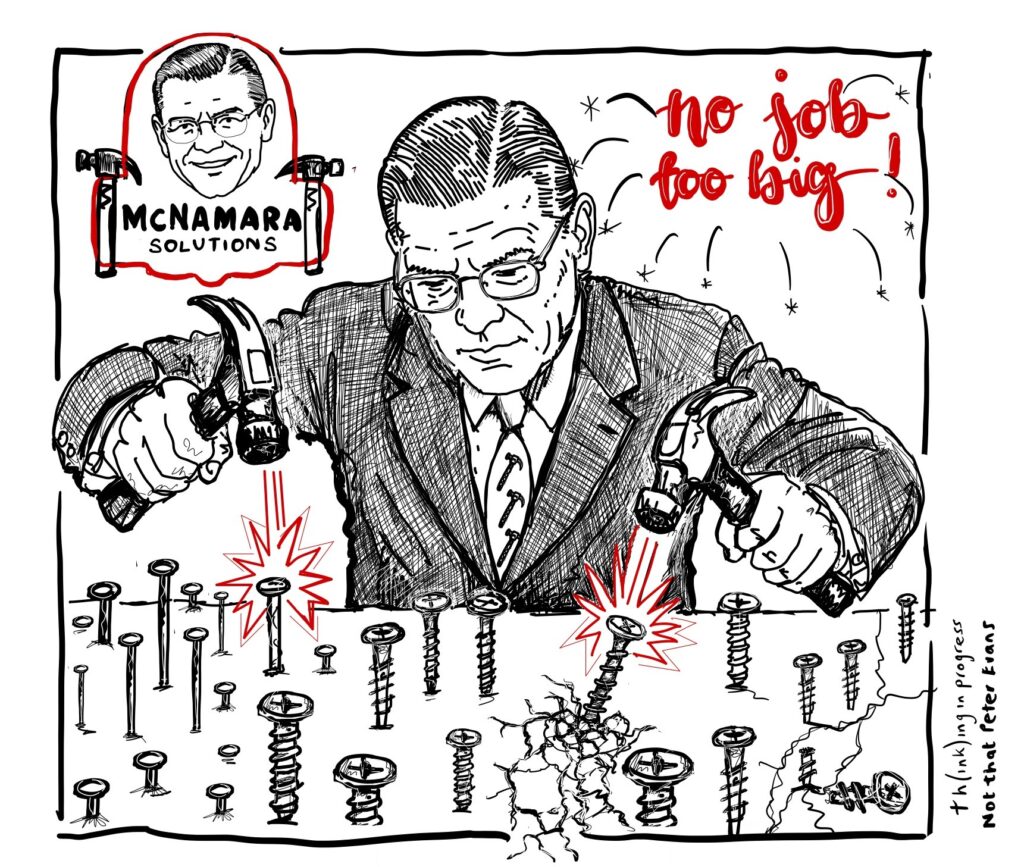
But, when considered together, the two wars of Robert McNamara’s life reveal a common approach, one that defined the postwar era of global development. Nicknamed “an IBM machine with legs,” McNamara was the living embodiment of midcentury American technocracy—a man who brought an ambitious drive to scale, a rationalizing impulse, and (most of all) a faith in the power of quantification to solve our most pressing social problems.

“To this day,” he wrote near the end of his life,2 “I see quantification as a language to add precision to reasoning about the world. Of course, it cannot deal with issues of morality, beauty, and love, but it is a powerful tool too often neglected when we seek to overcome poverty, fiscal deficits, or the failure of our national health programs.”

This approach made McNamara’s early career a glittering success. During World War II, he brought statistical control to the US Air Force’s bombing of Japan. At 24, he was made the youngest assistant professor at Harvard Business School. At 44, he became the first person outside the Ford family to preside over the Ford Motor Company—a job he left after just five weeks, to join President John F. Kennedy’s cabinet. At the Pentagon, and then the Bank, he presided over massive increases in spending, bending these huge bureaucracies to his will and reassembling them into their modern forms. 

And yet, when the sum total of his career is considered, the overwhelming sense is one of failure. The final years of McNamara’s life were spent reckoning with the wreckage of his legacy. 

Where did things go so wrong?

Something Rotten in South Vietnam

In 1960, the newly elected John F. Kennedy offered McNamara the choice of secretary of the treasury or secretary of defense. McNamara, who claimed to know little about finance, chose defense. Amid the arms race with the Soviet Union, he was now in charge of 9% of all spending in the US economy, and more than half of every federal tax dollar. 

His first task was bringing this spending to heel. He introduced the Planning, Programming, and Budgeting System (PPBS), which helped coordinate spending across the army, navy, and air force, and remains the main way the Pentagon allocates funds. With advice from the RAND Corporation, he created a new Office of Systems Analysis, which centered cost-effectiveness as a criterion for spending. It was perhaps the first serious attempt by a civilian to exert control over the Department of Defense—and remains the foundation of defense procurement to this day.

McNamara later said that, had Kennedy not been assassinated, the United States would not have become entangled in Vietnam. Perhaps, then, McNamara might have been remembered by history as a technocratic reformer. But under President Lyndon B. Johnson, McNamara instead became known as one of the fiercest advocates of escalation.

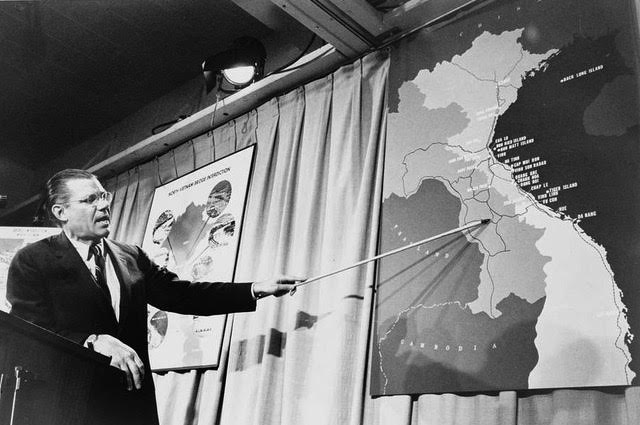
Robert McNamara pointing at a map of Vietnam during a press conference.
Robert McNamara pointing at a map of Vietnam during a press conference. Photo by Marion S. Trikosko; reproduced from the Library of Congress.

As head of the Pentagon, McNamara presided over a massive scale-up in South Vietnam. In 1961, there were still just 3,200 American troops in-country. By 1968, there were over half a million. From 1965 to 1970, they were fed and supplied by 3 million tons of dry goods shipped by sea. (This transpacific traffic would later set off the containerization revolution in global trade.) Overhead, American planes would eventually drop 7.5 million tons of bombs on Vietnam, more than double the amount dropped on Europe and Asia during World War II.

But the Vietnam War was more than just a military conflict. The need to “win hearts and minds” put questions of development at the center of the war—and although South Vietnam ceased to be a country over 50 years ago, it remains the fourth-largest recipient of US foreign aid in history. Perhaps without fully realizing it, McNamara was presiding over a massive, quixotic effort to develop a country that had not asked for it.

The Pentagon’s strategy was informed by a vast new statistical apparatus, the Hamlet Evaluation System. Starting in 1967, every month, an army of surveyors canvassed 12,000 hamlets (subunits of villages) in an active warzone. Hamlets were graded on a scale from “A” for friendly to “E” for contested, based on recorded attacks by Viet Cong or North Vietnamese forces. Alongside the wartime metrics were a host of other variables: questions about levels of education, the state of public works, conditions in agriculture.

Each month, the data from the Hamlet Evaluation System would be fed into an IBM 1410, which would spit out time-series plots that invariably showed that the US was winning the war. Another grisly statistic, the crossover point, measured the juncture at which more North Vietnamese and Viet Cong were being killed than could be replaced. Yet despite the mounting body counts, the tons of bombs dropped, and the purported success of pacification schemes, the North Vietnamese showed little interest in coming to the bargaining table.

The problem, McNamara’s critics stated at the time, was mistaking the war as something that could be understood as a purely quantitative exercise. Counting enemy casualties or pacified villages measured what was legible at the expense of what was strategically important. The North Vietnamese proved willing to absorb losses that American planners did not anticipate. By contrast, fundamental reform to address the root causes of why the Vietnamese were fighting—such as land reform to benefit peasant farmers—was delayed until it was too late.

Archival evidence suggests that McNamara had realized as early as November 1965 that the war could not be won—just months after he had pushed for massive escalation. Within the closed doors of the Johnson administration, he began advocating for a negotiated peace. Quietly, he also assembled a team of analysts, including the economist Daniel Ellsberg, to compile a set of secret papers on the errors of judgment that had led to American involvement.

Yet, for almost two years, McNamara continued to go out and sell the war to the American people. In November 1966, he told the press that “military victory [for the North Vietnamese and Viet Cong] is beyond their grasp.” In 1968, in a statement to the Senate Armed Services Committee, he claimed the Government of South Vietnam was making “encouraging progress.”

The cost of McNamara’s silence was enormous. Although precise estimates are impossible, perhaps 100,000 to 150,000 Vietnamese civilians were being killed each year. From 1965 to 1968, American deaths averaged over 9,100 a year. Decades later, landmines planted during the war were still mutilating children. The carcinogen Agent Orange—sprayed wantonly over fields and villages—is estimated to have caused another 400,000 excess deaths. 

When pressed years later on why he had remained silent, McNamara responded with the limp excuse that his ultimate loyalty lay with the president. (Notably, Cabinet secretaries swear their oath of office to defend the Constitution, not the president.) Perhaps he also believed that he could still influence the administration’s policy from the inside. For McNamara, the consummate system builder, it was impossible to imagine himself on the outside.

Privately, the cost of continuing the lie exerted a psychic toll. At night, McNamara ground his molars down to stumps, forcing a painful dental operation. His college-aged son and daughter turned against him. The tension between the sunny and confident public McNamara, and the haunted and doubt-ridden private one, was unsustainable.

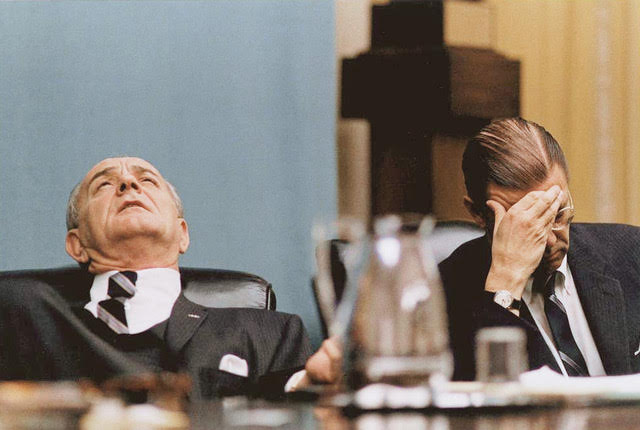
President Lyndon B. Johnson and McNamara in the Cabinet Room in 1968.
President Lyndon B. Johnson and McNamara in the Cabinet Room in 1968. Photo courtesy of the National Archives.

At the end of 1967, President Johnson announced that he was nominating McNamara to be president of the World Bank. Johnson had grown tired of McNamara’s doubts; McNamara, having reportedly suffered a mental breakdown, took the offer. Years later, he recalled telling his friend Katharine Graham, the publisher of The Washington Post, that he didn’t know if he quit or was fired.

“You’re out of your mind,” she said. “Of course you were fired.”

McNamara’s Bank

Bruised and drained by his final years as secretary of defense, McNamara found new vitality in the task of remaking the World Bank.

The Bank in 1968 was riddled with contradictions. It had been created to support the postwar rebuilding of Europe, but had been largely bypassed by the United States in favor of the Marshall Plan. It had pivoted to lending to developing countries (starting with a loan to Chile in 1948), but it still depended on capital from Wall Street, whose conservatism chafed at the risks of lending to poor countries. The result was a portfolio that was, in McNamara’s words, “small and patchy”—around $10 billion in today’s dollars, compared to the current portfolio of $120 billion.3 Moreover, the Bank had no central accounting system, no processes in place to evaluate the impacts of its lending, and no systematic projections of its loan portfolio. According to McNamara, a culture of “leisurely perfectionism” prevailed at the Bank; the process for finalizing projects was slowed by unnecessary technical reviews, and deadlines often slipped.

For a man of McNamara’s ambitions, this was unacceptable. He worked 12-hour days, divided meticulously into 15-minute blocks. He travelled constantly to the developing world, and made a point of venturing outside of capital cities and boardrooms, to see what the living conditions of the poor were really like. McNamara said little publicly about what drove this frenzy of activity. Any connection with demons from Vietnam must be heard in the silences. But his assistant, Olivier LaFourcade, said that it seemed as if “the emotions of a highly emotional person were subdued, controlled.”4

Just as he had at the Pentagon, McNamara first sought to exert centralized control over the Bank’s sprawling operations. He ordered the Bank’s senior managers to draw up standardized tables of its lending, and developed the “country program paper,” a common framework for Bank staff to evaluate member countries. A new Programming and Budget department controlled the allocation of resources within the Bank. In 1970, faced with the looming threat of a US Congressional audit, he created the Operations Evaluation Unit to monitor the performance of the Bank’s loans. In 1973, Bank management even pushed to measure the “social rate of return” of development projects. Staff resisted, and the change was scrapped.

Having consolidated his power within the Bank, McNamara next brought his relentless drive to scaling operations. He grew the Bank’s staff more than threefold, from 1,600 employees to 5,700, and began hiring economics graduates from the top American and European schools, transforming the Bank from an institution run by engineers to one dominated by economists. He canvassed Europe, Asia, and the Middle East, expanding the Bank’s pool of creditors beyond Wall Street. He brought on the talented financier Eugene Rotberg, who invented the world’s first currency swap to facilitate the Bank’s borrowing. In total, over McNamara’s presidency, the Bank’s yearly lending grew from around $1 billion in 1968 to $13 billion in 1981—an annualized growth rate of 20%, a pace which no other World Bank president has matched.

There were growing pains. McNamara’s focus on hitting lending targets created incentives to push money out the door, with, Nancy Birdsall notes, “relatively little regard for how it would be used.” To avoid missing targets, loans “bunched” up around key reporting deadlines, a phenomenon that persists at the Bank. A decade later, an internal audit of the Bank found evidence of an “approval culture,” which, ex ante, was overly optimistic about projects’ prospects and, ex post, did little to assess their outcomes.

But the positive imprint McNamara left on the Bank also cannot be denied. The skills he had once applied to the escalation of Vietnam—the drive to scale, the bureaucratic command, the impulse to rationalize and quantify—found a productive new quarry in the struggle for global development. Indeed, during McNamara’s early Bank presidency, aid became central to growth in a way it has not been before or since. In 1970, official development assistance was responsible for 10% of investment in low- and middle-income countries (LMICs), and 16% of their imports. By comparison, in 2021, aid accounted for just 2% of investment and 3% of imports in LMICs.

A War on Global Poverty

By the 1970s, however, it was clear that growth was not having the expected effects on poverty throughout the developing world. Despite progress in capital accumulation and infrastructure, the benefits were simply not flowing down to the world’s poorest. A 1972 report by the International Labour Organization described unemployment as “chronic and intractable in nearly every developing country… and will not be cured simply by accelerating the rate of growth.” 

In a landmark speech at the 1973 annual meeting of the World Bank and International Monetary Fund (IMF) in Nairobi, McNamara announced a new course. He called for a focus on what he called absolute poverty—“a condition of life so degraded by disease, illiteracy, malnutrition, and squalor as to deny its victims basic human necessities.” The narrow focus on “growth of GNP [gross national product]” missed central questions of inequality and distribution; the Bank must take “action… which will directly benefit the poorest.” Notably, McNamara called for tenancy and land reform—policies he had resisted in Vietnam—arguing that an “increasingly inequitable situation will pose a growing threat to political stability.”

Outside events accelerated the Bank’s turn toward global poverty. The 1973 OPEC crisis sent commodity prices soaring, encouraging commodity producers to demand fairer terms of trade and resource sovereignty. In May 1974, a special session of the UN General Assembly spearheaded by developing countries declared a New International Economic Order (NIEO), demanding technology transfers from the rich world, debt relief, and the reform of international institutions like the Bank and the IMF. In December, a subsequent vote for a new Charter of Economic Rights and Duties of States was 120 in favor and 6 against, with 10 abstentions. Every single developing country voted in favor. The 6 against were the United States, the UK, West Germany, Luxembourg, Belgium, and Denmark.

The NIEO represented a major challenge to the US-led international order. McNamara was sympathetic to its arguments—to a point. His moral commitment to the global poor was genuine. But he refused to advocate for deep structural reforms, such as those that might have increased the representation of poor countries at the Bank. With his close ties to the Washington DC political establishment, McNamara generally refused to buck Administration policy—by his own admission, “the US treated the Bank as though it were a US institution.” Modern econometric research suggests that countries that were diplomatically aligned with the US benefited from faster disbursement of loans and looser conditions.

The Bank’s new focus on the global poor produced some notable successes. River blindness, a disease caused by the parasitic worm Onchocerca volvulus, was virtually eradicated thanks to a Bank program with the World Health Organization—by 2002, around 600,000 cases of blindness had been prevented, largely in West Africa. A bronze statue in the World Bank atrium, of a child leading a blind man, marks the achievement.

Photo of statue in the lobby of the World Bank
A statue at the World Bank headquarters symbolizes the collaborative effort to combat river blindness. Photo by Karol Karpinski.

But, in the late 1970s, the same structural force that had motivated the Bank’s antipoverty turn—the global rise in commodity prices—began to undermine it. With most developing countries net importers of oil, rising prices forced them to take on debt to finance spending. To address this unfolding crisis, in 1979, McNamara introduced a new lending vehicle, the structural adjustment loan, intended to shore up a government’s general finances rather than support a specific project. In exchange, borrower countries were required to implement macroeconomic reforms: cutting government spending, opening up to trade, and liberalizing the domestic economy.

These first structural adjustment loans—$55 million to Kenya and $200 million to Turkey in 1980—marked the start of the Bank’s departure from the postwar recipe of state-led growth. Over the 1980s and 1990s, this would coalesce into what became known as the Washington Consensus—a mix of market-oriented reforms that emphasized fiscal discipline, liberalization, and the retreat of the state from active economic management.

The economic legacy of this period remains deeply contested. On the one hand, William Easterly finds no evidence of a relationship between structural adjustment loans and better policies or faster growth—perhaps because many of the reforms were never actually undertaken. On the other, defenders of the Consensus point to faster long-run GDP growth among reformers in the 2000s. Outside of economics, public health research suggests that structural adjustment programs, when implemented, led to declines in child and maternal health, likely from cuts to social spending—although this finding is controversial. Separating the effects of structural adjustment from the economic crises that led to those conditions being imposed may simply be an intractable question. 

Whatever their precise economic effect, the structural adjustment loans were seen as an expression of the imbalance of power between rich lenders and poor borrowers—precisely the asymmetry that the New International Economic Order had tried to correct. 

Moreover, the World Bank’s conditions became publicly associated with the economic disappointment of the 1980s and 1990s. With the afterglow of independence fading, sub-Saharan Africa fell into political instability and economic decline. Growth in Latin America stalled and even reversed amid a wave of debt crises. Morale at the Bank reached a low ebb. McNamara’s dream of a world without poverty, expressed so vividly in Nairobi in 1973, had been perverted beyond recognition. He resigned in 1981, a few months after the death of his wife.

McNamara’s Silence

After the World Bank, the last third of McNamara’s life was dominated by trying to confront the ghosts of Vietnam. He read widely, travelled extensively. In 1995, he even went to Hanoi, where he dined with his former North Vietnamese adversaries. (They almost came to blows.)

McNamara’s 1995 biography, In Retrospect, was his first public attempt to come to terms with the past. The book, which is almost entirely about Vietnam, begins with McNamara’s admission that “we were wrong, terribly wrong,” then chronicles the errors of judgment that led America into a quagmire. It makes little mention of his time at the Bank.

In Retrospect was widely panned. For longtime critics of the Vietnam War, it was too little, too late. In his review for the Los Angeles Times, David Halberstam wrote:

Had it been published 25 years ago while the battle itself and the debate over it was still raging—had McNamara come forth then and said, as he does here, that what had come to be known as “McNamara’s War” was “wrong, terribly wrong,” it would have been an extremely valuable part of the ongoing debate; indeed, it might have ended the debate then and there. A secretary of defense of his seeming certitude who came forward and said that he had been mistaken in his earlier estimates and that the war could not be won would have been the most powerful of witnesses…

McNamara’s second attempt to confront his place in history, the 2003 Errol Morris film The Fog of War, was better-received.

Then eighty-five, his face as wrinkled as an almond, McNamara stares directly into the camera and speaks with a crisp lucidity that belies his age. As a byway to Vietnam, he recounts his days in the air force during World War II, when he advised General Curtis LeMay on the firebombing of Tokyo—an operation, he admits, in which they were “behaving as war criminals.”5 He describes the 13 days of the Cuban Missile Crisis as one of the central American decision-makers, when the world came to the brink of nuclear war. The lesson flashes by in a title card: “rationality alone will not save us.”

And yet that message seemed to elude McNamara, even toward the end of his life. If there is a thread we can trace through his career, from the Pentagon to the Bank, it is that no amount of technocratic skill can substitute for ethical judgment. McNamara was one of the 20th century’s great systems builders—a man who could tame vast bureaucracies, enlarge them, rationalize them. That doing what was right might require sometimes stepping outside the system simply did not compute.

cartoon of a man hitting both screws and nails with a hammer

Even after McNamara was forced out by Lyndon Johnson, he refused to publicly come out against Vietnam, repeating the justification that former secretaries of defense should not contradict sitting presidents. At a 2004 event at Berkeley promoting The Fog of War, with the United States entangled in two more foreign wars, McNamara refused to criticize the Bush administration, citing the same principle.

When asked by Errol Morris if he felt responsible for Vietnam, McNamara refused to answer.

“Is it the feeling that you’re damned if you do, and if you don’t, no matter what?” asked Morris.

“Yeah, that’s right,” McNamara said. “And I’d rather be damned if I don’t.”

But one thing stood out to me on rewatching The Fog of War. Notice how quick McNamara is with his figures, particularly those marking human life. He remembers that Allied bombing destroyed 58% of Yokohama, 51% of Tokyo, 99% of Toyama. When asked, he can recite that 25,000 were killed in Vietnam by the end of his tenure at the Pentagon—“just under half,” he points out, of the 58,000 who eventually died. 

But also see the pride on his face when he points out that introducing seatbelts at Ford saved 20,000 lives a year. Or when he notes the thirteen years he spent at the World Bank (compared to seven at Defense) working on global poverty.

Perhaps he hoped that there was still a way to make the figures square, to at least net out some of the red. McNamara, who died six years later, was beholden to the numbers to the end.

Photo of Robert McNamara's grave
Robert McNamara’s grave in Arlington National Cemetery. Photo by Tim Evanson; CC BY-SA.


Oliver Kim is a development economist working as a Research Fellow on Coefficient Giving’s Global Growth Fund.6 He writes a Substack called Global Developments.

If you have comments on this article, or wish to contribute to the discussion, please email them to letters@indevelopmentmag.com. Responses will be featured in a letters section.

  1. David Halberstam, The Best and the Brightest (New York: Random House, 1972), 220. ↩︎
  2. Robert McNamara, In Retrospect: The Tragedy and Lessons of Vietnam (New York: Random House, 1995), 6. ↩︎
  3. William Taubman and Philip Taubman, McNamara at War (W. W. Norton & Company, 2025), 321. ↩︎
  4. Ibid, 331. ↩︎
  5. Today, the idea of a secretary of defense admitting fault, let alone confessing to war crimes, seems nearly unthinkable. A second Morris documentary, 2013’s The Unknown Known, on former US defense secretary Donald Rumsfeld, is almost unbearable to watch, as Rumsfeld eludes almost any attempt at self-reflection. ↩︎
  6. Another team within Coefficient Giving, the Effective Giving & Careers team, is a funder of In Development. They played no part in our editorial decision to commission, edit and publish this piece, and Oliver is writing in his personal capacity. ↩︎