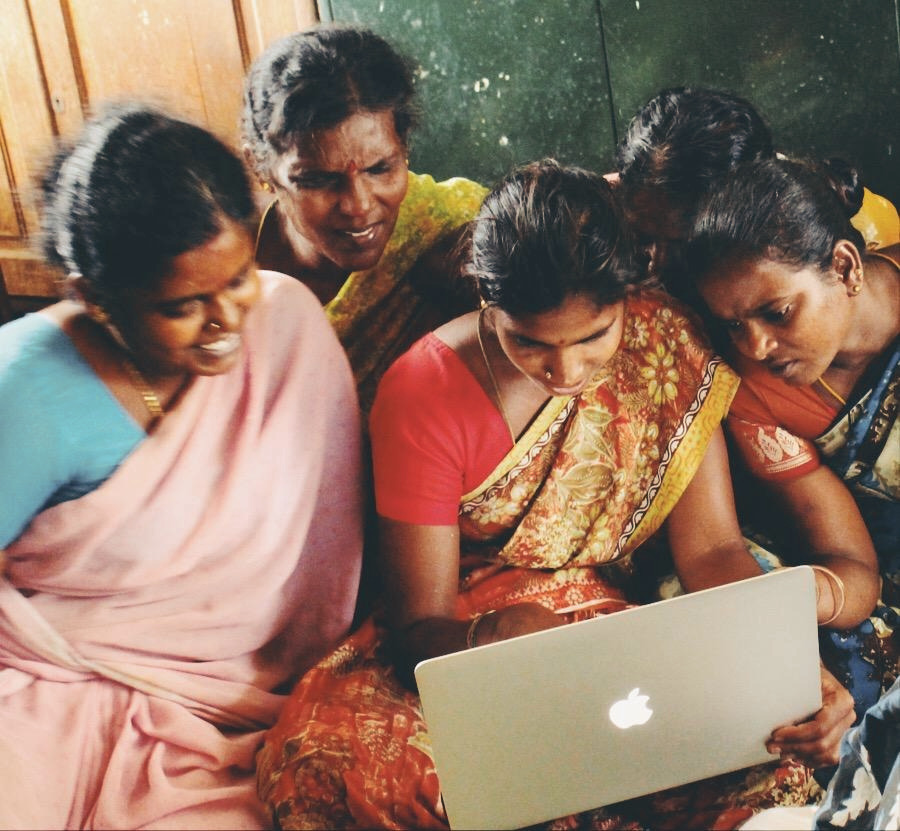
Is anticipatory action the future of aid or an expensive gamble?
Setting the Scene
In Turkana, Kenya, the International Rescue Committee (IRC) spent six months preparing for a disaster that never came.
The eight-person team assessed feasibility and need, registered 1,300 households and monitored government forecasts for a drought or flood indicator that would trigger the release of funds to each household.
But the threshold was never met, so no cash went out. On paper, the program did nothing, and cost roughly $112,000.
So Was That a Waste or a Worthwhile Premium for the Option to Act?
That question sits on top of a much bigger one. According to ALNAP, humanitarian actors moved an estimated $7 billion in cash and vouchers in 2025, roughly a fifth of all humanitarian aid. Very little is distributed before a shock — less than half a percent of humanitarian sector funding in any form1 is anticipatory.
Is waiting for a crisis to act the right choice? Maybe not. Crises are growing larger and more frequent, especially those driven by climate, while funding for humanitarian response continues to shrink.
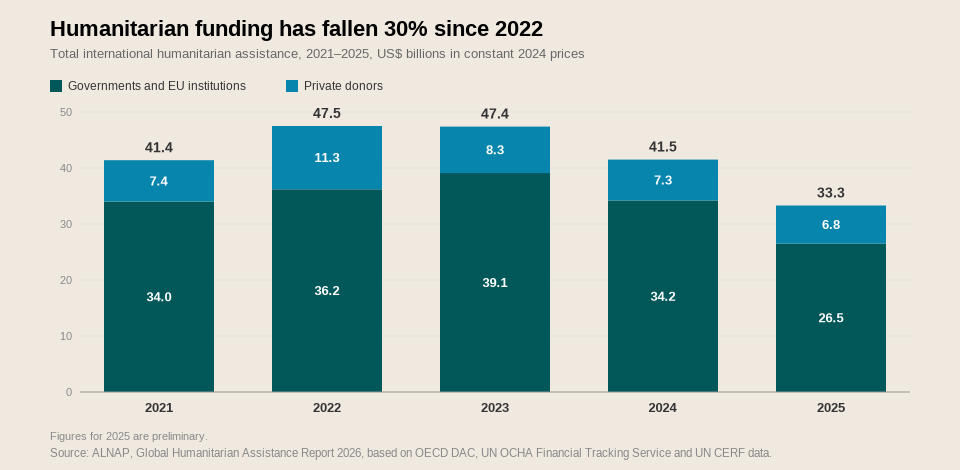
Global humanitarian funding has declined in recent years.
In this environment, any way to stretch limited funding is valuable. The sector’s own answer is to act earlier to stretch money further. Supplies cost less to buy and move before a shock, and families can prepare for it rather than go into debt or sell off assets to cope. Had Turkana’s trigger fired, 1,300 households would have received cash while there was still time to buy additional food or take preventative measures to protect themselves and their livelihoods. In 2024, a negotiating group of donors and aid agencies called on donors to target at least 5% of their humanitarian budgets for acting ahead of shocks, a goal that largely2has yet to be achieved.
Shrinking funding may be what finally forces the rethink.
Humanitarian System Reform: A History
Against today’s backdrop, we think adopting new approaches to make the most of limited money should be a priority.
One of these approaches is anticipatory action — what the Turkana program was building. Anticipatory action expands on disaster risk reduction and early warning system developments dating back to the 1970s and was further inspired by World Bank insurance model innovations of the early 2000s.
Of course, the underlying idea of reading signs of a coming shock and acting in advance predates structured humanitarian aid. Kagunyu et al. note that pastoralist communities in Kenya’s drylands have long anticipated floods and droughts through their own early warning systems: animal behavior, flowering plants, cloud patterns.3 These communities prepare for the coming shock, but their ability to prepare is limited by their own resources.
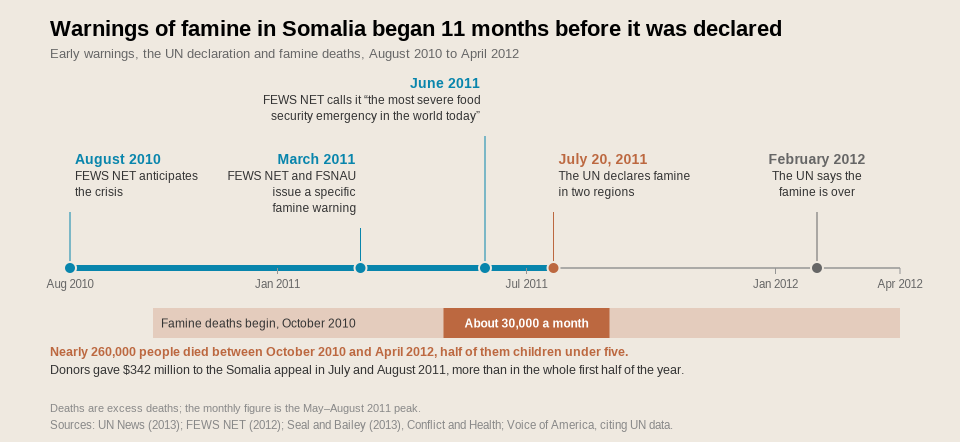
Humanitarian actors have far more resources. However, they have rarely turned early warnings into action. For example, forecasters issued “increasingly dire” warnings for 11 months before famine was officially declared in Somalia by the United Nations in July 2011. The international response largely failed to mobilize until after that declaration. According to the UN, this delay contributed to the famine’s death toll of nearly 260,000 people, half of them children under five years old.
In Somalia, warnings started long before famine declaration.
Anticipatory action tries to avoid this delay. Rather than wait for a disaster to strike before mobilizing relief, anticipatory action ensures resources reach households in advance of a shock. This is often triggered by a forecast crossing an agreed-upon threshold — for instance, a weather forecast showing a certain likelihood of flooding.
In practice, anticipatory action programs can vary a lot. A program can be lean and only begin investing in resources once a long-range forecast flags a likely hazard — or it can be something that requires much more investment and creates standing protocols and systems.
Across designs, though, anticipatory action changes both what a response costs and what benefits it delivers.
Anticipatory action has costs that traditional aid programs do not. Building and maintaining forecasts, triggers and delivery systems are real costs. But anticipatory programs allow households to buy and move supplies before prices spike and access is cut off. A Start Network rapid evidence assessment finds that early action can be cheaper than reactive aid for this reason.
Benefits can be significant. When families receive cash before a crisis, they can react better. They can move themselves and their families away from a natural disaster before it hits, prepare for a storm or flooding or buy what they need before prices climb. This can help families protect their livelihoods and keep the assets they would otherwise sell to survive. But a “wrong” forecast, where the trigger activates but the hazard never arrives, can mean anticipatory action pays out to non-impacted households. This can be seen as a waste of money and is not a problem in traditional humanitarian response, where transfers wait for confirmed need.
Anticipatory Action: The Evidence, As We Know It
There are some circumstances where anticipatory action is helpful and some where it is not. Unfortunately, the debate on anticipatory action is decidedly less nuanced than it should be. Depending on whom you ask, anticipatory action represents either the future of aid or an expensive gamble. Proponents see a smarter, faster and more dignified model. Skeptics see money wasted paying out on forecasts that don’t come to pass — or, as in Turkana, programs that have been set up but never trigger.4
According to the Anticipation Hub, anticipatory action activations roughly tripled from 2022 to 2025, reaching over 9 million people across 54 countries last year. But despite being around for over a decade, research exploring the cost-effectiveness of anticipatory action continues to lag. The IRC has been working to close that learning gap.
Though there is still much to learn, these programs and evaluations helped us develop much-needed heuristics to understand whether and how anticipatory action can maximize humanitarian cost-effectiveness.
1. Context determineswhatanticipatory action can do, not just how well.
A Mercy Corps synthesis argues that anticipatory action can serve two different purposes: (1) act as earlier aid, providing the same welfare gains as post-shock assistance and (2) let households protect productive assets and livelihoods before a shock closes off options.6
There can be limits to that second option, though. We conducted the first-ever randomized controlled trial of anticipatory action cash transfers in Afghanistan in drought-plagued Badghis Province in 2025. The IRC randomized whether households received a single cash transfer before the harvest season or two smaller transfers (with the same overall amount), one before and one after. All families in the program were suffering; a trifecta of near-total harvest failure, cross-border restrictions that cut off seasonal earnings and sudden withdrawal of humanitarian funding left households with almost nothing to fall back on. By endline, around 94% of households that received a cash transfer reported no income at all.
The cash was a lifeline. It helped families meet some of their immediate needs and avoid new debt; for many, it was the first assistance they’d received in roughly a year. Delivering the transfer as a single payment (before the shock) generally left families relatively better off than splitting it in two, but the average household in both treatment arms began and ended the study as “food insecure.”7 Anticipatory action could help blunt the impact of a shock, but it could not restart the wider economy and restore incomes. In a context this fragile, anticipatory action can be but one component of recovery.
The IRC was not alone in finding this — a qualitative Save the Children study across drought-impacted areas of Kenya and Somaliland also indicates that livelihood-protecting anticipatory action is unlikely to be enough on its own in a protracted crisis. For this reason, the study recommends layering anticipatory action with conventional humanitarian aid for the hardest-hit households.
2. The cheapest anticipatory action system is the one you don’t build from scratch.
Anticipatory action relies on forecasts and the ability to move money fast. These systems can be very costly to build but cheap to reuse.
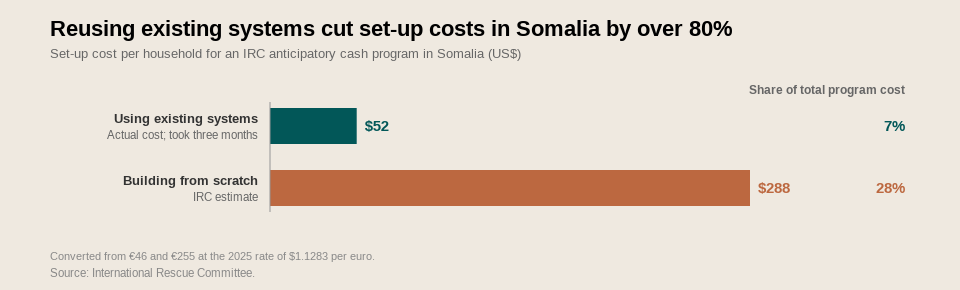
In Somalia, we layered our program onto resilience and early-warning systems already in place.8 As a result, setting up the program cost roughly $52 per household and took three months. It would have cost an estimated $2889 per household to build the same capability from scratch. We estimate that use of preexisting systems lowered the set-up costs from 28% of total program cost to 7%.
Reusing existing systems reduces setup costs.
We were certainly not the first to work with existing systems. When the World Food Programme delivered forecast-triggered cash ahead of Bangladesh’s 2020 monsoon, it relied on widely used mobile money channels; during Nepal’s 2021 floods, the Nepal Red Cross Society routed cash through the government’s Social Security Allowance system.
But our Somalia research program is among the few to quantify this reuse dividend, as well as to note that “working with existing systems” isn’t the same as “free.” Where a system already exists like in Somalia, this can be a powerful model.
When systems don’t already exist, the sector defaults to a “build” and “fuel” model. Under this model, the humanitarian actor invests up front in standing up frameworks and triggers from scratch (“build”) then releases money to households (“fuel”) when a trigger fires. But for many organizations and contexts, an up-front investment can be hard to justify, difficult to finance10 and time-consuming to establish.11
A leaner approach, e.g., standing up a hazard-specific contingency plan once a long-range forecast flags a high-probability threat, may help12 stretch resources further and respond faster.
This is what we did in Guatemala: free long-range forecasts from Columbia University’s climate institute flagged a high-probability flood season four months out; the open-source GloFAS flood platform pinpointed when to trigger; and cash and early-warning texts moved through a bank and a messaging platform we already worked with. The only thing newly built was our contingency plan, which spared us the cost of building our own trigger mechanism.
3. Fast action runs on patient money.
The two lessons above assume funding that (1) persists between shocks and (2) can move on a forecast. But the humanitarian system currently runs the other way around: it releases money once a loss has already occurred and been formally recognized (e.g., via a famine declaration or an emergency appeal). Under current rules, most humanitarian funding runs on an annual basis (or shorter) and is often tied to a donor fiscal year and specific geography. Many donors now say they want to act before a shock, yet the funding landscape does not reflect this. Some donors’ financial rules even prevent them from directly disbursing ahead of a shock at all.13
Increased use of two funding structures could help change this. Multiyear funding lets up-front investment pay off when spread across seasons: build once and activate across multiple forecasts. Pooled,14 flexible funding can do most of the rest: release money on a forecast, move as the forecast shifts and spread the risk of a trigger not firing across multiple seasons. Our German Federal Foreign Office funding spanned several countries, which let us work more probabilistically across them. When Turkana did not have a drought and the Kenya trigger didn’t fire, that money wasn’t “stuck” but could instead go where the need was.
Neither of these funding structures is new. The IRC’s own research on multiyear, flexible funding demonstrates how they lower administrative and cost burdens for both donors and implementers. Self-reporting indicates that in 2024, 14 of 22 donors gave more than 30% of their humanitarian funding as multiyear grants, up from 10 donors in 2023.
Where We Go From Here
The team in Turkana prepared for a trigger that never came. As a standalone project, it can seem like money spent on nothing. But judged as a part of a system — one aimed where hazards recur, based on data and delivery systems that span seasons, and funded to act in advance — it looks like a premium on an insurance policy: one worth paying where hazards recur and hard to justify where they do not.
And even an unactivated trigger can leave something behind. In Turkana, we trained partners in household-economy analysis (a method for estimating what a given shock will cost a household and how much of it they can absorb) and tested new forecast methods. The experience helped reshape how we work, too — concentrating set-ups where forecasts are more likely to trigger.
The real question isn’t does anticipatory action work, but where it fits, what it’s built on and how it’s funded to last. If we get that right, anticipatory action could be one of the more promising innovations in the redesign of a multibillion-dollar humanitarian response system. Get it wrong, and it’s a multibillion-dollar bet that will never pay out.
The authors thank Clare Clingain and Mikaela Cochran-George for the research and analysis underpinning this article and Emily Barnes, Ben Excell, Miles Murray and Anneleen Vos for their technical review. Any errors are our own.
Justin Labeille is a Senior Director at the International Rescue Committee’s Airbel Impact Lab, where he leads the Best Use of Resources team. He previously directed cost-effectiveness evaluations at GiveWell and Giving Green, and held global research and policy roles at Living Goods, Innovations for Poverty Action, and J-PAL.
Paige Kirby is a Senior Advisor at the International Rescue Committee’s Airbel Impact Lab, where she works to change how funders use cost evidence. Previously, she led work on economic resilience and sovereign debt at USAID, managed foreign assistance budget execution, and worked in policy and applied research at Development Gateway and the OECD.
If you have comments on this article, or wish to contribute to the discussion, please email them to letters@indevelopmentmag.com. Responses will be featured in a letters section.
Anticipatory action spans modalities, including cash and in-kind aid, and covers response to a range of hazards, including climate, health and conflict-related shocks. In this article, we’ll primarily focus on cash transfers for climate-related shocks. ↩︎
The main exception to this is Germany, a donor which has set (and met) its own quantitative 5% target. ↩︎
From this, as Derbyshire et al. note, an open question remains whether anticipatory action’s data-driven triggers build on — or around — that knowledge. ↩︎
Note that learnings from Turkana have informed an agile IRC approach that has been activated six of seven times. ↩︎
Afghanistan, Chad, El Salvador, Guatemala, Iraq, Nigeria, Somalia and Kenya. ↩︎
Each household received roughly $244 in total, constrained by the size of our funding envelope. With a fixed budget, implementers often must decide whether to transfer more money to fewer households or transfer less money to more households — and in this case, we chose the latter. ↩︎
Through the Building Resilient Communities in Somalia (BRCiS) consortium, funded by the UK Foreign, Commonwealth & Development Office (FCDO). ↩︎
In original currency, EUR46 and EUR255 — flipping 0.8862 2025 exchange rate used here to be 1.1283 EUR to USD. ↩︎
This type of model can also leave gaps in areas where no framework exists but climate shocks still occur. In Afghanistan, for example, the UN’s 2025 Humanitarian Needs and Response Plan anticipatory action framework was limited to northern areas. ↩︎
The six- month-long Turkana program set-up sounds lengthy but was actually quite quick by anticipatory action standards! ↩︎
Cost savings from such an approach would come by assembling readiness from preexisting parts, though we can’t yet say whether this approach beats build and fuel on cost-effectiveness. ↩︎
DG ECHO’s anticipatory funding reaches NGOs largely through pooled structures rather than direct grants. In 2024/25, the body commissioned a study whose objectives included analyzing ECHO’s legal and administrative frameworks and assessing the feasibility of a dedicated instrument to finance the fuel component of anticipatory action. ↩︎
Pooled financing is where several donors contribute to a shared fund that disburses against agreed criteria, rather than each donor individually disbursing their own grants to implementers. ↩︎
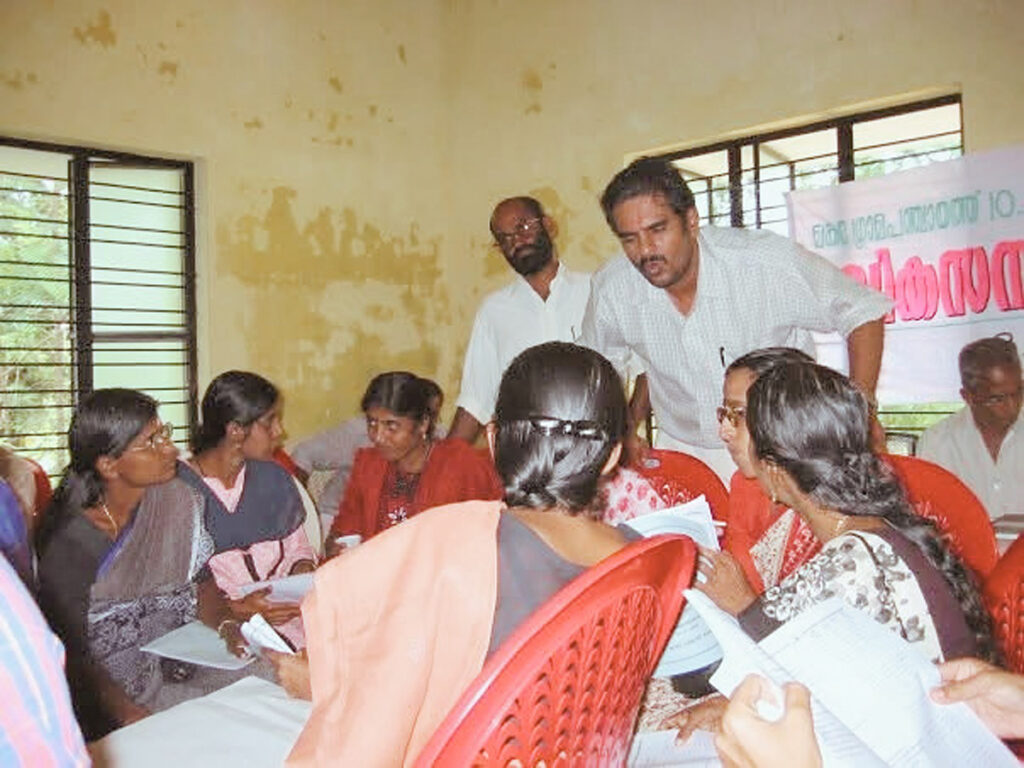
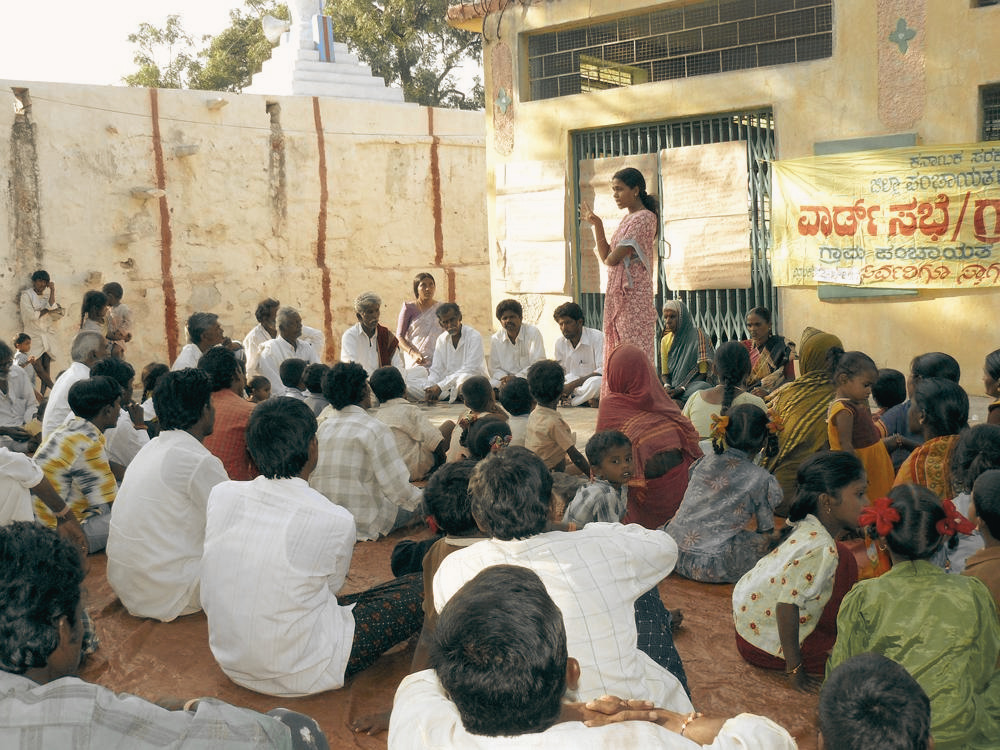
In 1992, India amended its constitution to create some 250,000 elected village governments covering roughly 800 million people — the largest exercise in democratic decentralization in human history. The effects of this 73rd Amendment have varied enormously across states. In Kerala, an extraordinary People’s Campaign in 1996 created a system of nested participatory planning. Street-level groups deliberate on their needs, which are passed on to a ward-level assembly, then percolate upward to a village assembly where all expressed needs are prioritized and matched with budgets. Over the course of the year, the agreed-upon projects are implemented and monitored in active collaboration with citizens.
Neighborhood meeting (Ward Sabha) in Kerala, 2003. Photo by Vijayendra Rao.
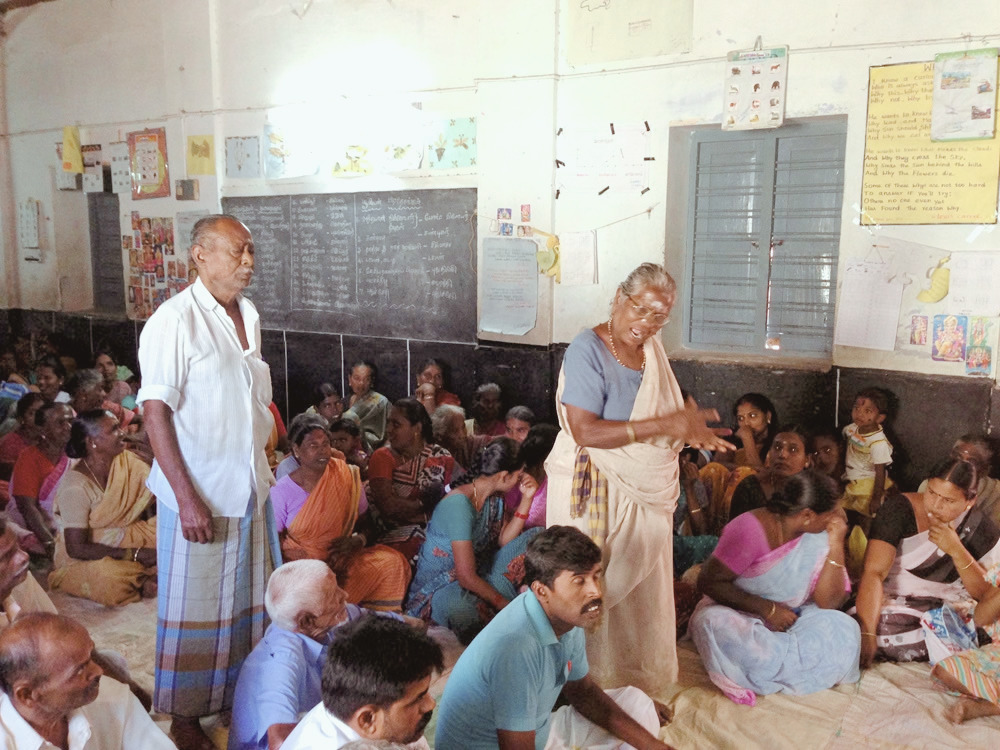
In other states, the same assemblies, created by the same amendment, are ceremonial rooms where nothing important is decided. In the 300 village-meeting transcripts that Paromita Sanyal and I analyzed for “Oral Democracy,” we found that differences in literacy, caste or wealth inequality did not explain how well these village assemblies worked. They were driven by whether the state government actually wanted decentralization to work – whether it devolved real money and real authority to the assemblies. The same constitutional amendment produced very divergent realities.
Gram Sabha in Tamil Nadu, 2012. Photo by Vijayendra Rao.
But understanding this divergence in the quality of deliberation has not been prioritized by mainstream economists and policymakers — because it would be a measure of process. Over the last century, the policy options on offer from economists for tackling poverty and inequality have overwhelmingly been focused on outcomes — resulting in what I call outcome-policies.
An outcome-policy manipulates the levers of government — transfers, taxes, expenditures, regulations — to hit a target and is judged by whether it hits it. Conditional cash transfers are judged by whether children stay in school; estate taxes by whether they improve intergenerational mobility; health insurance by its effects on health and hardship.
Outcome-policies are tied to metrics, which is much of their appeal. When the politics are favorable, they are relatively easy to enact by legislative or executive action. They are also easy to reverse.
A process-policy is a different animal. It tries to change how change happens: to equalize power in how decisions get made, each increment building on the last. Its proximate effects are subtle and hard to measure, and its full impact takes years to show. Precisely for those reasons, changes from process-policies tend to last longer than those from outcome-policies. Process policies change the machinery that produces outcomes rather than the outcomes themselves. Constitutionally protected deliberative bodies, participatory budgeting systems, adaptive systems of implementation — these are process-policies.
In the essay that preceded this one, I argued that development economics research has built a wall between itself and the people it studies. Policy has the same distance problem that research does, but the stakes are higher, because policy can directly and substantially affect people’s lives at a scale that research cannot. The distance, though, is not just a matter of bad implementation. It is built into the frameworks we use to think about what policy is.
The Three Dominant Ways of Thinking About Policy
Policies for welfare, growth, inequality and poverty are conditioned by three broad paradigms, all mostly derived from economics.1 All three are outcome-oriented at heart.
The neoliberal paradigm starts from deep skepticism that social science can understand complex human interaction well enough to engineer a better world. So it falls back on first principles: laissez-faire markets, free trade, human rights, electoral democracy. Free markets deliver growth; elections keep governments honest. The proponents of this paradigm have some empirical evidence for this: over the long run, democracy may indeed cause growth, and there is evidence that growth is an important determinant of poverty reduction.
This is the view that underlay the Washington Consensus of the 1980s and 1990s. Its answer to poverty is to maximize growth and equalize access to human capital, and there is something to it — but the effect of growth on poverty depends on how unequal a place is to begin with, and there is strong reason to believe that neoliberal policies increase inequality and erode social support. This can be by, for instance, creating opportunity markets that commodify access to basic needs like education and housing. Also, note that the largest reduction in poverty happened in China, which is not a democracy and grew and reduced poverty by making policy adaptively and experimentally, adjusting as it went.
The deeper limitation of neoliberal policymaking is disciplinary. Rational-choice individualism has no comfortable place for social exclusion or cultural and political inequality, so every socially driven argument — for gender equality, for social cohesion — has to be smuggled in through a growth prism. (Hence the slew of 1990s papers arguing that women’s education is good for GDP.) Welfare gets measured in income and consumption and poverty becomes a line denominated in dollars and cents, and a large survey industry exists to determine it.
The neo-Keynesian paradigm is the counter. Markets fail — through externalities, information asymmetries, market power — and the social sciences can tell the state how to correct them. Growth still matters, but there is acute awareness that markets do not deliver basic services to the poor and that discrimination is systemic. Household surveys now collect data on gender, religion, race and caste; equality of opportunity is a stated goal, backed by law and affirmative action.
The result is the intellectual justification for interventionist government — the London Consensus is the most recent comprehensive statement of this, with its slate of minimum wages, progressive property taxes and public investment in everything from infrastructure to nutrition. Along the way, the paradigm has developed a deep knowledge of government failure and clientelism. But even as it has sought to understand government failure, it does not seek to fix it through process. Instead, it builds on expert diagnoses by economists and social scientists — the state corrects, the citizen receives.
The third paradigm — neopaternalism2 — is arguably a more stringent extension of the second, and it has exploded in influence over the last two decades. It starts from the opposite end from neoliberalism: an abiding faith in the power of social science and data — behavioral experiments, randomized trials — to give direction to policy.
It takes its cues from public health, with a firm commitment to “evidence-based” everything. Its behavioral foundation is the research on scarcity: the poor face such punishing constraints on time and attention that they are steered into suboptimal choices, so the freedom to choose means little when the ability to choose is itself constrained. That is the justification for the top-down push — the nudge — away from actions, norms and practices that the policymaker has determined are harmful.
I want to be fair to this world, because it is the one I have been surrounded by and worked in for decades, and its advantages are real. The trials generate vast amounts of data about the conditions of the poor, well beyond income and consumption. They create a culture in which policy has to be justified with evidence rather than hope or idealism. And they weed out the bad intervention ideas.
But the disadvantages of this model of the world have been well catalogued, and two matter most here.
The first is overreach: policy driven by the demands of scientific technique rather than technique driven by the needs of policy — the tail wagging the dog. If all evidence must pass through a randomized trial, interventions that cannot be randomized disappear from the menu. And because a good trial needs good implementation — a messy rollout contaminates the design — trials effectively assume away what Albert Hirschman argued 60 years ago is the central problem of development policy: the complicated process by which ideas become action on the ground.
The second is context. An intervention that works in one place may fail in another. The randomizers’ answer is to run trials across many settings and at much larger scale, which works for simple interventions but breaks down for complex ones — the interventions tailored for, and especially by, communities, where designs vary too much for any sample to have adequate statistical power.
So neopaternalism drifts, by the logic of its own tools, toward interventions that are simple, uniform and predictable. It is a paradigm far more comfortable with certainty than with reflexivity. Culture enters the analysis as a set of “traits” to be scored good or bad; the study of social life becomes part of the expert’s apparatus for nudging people toward welfare as the expert defines it. Nobody asks the poor what they want. And it is not a rhetorical flourish to say that. It is a fairly precise description of the method.
As I write, British and American aid budgets have been gutted, and two economists I respect — Rachel Glennerster and Dean Karlan, who served as chief economists of the two countries’ aid agencies — have jointly responded with a call for “radical simplification”: take what money is left and spend it on a short list of proven, cost-effective “smart buys” — malaria nets, nutrition supplements, structured lesson plans, cash transfers — at large scale, shorn of the complexity that makes programs “expensive to design, hard to manage, and almost impossible to evaluate.” They have a point, up to a point.
Mission creep is real, and it is often driven by donors, as anyone who has watched a project buckle under the weight of a phalanx of consultants knows. Reducing mission creep and focusing on what you meant to do in the first place has value. But look at the third item on their charge sheet. “Almost impossible to evaluate” is a statement about the evaluator’s preferences and their expert-driven worldview; it prompts the question of “evaluable by whom?”
When the menu of interventions is restricted to what a randomized trial can certify, it fills up with simple, uniform, predictable interventions, and the complex policies with subtle effects and unpredictable trajectories — which can displace the steady state and shift to a better development path — gradually fall off it. But many effective programs are not simple and they can take decades to bear fruit. Indeed, it would be impossible to price the net gain per unit.
But consider who paid for these programs. The policy reforms of Kerala were not financed out of the bilateral aid budgets (now being gutted); they were political projects of Indian state governments, built (largely) with domestic money and domestic legitimacy. The principal financier of process-policy is (often) the national state, not the donor.
Radical simplification may be a good way to triage for shrunken bilateral aid budgets, but it can say much less about what governments and multilateral institutions should do with their own budgets.
Seeing Like a Policymaker
Why do three paradigms that disagree about almost everything else converge on focusing on measurable outcomes?
James Scott’s “Seeing Like a State” showed why: states can only govern what they can “see,” so they work hard to make society “legible” — standardized categories, uniform measures, administrative grids.
There is nothing inherently wrong with this. Without legibility, there is no taxation, no public health, no welfare state. But the categories are not just descriptions; they are instruments that remake the world in their own image. And what gets stripped out along the way is what Scott, borrowing from the Greeks, called métis (common sense). This is practical, local, experience-based knowledge, provided by those who know the area and the place.
His examples have become famous. German foresters replaced messy, diverse woodlands with neat rows of Norway spruce that could be counted and taxed. Brasília’s grid-based urban structure, shaped like an airplane, replaced the messy reality of settlements that grow organically.
Legibility is all over the policy world. A market price is legibility: it compresses a tangle of preferences and systems of production into a single number. A poverty line is a legible expression of poverty — which is a complex, multidimensional experience. Randomized control trials are also an exercise in legibility — making behavior legible by stripping away context and subjecting lives to a treatment variable.
None of the above paradigms disagree about legibility. They argue only about who should make the policy — the market, the ministry, the experimenter.
And none of them ask the people, who are ostensibly the beneficiaries of the policy. The outcomes may be legible, but there is little effort to make them legible to those the policy affects. Seen from this angle, radical simplification is not radical at all — it is the neopaternalist paradigm’s default option made legible by a budget crisis. In some ways it represents a return to the expert-driven, top-down vision for policy that organizations like the World Bank were criticized for pushing on the world in the 1970s and 1980s.
Elections Are Not Enough
All three paradigms have the same problem — who checks the policymakers? All three paradigms also have the same answer: democratic electoral accountability.
Neoliberals and neo-Keynesians lean on universal franchise to keep governments aligned with citizens’ interests. Neopaternalism leans harder still: Cass Sunstein’s libertarian paternalism is explicitly premised on democratic constraints keeping the nudgers benign.
But the electoral check is not perfect. Elite capture and clientelism are pervasive. Democratic backsliding is relatively common. And we now live in an age of surveillance capitalism, in which the capacity to track people with extremely precise data threatens to delegitimize democratic processes altogether. If the ballot box is the only check the three paradigms recognize, then as the ballot box weakens, so does the legitimacy of the entire policy edifice built on top of it.
Jeep used for a village council election campaign, Karnataka, 2003. Photo by Vijayendra Rao.
This is not a problem confined to poor countries. The question of who checks the policymakers is becoming urgent everywhere — from the United States to Hungary.
Meanwhile, civil society is not limited to the ballot box. Across the world, at every level, people have organized themselves into bodies that monitor power between elections — what John Keane calls monitory democracy: citizen committees, self-help groups, minipublics, social audits, watchdog NGOs. Such forums sometimes emerge organically, but they can also be created: development organizations have spent hundreds of billions of dollars inducing participation.3
These institutions exist even in authoritarian settings. In rural China, citizens’ groups working with sympathetic civil servants have built accountability without democracy inside systems of authoritarian deliberation. In other words: a paradigm of action that runs on process rather than outcomes already exists. It is time to give it a name and a description.
Reflexive Policy
I call the fourth paradigm reflexive policymaking. Reflexive is used in the sense the word carries in sociology and anthropology: a reflexive practice is one in which the professional treats the boundary between herself and the people affected as a problem to be worked on, not a wall to be maintained.
The idea is a close cousin of Robert Goodin’s reflective democracy: an effective democracy has to cultivate its citizens’ capacity to “deliberate within,” to run other people’s situations through their own heads. Deliberating within is what makes cognitive empathy possible at all. The policy challenge is to produce it at scale: to redesign decision-making so that politicians, officials and citizens develop cognitive empathy for one another, horizontally and vertically.
Grand as that sounds, the practice is concrete, and pieces of it are operating all over the world. Four processes recur.
The first fills in the blank space between elections with continuous dialogue between citizens and governments — deliberative systems anchored in some officially sanctioned civic space, a forum or a regularly scheduled public meeting, where an ordinary citizen can directly influence the decisions that bear on her life. Forums alone are not enough; they have to sit inside a culture of dialogue in which speaking and listening become everyday practice. That is what Kerala built, and its neighbors did not.
The second equalizes power in decision-making directly, by giving voice to disadvantaged groups — and, more radically, by reserving seats for them, as India has done for women and lower castes in its village governments. Reservation is itself an admission that deliberation carries no automatic guarantee of equity — an all-male council can ignore women’s concerns, and a government run by upper castes may ignore the concerns of lower castes, no matter how many times they are brought before them.4
Process-based policy does not assume that people will always govern justly; rather, it claims that for a government to be legitimate, it must be more directly run by the governed. They are better placed than the experts to define the problems about which they have more information and are better placed to address them; having citizens determine foreign policy is obviously not optimal, but having them run local schools is.5
Village council president, Ujjire, Karnataka, 2003. Photo by Vijayendra Rao.
The third builds feedback loops, within government and between government and citizens, so that decision-making becomes adaptive: try, learn, adjust — instead of design, implement, evaluate, stop.
The fourth uses technology to give people control over their own data, to strengthen collective action and equalize access to public services rather than to surveil. The current excitement about AI-mediated deliberation falls under this category too, with this caveat: use the machines to scale our ability to listen and learn, not substitute for it.
The Sandwich
The capacity to participate is not something that communities alone can control. It is a political relationship spread across three layers.
There has to be a responsive state at the top, with the political will to devolve real power and the fiscal capacity to back it with real money. There has to be a motivated and organized citizenry at the bottom — cohesive enough to act collectively and deliberative enough to work through disagreement. And there has to be a working middle: the district office, the field facilitator, the state ministry — an intermediary tier that translates citizens’ voice upward, and the state’s authority downward, thereby protecting local citizens from having their interests captured by local elites. Ghazala Mansuri and I, borrowing from Jonathan Fox, called this the “sandwich” in “Localizing Development.”
Every case of process-policy that works at scale has all three layers, and every visible failure has a hole in one of them. This is the pattern that Mansuri and I found in reviewing the evidence on participatory development, which has a large, mixed and often disappointing record. What was clear, however, was that the successes and failures could be explained — where the top was missing, participation degenerated into empty consultation, and the community meeting became a place for cheap talk. Where the bottom was thin, collective action became difficult to organize. Where the middle was broken — and in many countries the middle is the weakest layer — elite capture became much more likely and even well-designed policy harder to deliver.
This, in retrospect, provides insight into why so much donor-induced participation has disappointed. Donors build the bottom — generally the cheap layer, the one you can deliver on a project cycle. But they skip the political work at the top and the institutional work in the middle. A sandwich with one layer is not a sandwich — and the whole thing fails.
Kerala, to return to the opening puzzle, is what it looks like when a state builds the whole sandwich. The People’s Campaign organized the bottom, while the ruling coalition supplied the political will and intellectual direction for the top layer. And it did one other thing: it staffed and funded the cadres in the middle. Participatory planning works in Kerala because the street-level groups feed into the ward-level assembly, which in turn informs the village assembly. Each layer of the sandwich is linked in a feedback loop with the others.
The sandwich applies everywhere. Indonesia’s Kecamatan Development Program (KDP) began in 1997 as a pilot in 48 villages, having been designed by the anthropologist Scott Guggenheim and colleagues in Bappenas, the Indonesian planning ministry. It grew out of an ethnographic study of how Indonesian villages organized themselves, which found that the culture of gotong royong (mutual assistance) in Indonesia created village-level institutions with a much greater capacity for durable collective action than the user groups that projects kept creating.
Mosque built with gotong royong in Kalimantan, 2005. Photo by Vijayendra Rao.
Its design was not dissimilar to Kerala’s People’s Campaign. Block grants went directly from the central government to the kecamatan, the subdistrict. From the neighborhoods and hamlets up, villagers deliberated on proposals and sent a delegation of at least six representatives, three of them women, to an inter-village forum where they, drawing on gotong royong norms, deliberated and voted on which proposals to fund. Once the forum decided, nobody higher up could alter the decision. Facilitators recruited from NGOs and the private sector took the information and worked with village organizations to implement the agreed-upon plan, circumventing the village head’s tendency to capture such decisions. As Guggenheim puts it, the state’s job was to do less rather than more: keep the money moving, audit it and stay out of local decision-making.
That is the sandwich. Reform-minded bureaucrats in Bappenas and the Ministry of Finance at the top, with the World Bank supplying money and air cover. A tier of trained facilitators in the middle. And at the bottom, villages with long traditions of collective action and their own ways of managing and implementing a common fund. The layers of the sandwich held long enough for norms to shift. KDP reached 2,000 villages by 2002, 6,000 by 2006, when it was renamed PNPM Mandiri, and 60,000 by 2011. In 2014, Indonesia turned it into the Village Law, which made a block grant to all 75,000 villages a permanent entitlement in the national budget. A donor-supported experiment became a permanent part of the state.
Meanwhile, Brazil’s Porto Alegre is an example of the reverse. Its participatory budgeting was a celebrated case of citizens directly deciding how public money gets spent. But after the Workers’ Party (PT) lost the mayor’s office in 2004, the project was largely dismantled. The bottom was still there; the top lost interest, and the middle was rendered ineffective. This is why reflexive policy requires donors, organizers, politicians, bureaucrats and citizens working together long enough for norms and expectations to shift and reach a sustainable equilibrium.
A Revolution by Stealth
Consider Jeevika, the rural livelihoods program launched in 2006 in Bihar. The state was then, by almost any measure, the hardest place in India to attempt anything of the kind. Rural poverty stood at 55.7% against a national average of 41.8%. Per capita income was a third of the national average. Only 37% of women were literate, only 1% had access to microcredit and two-thirds of rural household loans came from moneylenders charging 100 to 200% a year.6 Alleviating rural poverty in this context would be a tall order.
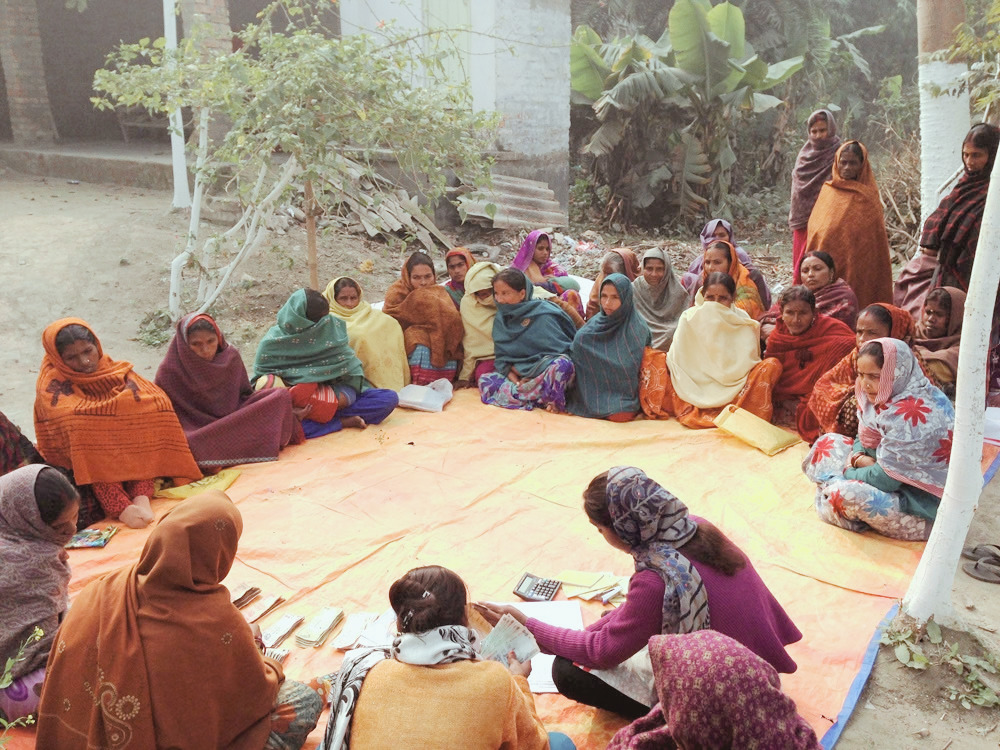
Furthermore, Bihar was a difficult, highly unequal, patriarchal and caste-ridden context. Into this, Jeevika introduced something deceptively modest: self-help groups (SHGs) of 10 to 15 women, meeting weekly to save and lend among themselves, subsequently federated into village organizations and cluster-level federations. Shruti Majumdar, Paromita Sanyal and I spent four years doing qualitative fieldwork (embedded with a randomized control trial that ran for 18 months) on how the project worked between 2010 and 2014. This fieldwork became our new book, “Revolution by Stealth”.
Jeevika offered cheap credit, insurance and income generation, with no language of women’s rights or resistance anywhere in sight.7In a short period of 18 months, the program refinanced 28% of household debt into SHG loans that charged a much lower interest rate of 24%, undercutting the previously available interest rates by 150 percentage points or more. There were also “general equilibrium” effects — competition from Jeevika reduced the rate charged by moneylenders by 35%.
Jeevika did not present itself as a challenge to the local order. It did not name a villain. Its targets were two things: poverty and the moneylender. It explicitly brokered the acquiescence, if not the acceptance, of the village head (mukhiya) and the other local power brokers by offering the village a better life without creating a revolution.
Women’s SHG, Muzaffarpur, Bihar, 2010. Photo by Vijayendra Rao.
The gender transformation came (much) later, and it came not from persuasion or an explicit effort to change norms, but from repeated practice that turned into ritual. Jeevika brought women together, regularly, in groups with rules. Week after week, they would meet, sing, save together; they’d lend to each other, deliberate, manage their accounts, bargain. Week after week, they’d meet. Participation built confidence and women’s voices. This repeated practice built radically new social roles and reworked relationships within households and communities.
As one bewildered male respondent quoted in our book put it: “(Chief Minister) Nitish (Kumar) has turned women into men.”
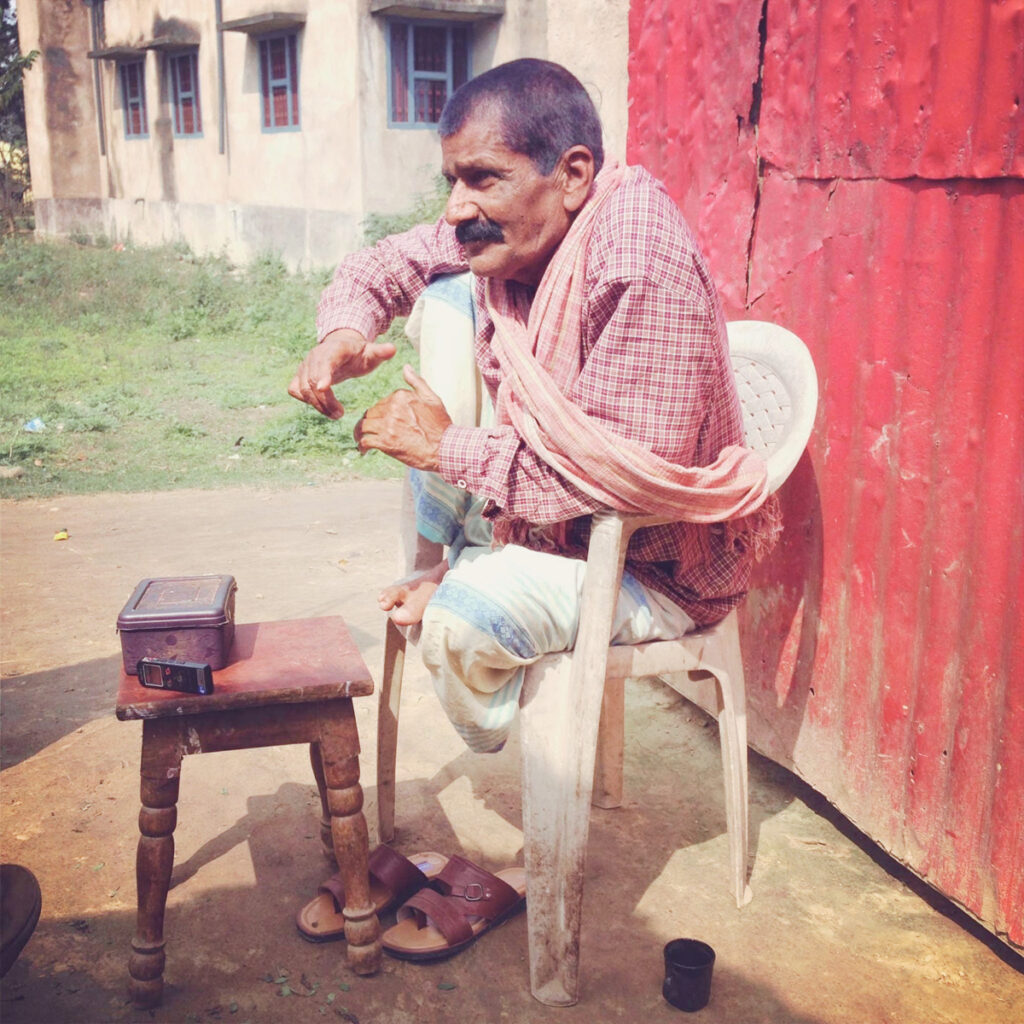
Village moneylender in Bihar, 2012. Photo by Shruti Majumdar.
That was the sandwich. The chief minister embraced Jeevika early and gave it sustained political protection from the top. It attracted the best young Indian Administrative Service (IAS) officers, professional staff and a network of facilitators to run the middle. And the didis themselves — the women of the SHGs, federated upward — became the organized bottom.
There was some resistance, of course, and there still is. But over the four years we came to read the backlash differently: it is not a sign that things are failing; it is what change looks like when power and identity are being renegotiated.
We also came to think differently about culture. It is not a set of cognitive biases to be nudged away. Culture can be changed, but it is a slow process; change requires protection from local elites and political interference.
Nothing about Jeevika looks like a radically simplified intervention. Almost everything about it is process-policy — no single outcome target, no lever pulled from the capital, just a rearrangement of when, how and how often people meet, who meets whom, who holds money and who gets to speak. And it produced cultural change in gender relations. Evaluations that revisited the original RCT sample almost 10 years later found that the program had caused 126% more low-caste women to run for political office and improved women’s ability to share risk, while radically transforming credit markets in one of the most patriarchal places on earth, on a timescale the standard paradigms would have said was impossible.
Doing by Learning
None of this is easy to do at scale, and much of it is not even easy to measure. That is rather the point, though. Process-policies shift trajectories in unpredictable ways, so evaluating them means watching processes move: how decisions get made, how power relations shift, how narratives and discourse change.
These things do not sit in administrative data and clean survey answers. They require qualitative work and narrative analysis coordinated with quantitative methods in genuinely mixed-method designs, which are not the norm in development economics.
For several years at the World Bank, colleagues and I tried to build this way of working into the machinery of Jeevika and its Tamil Nadu counterpart, through something we called the Social Observatory.
The idea was to move researchers from being overqualified outsiders who fly in whenever a survey needs doing to something like the project’s own think tank, with the aim of improving implementation by creating a culture of doing-by-learning. A team of economists, sociologists, political scientists, public health specialists and data scientists embedded within the project helped build decision-support systems so that staff, from the village level up, could act on good, fast data. (This was instead of yet another management information system nobody paid attention to.)
Qualitative process monitors visited a rotating random sample of villages every quarter and fed what they found back into design. Impact evaluations varied by how the answer would be used — quick impact evals when the project needed an answer soon, long mixed-method ones when it needed to understand outcomes and mechanisms.
The aim was to turn research from a tool for assessment into a tool for implementation. A paper that we originally wrote in 2015, drawing on the qualitative work, was critical of how the project’s second phase was being implemented, showing that the reflexive, co-produced process followed in the first phase was being neglected in the pursuit of higher enrollment numbers. The project responded with a concerted effort to give field staff more room to use their judgment. It improved the management information system and the process-monitoring system, strengthened the feedback loops between them and the facilitators, and created forums where facilitators could learn from and advise one another. The result was that facilitators moved away from an exclusive focus on the number of women enrolled toward a more adaptive and reflexive way of working with each village.
Policy, done this way, becomes constant adaptation rather than a one-shot deal. (Incidentally, this also protects against policy stasis: it kept the program responsive to changing conditions on the ground.)
What Would It Take To Do This?
Now: the honest accounting of such policymaking.
Reflexive policymaking requires very long time horizons. It is a “slow-cooked” way of doing policy, as opposed to the simple, easily scaled McDonaldization that pervades policy work. It requires a certain tolerance for mess, because reversing inequalities in power and agency is a contentious, uncertain business.
But the deepest obstacle to implementation of process-policies is that governments — and quasi-governments like the World Bank and donor agencies — are not set up for process-policies. The logic of bureaucracies, and of the political environments they answer to, pulls toward interventions that produce quick, measurable impact without threatening the status quo. Process-policies fail on all three counts: they are slow, they are hard to measure and they threaten the status quo more or less by definition.
Part of the problem may be how policy professionals are trained. (There are other equally important reasons.) Schools of public policy are generally staffed (with the occasional infusion of a “professor of practice”) by academics trained in economics or another social science discipline. Their knowledge of policy comes almost entirely from bringing academic expertise to implementers who choose to seek their advice, not from being embedded in the world of policy. So the courses that policy schools teach are, for the most part, variants of academic economics or political science, subject to the same fads as the academic departments and to the same pathology of belief: that to be a good policymaker you have to be an academically gifted expert immersed in the latest techniques and theories. There are very few courses that teach you how to sit through a village meeting, and only a small minority focus on the nitty-gritty of process issues.8
In practice, there is already some process-policy in place. Almost all policy in any country involves some amount of all four paradigms. Markets do coordinate dispersed knowledge; states do correct market failures; evidence can improve design. My claim is not that reflexive policymaking should replace all other types of policymaking. Rather, it is narrower: the three dominant paradigms would all benefit from more reflexivity. Reflexivity is neglected precisely because it is hard to measure, and in the current policy culture, what is hard to measure gets treated as unserious.
Process-policies mostly come into the world through years of unglamorous effort by activists working at a small scale in social movements and NGOs. Given what is happening to democratic institutions, and to inequality, it is time to bring them into the mainstream of the policy craft.
In concrete terms, every large program should budget for embedded learning. The structure of that learning should not be determined in advance; it should be process-oriented. It also does not suffice to only do randomized trials that give us a measure of outcome at the end of the project cycle.
Donors must also fund the middle tier — the facilitators, the district staff, the connective tissue — instead of mobilizing communities and walking away. Projects should be given time to evolve and adapt rather than be judged on whether they follow a predetermined trajectory of change. And schools of public policy should require — alongside the econometrics sequence — that their graduates actually spend time in the places where they will likely work. None of this is impossible, or even particularly difficult, to do. It is merely beyond current practices.
Whose policy counts? The three dominant paradigms answer, in effect: the market’s, the ministry’s, the expert’s. The people the policy is for appear as consumers, recipients and subjects, respectively; they are not shapers of policy.
There may be a different answer. Policy counts when the people it is meant to serve can shape it, contest it and correct it — when the woman who was dragged out of my focus group in Karnataka, whom I described in my previous essay, has somewhere to take what she knows. Research that does not listen produces papers about a world it has not understood. Policy that does not listen produces programs that are neither tailored to people’s needs nor able to adapt across place and time. Policy that listens can shift the political, social and cultural equilibrium — and that is what makes change last.
Vijayendra Rao is a development economist who combines econometric methods with ethnography. He spent 27 years as a Lead Economist in the Development Research Group at the World Bank and is currently the Roberta Buffett Distinguished Scholar-Practitioner in Residence at Northwestern University and Distinguished University Fellow at National Law School of India University. His interests include gender, culture, participation, deliberative democracy, political economy and innovations in mixed methods. His latest book, “Revolution by Stealth: How Women’s Groups Catalyzed a Cultural Transformation in Bihar” (with Shruti Majumdar and Paromita Sanyal), was published by Cambridge University Press in 2026.
If you have comments on this article or wish to contribute to the discussion, please email letters@indevelopmentmag.com. Responses will be featured in a letters section.
These are “ideal types” and may blur into each other in practice. ↩︎
To quote Thaler and Sunstein, “a policy counts as ‘paternalistic’ if it is selected with the goal of influencing the choices of affected parties in a way that will make those parties better off.” ↩︎
There is a very large (and growing) literature on women’s and caste reservations in India that show that they are — on balance — equalizing both on policy choices and deliberation. This paper summarizes the literature. ↩︎
Decision-making should, as much as is within the realm of feasibility, follow the principle of subsidiarity: “central authorities should perform only those tasks which cannot be performed effectively at a more intermediate or local level.” ↩︎
See the first chapter of Revolution By Stealth for citations and broader discussion on conditions in Bihar in 2006. ↩︎
Women’s SHG programs in India are government-run non-profits that should not be confused with microcredit or microfinance programs. As we document in Revolution by Stealth, group-based credit and savings are just the start, used as an initial incentive to develop a federated community of women — running into the millions — creating women’s social capital that is in turn used as a platform to run all manners of “vertical” interventions including nutrition, health, schooling, food security and income generation. ↩︎
Cheap lifesaving drugs already exist. A better injection device could get them to patients in time.
In the U.S., over 1.5 million people are prescribed an epinephrine autoinjector, such as an EpiPen — a small pen designed to deliver a single dose of adrenaline. People carry it in case of anaphylaxis, a severe allergic reaction to foods, medications, insect stings or other materials that can become fatal within minutes. Treating anaphylaxis, though, has become remarkably simple: pick up an EpiPen, remove the cap, push it against the thigh and hold for a few seconds.
Using one requires no preparation. Inside the pen, a hidden needle deploys into the muscle, delivering 0.3 mg of epinephrine. Epinephrine cues the body’s “fight or flight” response, tightening blood vessels and causing the heart to beat harder and faster. Within minutes, the collapse in blood pressure reverses and the airways relax. The person can breathe again. Anyone can do it; no trained medical professional is needed.
This is new. For most of medical history — and still today across much of the world — treating anaphylaxis has required a trained healthcare worker to carefully draw medication from a glass vial into a syringe, with steady hands, at the correct dose, during a life-threatening emergency. The autoinjector transformed this complex procedure into something almost anyone can perform for anyone, in seconds. This is a remarkable feat of medical engineering.
But the use case for autoinjectors is not limited to anaphylaxis. In wealthy countries, autoinjectors — and similar technologies like reusable pens — are increasingly used for non-urgent, chronic therapies like GLP-1 medications and autoimmune disease treatments. This has drawn considerable commercial investment, resulting in expanded manufacturing capacity and reduced costs per unit.
This additional scale could allow us to return the technology to emergency use, where it could transform patient care in low- and middle-income countries (LMICs).
Where Autoinjectors Began
The autoinjector was not the first attempt to simplify emergency injection. Its predecessor was the syrette, a squeezable tube of medicine — similar to a tube of toothpaste — fitted with a needle. Developed by Squibb around the start of World War II, the syrette was primarily used to deliver morphine to soldiers.
To use one, a soldier broke an inner seal with a wire pin, worked the needle under the skin and squeezed the tube empty. This was an advance over drawing up medicine from a vial into a syringe, but it was still far from ideal. Successful administration relied on a series of fiddly steps being executed rapidly and correctly, no less by a frightened person in the chaos of battle. Imagine squeezing a whole toothpaste tube into your thigh during an emergency!
Seeing this, National Institutes of Health (NIH) cardiologist Stanley Sarnoff sought to create a device that could allow one to inject an antidote in a single motion. In the 1950s, he and his wife founded Rodana Research (later renamed Survival Technology) to build it. A patent he filed in 1953 described the first modern autoinjector concept: a spring-driven hypodermic injector designed so that “a person unskilled” could give an injection “either to himself or to another person.” Loaded with a 2 mg dose of atropine, the device was later commercially marketed as the AtroPen.
The invention soon spread beyond the battlefield. By the early 1960s, NASA was equipping astronauts’ emergency medical kits with autoinjectors to deliver anti-motion-sickness drugs, stimulants and vasoconstrictors for shock. Survival Technology also adapted the device to deliver epinephrine instead of atropine. The underlying challenge was the same: a soldier under chemical attack and a person in anaphylactic shock both needed a drug that worked fast, transported easily and required no training to give. A new glass-cartridge design, developed by one of the company’s engineers, Sheldon Kaplan, became the EpiPen — patented in 1977 and approved by the FDA in 1987.
Originalpatentfor “Hypodermic injection device having means for varying the medicament capacity thereof” submitted by Kaplan et al. on May 14, 1976, Patent 4,031,893.
In parallel, a second family of injection devices — pens — was being developed for routine injections. The key design difference was that users pushed the needle in by hand rather than relying on a spring-loaded mechanism to deploy it. Novo Nordisk built the first pen in 1985 — the NovoPen — allowing people with diabetes to administer insulin daily without having to use a vial and syringe.
Autoinjectors followed pens into non-emergency markets in the 2000s, starting with Abbott’s Humira Pen and Amgen’s SureClick, both for treatment of arthritis. Humira went on to become the highest-grossing pharmaceutical drug of all time, with over $200 billion in cumulative sales. Such a lucrative market made it worthwhile to develop and sell these drugs in higher-cost autoinjector formats. It is unsurprising, then, that between 2000 and 2023, around 40% of FDA-approved injectable biologics1 were delivered by autoinjector, and almost all for chronic maintenance treatment — not emergencies.
The Neglected Applications
In emergency medicine, autoinjectors are most useful when:
There is no oral option for treatment. The drug either isn’t absorbed fast enough by mouth to work, or an oral drug doesn’t exist.
Minutes matter. Timely administration of the treatment has a critical impact on patient outcomes and mortality. This is often linked to the first; if an oral drug isn’t fast enough, it is likely that minutes will matter.
No clinician is in reach. The person best placed to give the treatment is usually a parent, a bystander or the patient themself — not a clinician requiring access to an intravenous (IV) line.
Where all three hold,2 an autoinjector may be the only realistic way to get lifesaving drugs into the patient. Yet despite having been developed more than half a century ago, they are now rarely used in emergency medicine outside of anaphylaxis.
This is because the set of circumstances described above is relatively uncommon in developed countries. Most people have fairly easy access to clinicians; they are a 911 call away. However, it happens far more often in LMICs. Life-threatening injuries are more common, and people are often far from a trained clinician when they strike.
Consider tranexamic acid (TXA) as an example. It is a cheap, off-patent, proven drug that controls bleeding. It is highly effective at reducing deaths from bleeding in two settings: traumatic hemorrhage, or severe blood loss after an injury such as a road traffic accident, and postpartum hemorrhage (PPH), or severe bleeding after childbirth. And it is hardly a new treatment: TXA was discovered in the 1950s by Japanese medical researcher Utako Okamoto and her husband Shosuke Okamoto to treat PPH.
Traumatic hemorrhage is responsible for about 2 million deaths each year and is a leading cause of preventable death, while PPH is the single largest cause of maternal mortality worldwide. The CRASH-2 trial, which followed just over 20,000 trauma patients, found that TXA given within the first hour cut bleeding deaths by roughly a third (RR 0.68). The WOMAN trial, which followed just over 20,000 postpartum hemorrhage patients, found similar results: TXA given within three hours of birth cut deaths due to bleeding by 31%.
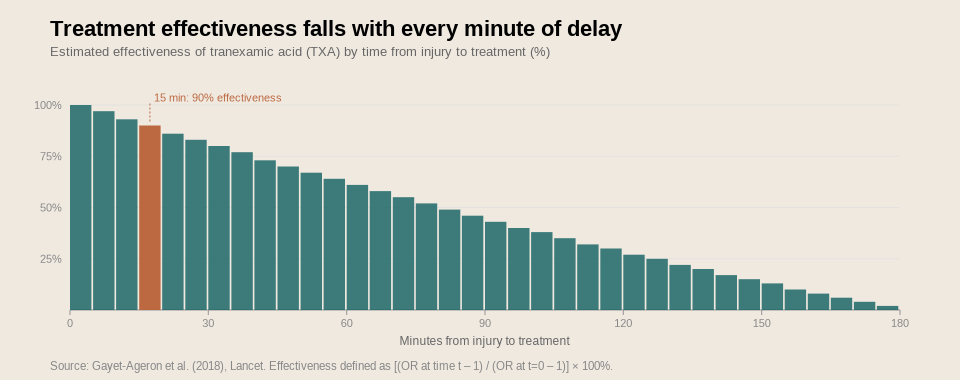
But the benefit is acutely time-sensitive. A pooled analysis of the CRASH-2 and WOMAN trials found the odds of survival were over 70% higher with immediate treatment. The benefit dropped by roughly 10% for every 15 minutes of delay.
TXA is far less effective when administered later.
If a new mother experiences hemorrhage shortly after childbirth in a well-equipped hospital, this is manageable — TXA is often on hand and it only takes a nurse a few moments to insert an IV line. Yet readiness across healthcare facilities varies enormously across LMICs, where the share of facilities able to provide basic emergency obstetric care can range from 2% to 79%. Many women do not give birth in facilities at all: in sub-Saharan Africa, a third of births occur outside a facility, and nearly three in ten women of childbearing age live more than two hours from their nearest hospital. So although TXA was discovered over 50 years ago and is available cheaply as a generic, few of these women receive it — no one present at the birth is trained or equipped to give an intravenous drug.
The benefits of a better way of administering TXA are even more obvious for trauma care. After a car accident, it is not possible to carefully prepare an IV line on the side of the road. Well-stocked ambulances are rare in many LMICs, where patients are often transported by family members, neighbors or private vehicles. Where prehospital services do exist, intravenous TXA is rarely given: in South Africa, only 2.8% of trauma patients at risk of hemorrhage received TXA before reaching a hospital.
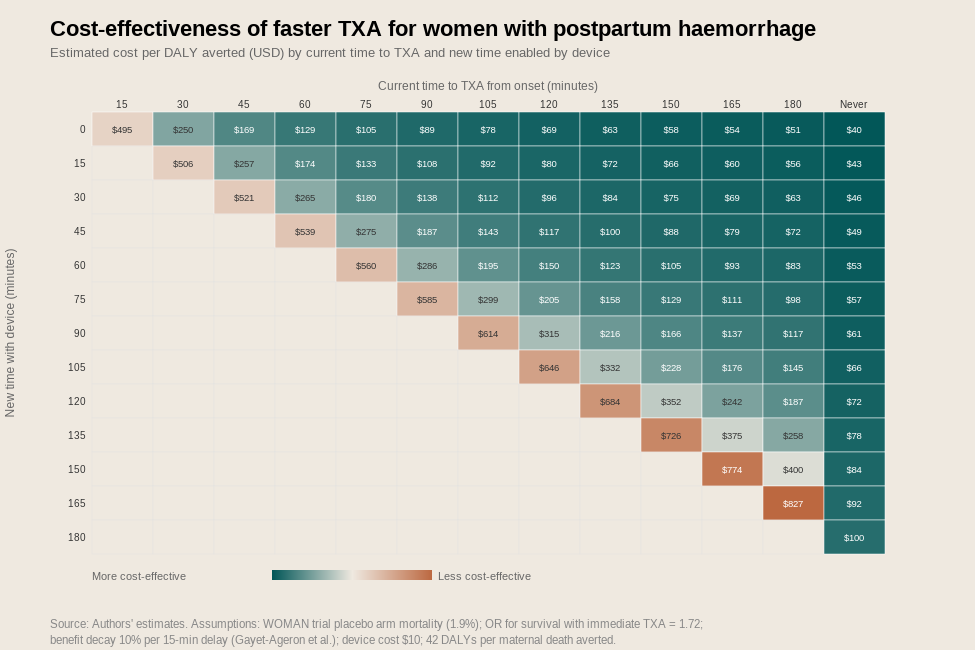
Autoinjectors could close this gap. TXA does not have to be delivered by IV; a trial has found intramuscular TXA reached therapeutic levels in the blood within minutes and achieved bioavailability close to that of intravenous administration. This means it could be given via prefilled syringes in two 5 mL injections, or — with further engineering to concentrate the formulation — as a single autoinjector. Both are technically feasible, and an autoinjector would allow a wider range of people — lower-cadre health workers, birth attendants, family members — to administer it. Such a device could be carried to home births, or given on the spot in facilities where no one is trained to place an IV line or a line is not yet set up — in both scenarios, a potentially lifesaving intervention. From our own back-of-the-envelope estimates, if a TXA autoinjector were stocked in these settings, 3.2 times more women experiencing PPH would receive TXA, and they would receive it 1.5 hours sooner on average. This could avert 20% of deaths from postpartum bleeding at a cost-effectiveness of $155/DALY (disability-adjusted life year).3
Faster administration of TXA could be a highly cost-effective intervention. The difference between the y-axis value and the corresponding x-axis value is the $/DALY of improving time to TXA administration by that difference. For example, it costs $150/DALY to reduce time to administration by an hour (60 minutes, y-axis) for women who currently receive TXA at two hours (120 minutes, x-axis). The “Never” column represents women who currently receive no TXA at all. See model here for assumptions.
Yet because most of the benefit would be in LMICs where procurers have limited purchasing power, firms have few incentives to invest in developing cheap autoinjectors for TXA. After all, they could spend R&D dollars on chronic diseases more common in rich countries,4 where the ROI on spending is likely to be higher.
Development of a TXA autoinjector has begun, but it is unlikely to address these particular issues. Current development is oriented towards trauma care gaps in high-income countries — accidents, mass-casualty events and battlefield injuries. A device built for these buyers may not transfer well to LMICs: It may assume climate-controlled storage in ambulances and stockpiles, use costlier components like automatic needle shields, electronic voice or light guidance or be engineered to withstand battlefield conditions — a level of robustness not needed for an at-home birth. And there is little incentive to strip these features out when high-income procurers are willing to pay for them.
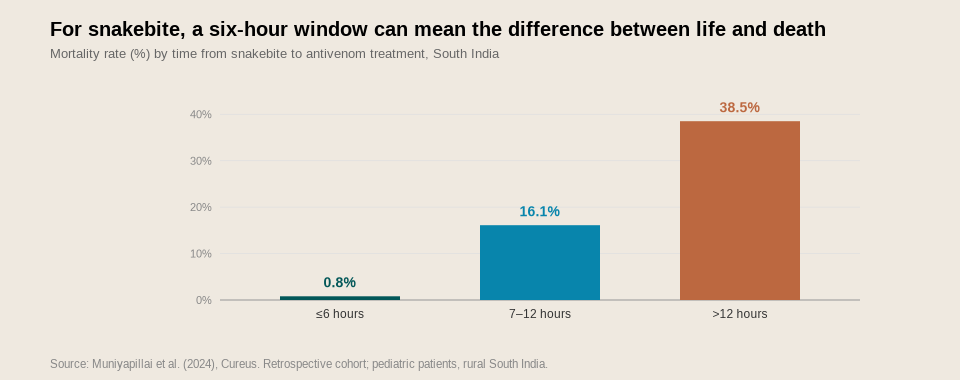
As with anaphylaxis and bleeding, snakebites can be fatal and require immediate treatment with lifesaving antivenom. In one Indian study, mortality was 0.8% when antivenom was given within six hours of a snakebite but increased to 38.5% when treatment was delayed beyond 12. Yet because antivenom is administered intravenously, snakebite victims must get to a clinic before they can receive it.
Antivenom is more effective the sooner it is administered.
This creates two delays in treatment: once in getting to a facility, and again after arriving. Because snakebites occur overwhelmingly in rural areas with long travel times to care, many victims never reach a healthcare facility in time. An estimated 77% of snakebite deaths in India occur outside a hospital. Even when patients reach healthcare facilities, a study in South India found that only 39% got antivenom at the first one they visited. Most were bounced around two or three more facilities before getting a full dose, often because facilities had no one on site trained to give it. These barriers to timely treatment help explain why snakebite has proved unusually challenging to address: although mortality has declined over the past two decades, progress has been too slow to meet 2030 WHO goals.
It has long been assumed that only slow, intravenous administration would work, because antivenom molecules were too large for reliable absorption through muscle. But a 2021 human study, which compared intravenous and intramuscular administration of antivenom, found intramuscular patients fully recovered without needing repeat doses. A 2025 large-animal study offers a mechanism behind this: Intramuscular antivenom neutralized venom more completely and just as fast as, if not faster than, intravenous antivenom did. It may do so partly because it’s absorbed into the lymphatic system — the same route much of the venom itself travels through. The evidence is still preliminary, but if validated further, it could remove the requirement for an IV line.
This suggests that it may be possible to bring snakebite treatment out of the clinic and into the hands of farmers and local emergency responders. While antivenom remains costly, and finding ways to lower prices is important, cheaper vials help little if patients cannot access them in time. The evidence here is less advanced than it is for TXA, but it certainly bears more investigation.
Nor are these the only examples where autoinjectors could save lives. Several other drugs may fit the same profile — they are fast acting, poorly suited to oral dosing and most likely to be needed when there is not a clinician on hand. These include intramuscular artesunate for severe malaria and magnesium sulfate for eclampsia, a leading cause of maternal death. Even atropine — the nerve-gas antidote that inspired the first autoinjector — could find a new purpose. Atropine is also an antidote to organophosphate pesticide poisoning, a major cause of fatal pesticide self-poisoning that accounts for more than 100,000 deaths globally each year. These drugs are already cheap and easily available; what’s missing is an affordable, readily available device that allows them to be administered in the way that is needed.
How?
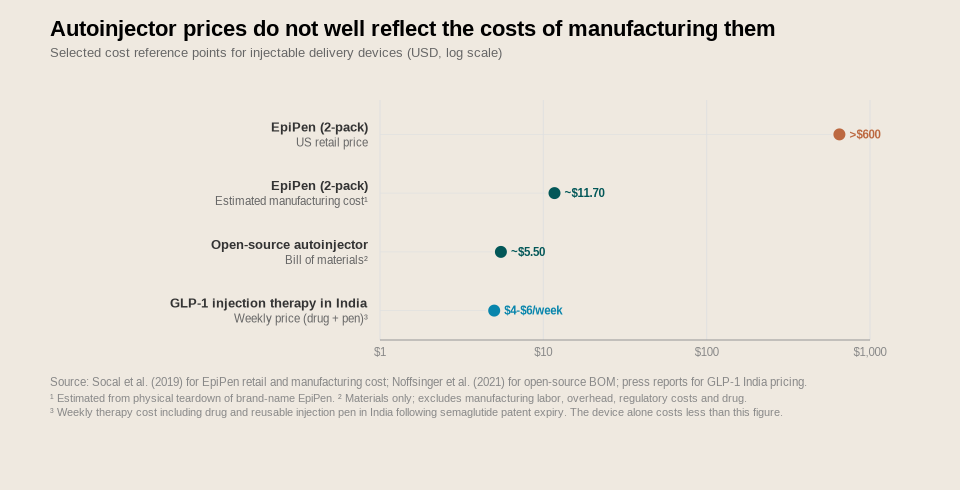
An obvious objection to the use of autoinjectors in LMICs is cost. A two-pack of brand-name EpiPens may cost more than $700. But the billed amount in rich countries is not the same as its manufacturing cost. Engineers who took apart a brand-name EpiPen estimated the manufacturing cost of a two-pack at about $11.70 (2026 dollars). Another analysis put the bill of materials for an open-source, 3D-printed autoinjector at around $5.50,6 with 57% of the cost attributable to a single steel spring. This doesn’t include all costs — shipping, medication, R&D — but it is suggestive that significant cost reductions are possible.
Indeed, we are already seeing monumental cost reductions in the self-administered injections industry.7 When Novo Nordisk’s semaglutide patent expired in India in early 2026, multiple manufacturers launched generics within months. While list prices for Mounjaro and Wegovy exceed $1,000 per month in the U.S., weekly GLP-1 injections in India can be obtained for a fraction of that cost — some therapies delivered through reusable pens are priced at about $4-68 per week. If the all-in cost of therapy is $24 per month, clearly the pen costs less than this.
The manufacturing cost of an autoinjector is much lower than the retail price.
As demand for GLP-1 medicines increases, production capacity and sophistication will increase too. Novo Nordisk has committed more than $23 billion to expand production capacity.9Ypsomed, another major manufacturer of autoinjectors, is investing nearly half a billion Swiss francs to increase its annual production capacity by up to 500 million pens and autoinjectors.
While some of this investment is for reusable pens rather than autoinjectors, both are built by the same industry — firms like Ypsomed manufacture both, using shared components and fill-finish lines. Indeed, most growth is happening in the format needed for emergency use cases — immunology biologics and the newer obesity drugs are mostly delivered through single-dose, disposable devices. While these devices may not have the spring mechanism of an EpiPen, they are still vastly faster and easier to use than inserting an IV. Cost savings that widen profit margins could instead be passed on to reduce prices.
All of this means that autoinjectors are likely to become increasingly cheap and easily available.
What’s Still Needed
Despite the advances in manufacturing making cheap, easily available autoinjectors a possibility, it is not inevitable that they will be used to save tens of thousands of lives. In fact, far from it.
Why is this the case? We are not missing the drugs themselves — they already exist, and many are decades old and off-patent. What’s missing is a market large enough to pull research and development toward a delivery device suitable for LMICs.
Right now, autoinjector R&D is geared towards rich-world markets, which combine a greater willingness and ability to pay with lower barriers to entry. Indeed, autoinjectors accounted for around $160 billion in drug sales in 2024,10 and autoinjectors are the dominant delivery platform in immunology, the second largest therapeutic market. Profit margins are relatively high for these drugs.
Markets in LMICs are very different. Though the overall market size is potentially large, selling products there requires navigating many different approval systems with limited commercial return on investment. The profit per device would be much lower than that earned on, for instance, the Humira Pen. As a result, development for these settings is far from the minds of R&D departments at pharmaceutical companies, who see a simple equation of costs greater than expected returns. This is despite the tremendous potential for impact in these settings — the DALY burden from maternal hemorrhage and road injuries is over 50 million annually in LMICs.11
For autoinjectors containing TXA, antivenom and other medicines to be developed for LMICs, this equation must be rebalanced; otherwise, “technically plausible” is where the technology is likely to remain.
Philanthropic capital could be used to ease this transition. There are several ways such capital could engage.
One would need to begin by establishing the groundwork. This includes identifying the high-burden indications where an autoinjector would be cost-effective and building the evidence base for them. This could include funding clinical trials to advance promising candidates, commissioning health technology assessments to make the procurement argument or developing demand forecasts to give investment certainty to firms and manufacturers.
From there, the right market-shaping approach is trickier. Getting a device into a user’s hands is an end-to-end process: proving the safety and efficacy of intramuscular delivery, engineering a device that is robust, heat stable and cheap enough for LMIC conditions, taking it through licensing and regulation, coordinating with manufacturers, getting onto treatment guidelines, establishing procurement channels, training health workers and building trust in the communities that would use it. When these steps are profitable, they are normally incentivized and coordinated by the forces of the free market. Where they are not, there are two broad approaches.
The first is to coordinate the chain itself: Choose a firm or product and fund each step directly, through grants, contracts, milestone payments and procurement commitments. There is precedent for this: PATH’s Uniject — a prefilled, single-dose, auto-disable device — was developed in the 1980s and 1990s through a public-private partnership. The device has enabled traditional birth attendants to immunize pregnant women against tetanus, carry hepatitis B vaccines to rural births and administer oxytocin to women at home right after delivery. Uniject itself cannot hold enough volume for even a concentrated TXA formulation, but the model behind it could be repurposed — today with partners such as the Drugs for Neglected Diseases initiative (DNDi), Unitaid, MedAccess or PATH again. The model is demanding, though, which partly explains why no organization has repeated it for autoinjectors: The funder carries the coordination, and the risk of backing the wrong firm or design.
The second is for a funder to try and recreate the forces of a profitable, free market themself through mechanisms like advance market commitments (AMCs). An AMC is a binding promise to buy a product that meets a set specification, at a set price, from whichever firm delivers it. The funder picks no firm, funds no individual step and does not pay out any money if the product is not delivered to users. Instead, firms organize themselves (as they do in high-income, profitable markets) to carry out the R&D, regulatory work and manufacturing, all in competition for the committed purchase. While more costly than other mechanisms, an AMC for a low-cost antivenom or TXA autoinjector could give firms a reason to build one while shielding funders from downside risk if the product turns out to be ineffective.
Regardless of the market-shaping mechanism used, it is important to not let opportunities to cost-effectively save lives pass us by. Autoinjectors were invented to expand lifesaving medical access; we should continue to look for ways to use them to do so. From battlefields in France in the 1940s to rural Nigeria today, they should be used to make it easier to treat urgent medical issues.
Akhil Bansal is a practicing physician in the UK’s National Health Service, and a global health researcher. He is a fellow at both the Center for Global Development and at Renaissance Philanthropy. Georgia Bradley is a researcher at Dartmouth College. Both Akhil and Georgia are part of the Market Shaping Accelerator, a joint initiative of the Center for Global Development, the University of Chicago, and Dartmouth College.
If you have comments on this article, or wish to contribute to the discussion, please email them to letters@indevelopmentmag.com. Responses will be featured in a letters section.
There is a fourth condition, which is that the dose of medication needed is larger than a milliliter. This prohibits the use of existing, prefilled syringe mechanisms like Uniject. ↩︎
Compared to the standard of care, in which some women in these settings get referred to facilities and receive TXA. For our rough back-of-the-envelope calculation and assumptions, see here. We value the price of an autoinjector at $10/dose. ↩︎
For instance, immunology, oncologics and antidiabetics therapies ↩︎
These are preferred to targeted antivenoms, which are often impractical. This is because snakes are rarely brought in to hospitals with the victim and the differences in clinical syndromes separating one snake from another are nuanced and not well known. ↩︎
The original estimate of CA$6.83 (reported in 2023) was converted to U.S. dollars using the 2023 CAD/USD exchange rate and inflation-adjusted to 2026 dollars. ↩︎
Including pens, prefilled syringes and autoinjectors. ↩︎
Semaglyn by Zydus has a 15 mg reusable pen for 2,200Rs/month; at the maximum dose of 2 mg/week, this is 550Rs/week, or $5.70. Semasize by Alkem is 450Rs/week, or $4.67/week. ↩︎
Including acquisitions; see Novo Holdings’ 2024 acquisition of three Catalent manufacturing sites ($11.7 billion) and 2024 plans for DKK 80 billion into expanding own API production capacity ($12.2 billion) ↩︎
Total, global therapeutic drug sales for autoinjectors in immunology, antidiabetics, anti-obesity meds and respiratory agents were approximately $95B-105B, $30B, $22B and $8B. ↩︎
Coming to 47,192,584 DALYs due to road injuries and 2,979,097 DALYs due to maternal hemorrhage as of 2023, global burden of disease across low socio-demographic index (SDI), low-middle SDI and middle SDI. ↩︎
In 1995, seven in 10 Nepalis lived in extreme poverty. By 2022, fewer than one in 40 did.
I. A Remarkable Story of Extreme Poverty Reduction in Nepal
Over 1995-2022, Nepal lifted 2.5% of its population from extreme poverty each year. Compared to the giants of extreme poverty reduction — China, Indonesia, Vietnam, Bangladesh, and India — Nepal’s pace is matched only by China. The extreme poverty rate in Nepal now is lower than in the considerably richer Indonesia, India, and Bangladesh.
Nepal’s journey out of extreme poverty also looked very different from that of these other countries. These countries — responsible for the global decline of extreme poverty from 43% in 1990 to 10% in 2025 — did it through sustained growth, foreign direct investment, export expansion, and industrialization. Nepal had almost none of that:
Real GDP per capita grew by 8% annually in China and by over 4% in Vietnam, India, and Bangladesh. Nepal grew by just 3.1% on average.
Foreign direct investment was important in Vietnam and China, averaging 5.4% and 3% of GDP, respectively; in Nepal, FDI averaged just 0.2%.
Nepal’s growth rate was slower than peer countries and it had low FDI.
Exports as a share of GDP soared in Vietnam and increased steadily in China, India and Bangladesh until the 2000s. In Nepal, exports fell from a high of 25% in the mid-1990s to below 10% today.
Manufacturing-led industrialization flourished in Bangladesh and Vietnam and remained strong in China and Indonesia over this period. In Nepal, industry’s share of GDP fell from about 20% in the mid-1990s to about 10% today.
Large-scale safety net programs targeting the poor were key in Indonesia and Bangladesh. In Nepal, such programs were not scaled and sustained.
Nepal has had little industrial or export growth, but remittances have grown substantially.
By nearly every conventional measure, Nepal moved backwards, except for one: its poverty rate fell.
So, what happened? Large-scale migration!
Beginning around 2001, Nepali workers began leaving for the Gulf States and Malaysia in substantial numbers. The share of Nepalis living abroad doubled from 3.3% to 6.9% between 2001 and 2011, where it has remained since. Remittances, which averaged only around 1.5% of GDP before 2001, rose sharply to roughly a quarter of GDP since 2009.1
Nepal’s escape from extreme poverty was built not on factories or foreign investment but on the export of labor. Is this replicable elsewhere? Maybe.
II. The Spectacular Rise in Gulf and Malaysia Migration
Historically, India was the predominant destination for Nepali migrants. Somewhat unusually, Nepal maintains an open border with India, which has facilitated the movement of workers between the two countries. As a result, international migrants accounted for about 3% of Nepal’s population between 1960 and 2001, with India remaining the destination of over 77% of Nepali migrants. This migration was largely relatively local, mostly from western Nepal to nearby Indian cities.
By 2011, Nepal’s migration map had changed dramatically. Although 2.5% of Nepal’s population still lived in India, migration elsewhere had expanded dramatically. Six in 10 migrants from Nepal lived outside India by 2011, with the share increasing to two out of three migrants by 2021. The shift was driven by rising migration to the Persian Gulf — especially Qatar, the United Arab Emirates, and Saudi Arabia — and to Malaysia, which together accounted for half of all Nepali migrants by 2011.
Far more Nepalis migrate to the Gulf today than did 25 years ago.
Although the overall migration rate remained broadly unchanged between 2011 and 2021, destinations continued to diversify. The share of Nepali migrants in developed economies — across North America, Europe, Australia, and parts of Asia — rose to 18% from 3% in 2001 and 8% in 2011, led by Australia, the United States, Japan, the United Kingdom and South Korea.
The geography of migration in Nepal has changed – Gulf migrants come from across Nepal.
The Initial Push and Pull
The sharp rise in migration after 2001 was due to a confluence of push and pull factors. Nepal’s first decade of democracy after 1990 had not delivered the prosperity and economic opportunities many expected. Industrial growth, led by export-oriented carpet manufacturing, rose in the early 1990s but lost momentum very quickly.2
Deprivation and frustration, especially in the poorest parts of the country, helped fuel the Maoist insurgency. By the late 1990s, the insurgency had made large parts of the country unstable. Things continued to escalate after the army was deployed in 2001. The years that followed were the bloodiest of the conflict, until its resolution in 2006.
As conflict and joblessness pushed workers out, rising demand for low- and mid-skilled labor in Malaysia and the Gulf pulled them in. Facing acute labor shortages in manufacturing, plantations, and construction after the 1997-98 financial crisis, Malaysia opened its doors to Nepali workers in 2001. At the same time, an infrastructure and real estate boom across the Gulf countries drove demand for construction, hospitality, and domestic workers from South Asia, including Nepal.3
The System That Made It Persist
Private recruitment agencies mushroomed to match the demand with supply, numbering over 800 by the 2010s. To find prospective workers, these agencies — concentrated largely in Kathmandu and a couple of other cities — relied on tens of thousands of individual agents whose networks permeated villages and communities with little or no prior experience of international migration.
The government took steps to facilitate migration. Decentralizing passport issuance to district offices in the early 2000s meant that prospective migrants no longer had to travel to Kathmandu to obtain one. The Foreign Employment Act of 2007 sought to facilitate labor migration while making it safer, better managed, and more decent. Agencies like the Department of Foreign Employment and the Foreign Employment Board were established to regulate and monitor the sector and improve migrant welfare. Bilateral labor agreements and memoranda of understanding were signed with destination countries to better regulate migration.4
With this, international migration from Nepal took off and kept rising. Nepal issued about 2,000 labor permits for migrant workers in 1995; by 2005, it was issuing more than 140,000. The Maoist conflict ended in 2006 and elections were held in 2008, but outmigration continued to surge. Passport issuance was recentralized during the transition to machine-readable passports from around 2010 to 2015, yet migration kept growing. After a brief slowdown during the COVID-19 pandemic, the numbers rebounded and exceeded pre-pandemic levels, with about 800,000 permits issued annually in recent years.
Labor migration from Nepal has consistently increased over time.
Once networks, recruiters, systems, and expectations were in place, the original triggers mattered less. As long as overseas demand remained strong and promised higher wages, people continued to migrate for work.
The Appeal and Reach of Gulf-Malaysia Migration
Nepali migrants have three tiers of possible destinations — India, Gulf-Malaysia, and developed countries — with different sets of costs, risks, and return.
India offers the lowest-cost, lowest-barrier option, given the open border, proximity, and established migration networks. This makes it accessible to poorer households, but the earnings gains are only modestly higher than in Nepal and job prospects are uncertain.
Higher-income destinations in North America, Europe, and Australia offer greater returns, but high costs and barriers related to visas, documentation, education, and financing keep them out of reach for most households. For many, student migration is the only viable pathway, further raising costs and delaying returns. These destinations are only accessible to the wealthiest Nepalis.
The Gulf countries and Malaysia offer a more attractive option for many households. Earnings are three to four times higher than in Nepal with very little uncertainty. Unlike migrating to India, where workers have to search for a job upon arrival, migrants already have a job lined up in advance before traveling to the Gulf countries or Malaysia. Recruitment agents help take care of passports, documentation, employment contracts, and visas. Although upfront costs of $1,000-2,000 are substantial, the credible prospect of steady overseas income made migration bankable. Many households borrowed to finance migration, and local moneylenders were willing to lend against expected earnings abroad and regular remittances sent to the family left behind. For moneylenders, lending to a migrant with an employment contract in Malaysia, for instance, presumably posed less repayment risk than financing migration to India or a business venture in Nepal due to the uncertainties involved.
Poorer Nepalis migrate to India; richer Nepalis to developed countries.
High labor demand, combined with affordability, made Gulf-Malaysia migration available to a broad segment of Nepali households. More than 2,000 migrants now leave for these destinations each day, from all socioeconomic groups and virtually every part of the country.
The temporary nature of Gulf-Malaysia migration also mattered for remittance flows. With no pathway to residency or citizenship, workers had little incentive to relocate their families or invest abroad for the long term. After covering basic living costs, most earnings flowed back to Nepal as remittances. This combination of scale, accessibility, and remittance intensity transformed the economic landscape of Nepal.
III. The Transformation at Home
The opportunity to work abroad in the Gulf and Malaysia transformed Nepal. But there was no export boom, no large industrial parks, and no major poverty-targeted transfer programs. Instead, transformation began closer to home, with millions of households with family members abroad.
Transformation of the Family
The most immediate channel for impact was the higher earnings abroad. In low- and mid-skilled jobs in the Gulf and Malaysia, Nepali workers could earn three to four times more than at home.5 These transfers raised consumption, helped repay migration loans, kept children in school, improved diets, financed home repairs, and helped families cope with shocks.
Higher incomes also translated into greater investment in children’s education, especially for girls who were lagging behind. With more resources and higher expected returns, families were better able to keep children enrolled and cover education costs. A 10 percentage-point increase in the probability of migration to the Gulf and Malaysia raised child enrollment by 4 percentage points and increased girls’ schooling by 0.26 years, making education one of migration’s most important long-run development channels.
Transformation of the Local Communities
Beyond the immediate household, migration also reshaped local economies. With new income from abroad, families could purchase more things, raising demand for local goods and services. At the same time, the departure of young men tightened the labor markets, creating opportunities for women and poorer workers that remained.
By 2011, nearly half of Nepal’s around 4,000 villages had at least a quarter of their young men aged 15 to 40 living abroad. A 10 percentage-point increase in village migration rates raised wages for those who stayed behind by 25% and increased labor force participation by about 4 percentage points. This created opportunities even for households without migrants. Participation gains came mainly from women entering non-farm work and men working more in agriculture, while wage gains were strongest in agriculture for both men and women and in non-farm work for women.
Higher remittances increased local demand for shops, transport, restaurants, construction and other services. They also provided households, both migrant and non-migrant, with capital to start or expand businesses to meet the growing demand. In addition, returnees often brought back savings, exposure, and ideas for ventures they could pursue in Nepal.
Overall Impact on Poverty
Together, these effects improved living standards across the board and drastically reduced extreme poverty. Villages with higher migration rates to the Gulf and Malaysia saw larger reductions in poverty. Rising migration rates to these destinations alone explained 40% of Nepal’s poverty reduction between 2001 and 2011.
Where more people migrated to the Gulf, declines in poverty have been more pronounced.
Three factors were critical to this transformation: scale, affordability, and large earnings gains. Migration to India had only the first two, and so did not produce the same poverty impact. By contrast, Gulf-Malaysia migration reshaped local economies within a decade. Household by household and village by village, it became Nepal’s most important engine of poverty reduction.
IV. The Costs of Migration
The impressive poverty reduction story of migration has not been without tradeoffs. Millions of Nepali workers took a gamble: borrowing heavily, trusting recruiting agents to place them in jobs in unfamiliar countries, and spending their prime years away from family. This was not easy, it wasn’t smooth, and it had some important consequences beyond the reduction in poverty.
The Lives of the Migrants
The most salient risk is migrant deaths. Two thousand people leave every day, and about four of those will come back in a coffin, devastating their families. This translates to an annual mortality rate of 0.65 per thousand.6 Is that a high rate? Turns out it’s not. The annual mortality rate for Nepali men of the same age composition as migrants in Nepal is 2.3 per thousand, 3.5 times higher than that of migrants. In fact, the mortality rate of Nepali migrant workers is lower than that of men in Canada (0.8 per thousand) or the United States (1.4 per thousand) with the same age composition.7
While the mortality rate itself is not unusually high, the causes of migrant deaths deserve closer attention. Almost two out of five deaths are officially attributed to “natural causes,” cardiac arrest, or heart attacks; more than one out of five to traffic accidents and suicide. Understanding the specific mechanisms behind these sudden and catastrophic events is essential for prevention. Perhaps, better information, education, and training — particularly on hydration, heat management, stress, and mental health — could help save lives.
Abuse and Exploitation
Abuse and mistreatment are also widely reported, including contract substitution, excessive fees, unpaid or delayed wages, passport confiscation, unsafe worksites, and crowded housing. The same intermediation system that made migration accessible at scale also created space for exploitation. After all, recruitment agents and agencies know a lot more about the actual conditions than the migrants, and they exploit misinformation in their favor.
If other countries wish to emulate Nepal, they must be aware of these risks. Stronger monitoring of recruitment agencies, better enforcement against abusive recruiters and employers, and clearer information for prospective migrants can improve worker welfare. Prospective migrants, especially going abroad for the first time, value practical information: Even basic information on average wages and mortality risks can influence their decisions and behavior.
Changing Social Fabric
Perhaps migration’s greatest non-economic transformation has been its effect on family structure. Migrants are overwhelmingly men, and many spend long stretches of their young and most productive years away from spouses, children, and parents. These absences have consequences.
Migration might lead to greater empowerment and agency for women, especially wives who manage remittances, household budgets, and make farming and business decisions while husbands are away. Women may also make decisions differently, often in ways that favor children’s health and nutrition. This change, if it translates to participatory decision-making when husbands return, could strengthen family welfare and improve women’s well-being. But years of separation can also strain marriages.
Migration has also reshaped family formation. Evidence from a similar context in Bangladesh finds that unmarried men delay marriage and remain for longer in extended households with parents and siblings. The family may also move to cities and the plains. Over time, these private decisions add up to broader changes in household structure, intergenerational support, and rural settlement patterns. The 2021 census already documents population decline in 34 of Nepal’s 77 districts, mostly rural hill and mountain districts.
These changes may also interact with Nepal’s rapid fertility decline and affect sex ratios at birth. The prospect of male migration could further increase the economic value of a son, and accentuate the already strong preference for sons. Extended male absence may further accelerate fertility decline. Together, lower fertility and stronger son preference can intensify pressure to have a son and increase the risk of sex selection at birth. By 2021, Nepal had 112 males born for every 100 females — a ratio comparable to some of the worst-performing Indian states. Migration may not be the only driver, but it could be exacerbating an increasingly worrying trend.
Some are also concerned about the macroeconomic impacts of remittances. Evidence, beyond speculations drawing from increased consumption and wages, is, however, absent.8
V. Path Forward
In many ways, one might have expected Nepal to have seen stagnation, or even a growth in extreme poverty over the last two decades. There was widespread conflict in the 2000s, a major earthquake in 2015, and perennial instability of governments throughout. There were none of the usual indicators of structural transformation — no export growth, no industrialization, no East Asian miracle.
And yet: Extreme poverty is now rare. Nepal’s experience shows that migration can be a powerful driver of poverty reduction. It did not replace the need for growth and job creation at home, but provided sustained high incomes to the masses when domestic opportunities were limited. Millions of Nepalis have benefitted.
Can this model work for other low-income countries? It seems possible other countries may look to Nepal, for two reasons.
First, the development paths followed by China, Vietnam, Bangladesh, India, and Indonesia are becoming harder for today’s low-income countries to replicate. The prospects for growth by focusing on expanding rapid, labor-intensive, export-led industrialization look far worse than they did in the 1990s. Automation, artificial intelligence, protectionism, supply-chain disruptions, and geopolitical uncertainty are all reshaping global production in unpredictable ways. Countries that missed that wave will need other ways to deliver sustained income gains for poor households. Expanding access to better labor markets abroad offers one credible pathway.
Second, demographic divergence across countries has created a stark gap between where jobs are and where workers are. Wealthy, aging economies face growing labor shortages in care, construction, hospitality, and other labor-intensive services.9 Many developing countries, by contrast, have large and growing youth populations but too few jobs.10 Well-managed migration can connect workers where opportunities are scarce with jobs where labor is needed.
No country should build its entire development strategy around a single sector, product, or pathway. Nepal’s experience shows that well-managed labor migration can be a powerful complement to domestic job creation and poverty reduction. For many low-income countries facing limited domestic opportunities, migration may be an area they cannot afford to ignore.
Maheshwor Shrestha is a Senior Economist in the Social Policy unit at the World Bank. He has led policy dialogue and programs on social protection and youth employment across countries in Sub-Saharan Africa, East Asia, and South Asia. His research focuses on migration, labor markets, education, health, and social safety nets in developing countries.
If you have comments on this article, or wish to contribute to the discussion, please email them to letters@indevelopmentmag.com. Responses will be featured in a letters section.
At 24.2%, Nepal ranks fourth among all countries in terms of remittances as a percent of GDP since 2010. Tajikistan, Tonga, and Kyrgyz Republic are the top three countries. ↩︎
At its peak in the early 1990s, the hand-knotted carpet sector employed over 250,000 workers and accounted for two-thirds of all exports. The sector was established by Tibetan refugees and had strong links to markets in Europe. However, starting in the mid-1990s, the sector faced reduced demand from abroad, in part due to concerns around the use of child labor and competition from other countries in the region. ↩︎
Migration to the Gulf countries and Malaysia also increased from countries like Bangladesh, India, and Pakistan over the same period, perhaps in similar or even larger numbers. But relative to the population, Nepal’s outmigration was much higher. By 2024, the expected number of international migrants was 5% of the population in Bangladesh, 1.3% in India, and 2.7% in Pakistan, compared to 8.9% in Nepal. Likewise, the impact of migration and remittance in Nepal is a lot more salient. ↩︎
The first Bilateral Agreement signed was with Qatar in 2005, followed by South Korea and the United Arab Emirates in 2007, and Bahrain in 2008. To date, Nepal has signed agreements with about a dozen destination countries in and beyond the Gulf countries and Malaysia, including South Korea, Japan, and the United Kingdom. ↩︎
Based on average wages in Nepal and reported wages abroad. Rigorous evidence from Bangladesh for migrants in Malaysia finds a similar wage premium. ↩︎
Mortality rate here is calculated based on data from 2009 to 2013. The comparison mortality rate is also around the same time. ↩︎
The comparison here is not meant to be a causal comparison. For instance, migrants are likely to be healthier than non-migrants of the same age and have a lower ex-ante mortality rate. But benchmarking helps move the dialogue beyond the headline numbers to more useful diagnosis and solutions. ↩︎
The typical argument for a potential Dutch disease effect is more complicated in the context of Nepal. Nepal’s exchange rate is pegged to India’s rupee, which significantly dampens the exchange rate appreciation effect. Also, unlike in the context of a typical resource curse setting where a small segment controls the resources and forex inflows, remittance flows to millions of individuals. So, the distortionary political economy impacts of the powerful elite controlling a large export sector is also absent for Nepal. ↩︎
Some estimates suggest that the European Union will need 131 million workers from outside the Union by 2050 to maintain today’s working-age-to-elderly ratio. ↩︎
Manufacturing may no longer be the growth engine it once was. What should governments in low-income countries bet on instead?
For much of the 20th century, manufacturing occupied a unique place in development thinking. After all, it was the engine that had transformed Britain, Germany, the U.S., Japan, South Korea and, more recently, China. Factories solved several development problems at once, by combining rapid productivity growth and the ability to employ millions of workers with little formal education. As people moved from farms to factories, wages rose, exports expanded and a growing middle class started to emerge.1
But today’s manufacturing is different, and many economists no longer believe that this model, which has been the single greatest force lifting people out of poverty, can be replicated. This is not because manufacturing has become unproductive: quite the opposite. Factories have only become more automated and technologically sophisticated. As a result, they do not create as many jobs as they once did. Competing in global markets increasingly requires advanced capabilities, reliable infrastructure and dense supplier networks — the factors that many low-income countries lack and struggle to build. Meanwhile, China has become an extraordinarily efficient competitor in precisely the labor-intensive industries that once acted as the first rung of poorer countries’ industrialization ladder.
This is borne out in the data, which reveals a growing disconnect between manufacturing output and manufacturing employment. Countries can succeed in attracting modern factories, integrating into global value chains and expanding exports, but that no longer seems to generate the broad-based employment growth that characterized earlier episodes of industrialization.
The figure that follows illustrates this fact. It plots the manufacturing shares of total value added and total employment against GDP per capita from 1950 to 2010. It does so separately for two groups of countries, early vs. late starters, defined according to whether and when they graduated from lower-middle- to upper-middle-income status, a threshold of income per capita of $4,000. In early starters, the manufacturing shares of employment and value added were much closer to one another than in later starters.
Manufacturing was a better source of jobs for early industrializers. Source: Francesco Amodio, Pamela Medina and Monica Morlacco, “Monopsony Power and Structural Change,” Mimeo, unpublished (2026). See also Laura Alfaro, Marcela Eslava, Martí Mestieri and Luis Feliz Sáenz, “Jobless Industrialization,” Mimeo, unpublished (2023).
Mexico’s experience since joining NAFTA illustrates this tension. It is now a manufacturing powerhouse that is deeply integrated into North American supply chains. Yet the productivity gains generated inside export-oriented firms have spread far less to the rest of the economy than many had hoped. In Ethiopia — one of the few African countries to have pursued an aggressive industrial development strategy — manufacturing employment has expanded, but increasingly through smaller, less productive firms, as opposed to the kind of large-scale industrial transformation that powered East Asia’s rise.2
Production grew – but jobs stayed relatively flat.
These experiences have led many economists — including Dani Rodrik, who was once one of manufacturing’s most influential champions — to reconsider an idea that had seemed self-evident. If factories no longer absorb labor on the scale they once did, perhaps they should no longer sit at the center of governments’ development strategies. Instead of trying to recreate yesterday’s model, governments should focus on raising productivity where most jobs are, and will be: in retail, transport, hospitality, construction and other labor-absorbing non-tradable services.
The crux of the argument, however, is this: Can targeted interventions in the space of non-tradable services really allow low-income countries to embark on a transformative development path? Can this sector ever absorb large numbers of unskilled workers into better jobs on a scale comparable to manufacturing in the past?
The Race Between Productivity and Demand
The patterns we have seen unfolding in manufacturing over recent decades force us to confront the question of what comes next. Suppose (and it is a big “if”) that a government succeeds in making retail, restaurants, transport and other labor-intensive service sectors more productive. Firms adopt better technologies, improve their management and organize more efficiently. Workers become more productive and earn higher incomes. The question then becomes: Will these sectors continue to generate large numbers of new jobs? Or will they simply provide the same services with fewer workers?
The answer lies in a surprisingly simple piece of arithmetic. Employment in a sector is determined by a race between two forces, productivity (how much each worker can produce) and demand (how much consumers want to buy). If productivity grows faster than demand, firms eventually need fewer workers. If demand grows faster than productivity, employment expands.
This simple intuition helps explain why productivity improvements do not always translate into more and better jobs. Raising productivity increases incomes and living standards, but it does not automatically create jobs on the scale needed for transforming the lives of millions of people. For that to happen, productivity gains must be accompanied by a rapid expansion in demand.
So, where does that demand come from?
Factories Didn’t Just Make Goods: They Created Customers
The underappreciated reason why manufacturing acted as an engine of growth, beyond the well-known story of how it raised productivity inside factories, was that it fostered demand that allowed the rest of the economy to grow alongside them.
The story of industrialization is a story about ordinary workers earning regular wages. As millions of people left low-productivity agricultural work for factory jobs, they became customers — they bought shoes, clothes, cars and furniture, they rented homes, took buses, ate in restaurants, repaired bicycles, visited doctors and sent their children to school. The productivity gains achieved inside factories spread through the incomes factories generated. Every productive factory job created demand for many other activities, in manufacturing itself but also in local services. Manufacturing workers were the customers of other manufacturing firms and workers, all allowing shopkeepers, transport companies, restaurants, repair services and countless other businesses to expand.
This success was built on combining several features in a single package: access to large markets through trade, rapid productivity growth, stable wage employment for workers with relatively little education and broad-based increases in demand. Those elements reinforced one another. Higher productivity supported higher wages. Higher wages expanded domestic demand. Stronger demand created opportunities for new firms and new jobs throughout the economy.
Can Services Create Customers?
Perhaps surprisingly, the answer might be yes. Recent research has shown that productivity improvements in consumer services can generate self-reinforcing growth.3 As workers move into modern service firms, out of more traditional, lower-productivity activities, they earn higher incomes and spend more on other modern services. Restaurants attract more customers as they improve their quality, retailers lower prices and expand their market as they become more efficient. And rising incomes make households willing to purchase services that were previously unaffordable. Through this feedback loop, with productivity improvements generating new demand that in turn supports further productivity growth and employment, services can play the role manufacturing traditionally played.
If these virtuous cycles are strong enough, labor-absorbing services could become a genuine engine of development. But for governments, that begs the question of whether, and how, they can reliably set these mechanisms in motion.
Governments cannot simply legislate “higher productivity in services.” They must choose concrete policies, whether that’s entrepreneurship training, credit subsidies, management consulting or support for new platforms and technologies. Over the past two decades, development economists have evaluated many of these interventions. Some have produced meaningful improvements for particular firms or entrepreneurs, while others have helped modern businesses to grow or adopt better management practices.
Yet the broader picture is more sobering. Training interventions, for instance, have generated only modest average effects.4 The entrepreneurs who benefit most are often those who were already relatively capable. Microfinance programs also increase profits only among businesses that were already the most profitable, while encouraging the entry of new, less profitable businesses.5 Generally, productivity increases among service/retail-type microenterprises have rarely translated into substantial job creation. Many of them have occurred not because their working owners possess untapped entrepreneurial talent but because they lack better employment opportunities.6 Helping some of these firms become more productive is not the same as creating a new engine of mass employment.
This distinction is key. Manufacturing’s historical contribution was that, in raising the productivity of firms, it raised the productivity of ordinary workers, at scale. It took millions of people with limited formal education and placed them in organizations where technology, specialization and scale made them dramatically more productive. That was the foundation on which the broader multiplier was built. There are reasons to believe that, while present, non-tradable services cannot generate virtuous cycles that are sufficiently large, broad and predictable to anchor a national development strategy.
Could artificial intelligence change this? There is little doubt that AI has the potential to make service-sector workers more productive. Think about health or elderly-care workers becoming capable of performing basic diagnostics. But, as with other technologies, whether this will increase the demand for labour depends on whether the gains are sufficiently diffused to generate additional demand. In the case of robots and manufacturing, for instance, evidence shows that adoption reallocates labour from directly replaced tasks towards complementary ones, with muted overall employment effects.7 The impact of AI will similarly depend on whose skills it complements and whose it substitutes for. And then there is the key question of ownership. A substantial share of the resulting surplus is likely to accrue to the owners of models, computing infrastructure, data and complementary capital located outside low-income countries. To the extent that these gains do not translate into higher local incomes, another potential channel of demand and employment generation is weakened.
What Should Governments Bet on Instead?
Imagine that you are the finance minister of a low-income country. After months of negotiations, you have finally persuaded parliament to fund an ambitious economic development program. The budget you’ve been allocated is substantial. The political support for your agenda may not come again. You have one opportunity to place a big long-term bet on your country’s future.
Where do you put the money?
Looking just to the success stories of the past century, perhaps you’d decide on an industrial park, or an export processing zone, or maybe generous incentives to attract manufacturers from abroad.
But if traditional manufacturing no longer works as the primary engine of development, and if labor-absorbing services are unlikely to become one, governments need to think differently about industrial policy. They should not ask which sectors employ the most workers today but start asking a different question: Which sectors create opportunities for everyone else? The sectors that matter most may not be creating jobs within themselves but can trigger a chain reaction of investment, production and consumption far beyond their own boundaries.
High-value agriculture is one example. Modern exports of premium blueberries or other soft commodities bear little resemblance to traditional farming. They require sophisticated logistics, quality certification, cold chains, financial services, marketing and increasingly complex supply networks. Their success creates demand for a wide range of activities that lie outside agriculture itself. My own research on Uruguay illustrates this.8 During the 2010s, rising demand from China transformed the country’s beef exports. This export boom also generated substantial gains for domestic suppliers, especially in services. Expanding exporters increasingly needed logistics, transport, finance, professional services, maintenance and countless other inputs, all of which increased demand for those operating outside of the beef sector. In fact, firms that never exported anything themselves were often the largest beneficiaries.
The same logic applies to highly sophisticated manufacturing. Modern pharmaceutical production, for example, may never directly employ millions of workers. But what it can do is stimulate an ecosystem of research, engineering, logistics and specialized suppliers, alongside a host of other complementary activities.
The value of these types of sectors lies in the opportunities they generate elsewhere in the economy — and different sectors can perform this same function. By injecting purchasing power into the domestic economy, they create demand beyond those firms that are directly involved, making new forms of business viable across a variety of sectors.
How To Think About Industrial Policy
When seen through this lens, the core questions ministers should ask of industrial policy are: If this sector succeeds, who earns more? Who supplies it? Who spends more because of it? Who gets hired next?
These shift the focus from sectors to spillovers — from direct employment to indirect opportunity — as a sector’s importance lies not only in the jobs it creates within its own boundaries but in the chain reaction it sets off across the rest of the economy.
Historically, manufacturing combined productivity growth, access to global markets, rising wages and strong domestic linkages in a way that no other activity could match. This combination of factors made it a powerful engine of development. But it was never the factories themselves that were sacred; their importance lay in the functions they performed for the wider economy.
Those functions still matter. The question is whether other sectors can perform them just as well and whether development policy can effectively identify, and support, those high-potential sectors.
So debating whether developing countries can “skip the factory” is the wrong place to start. The world has changed. Labor-intensive manufacturing is no longer the reliable escalator it once was, and governments shouldn’t spend the next 20 years betting solely on yesterday’s model. But development has perhaps never been about choosing between manufacturing, services or agriculture. It has really been about identifying the specific activities capable of setting off a chain reaction, by raising productivity, generating incomes and creating customers, thus opening opportunities for the rest of the economy.
The challenge now, for every country, is to find what can do what factories once did.
Francesco Amodio is a development and labor economist and Professor of Economics and International Development at McGill University. His research studies the private sector in low- and middle-income countries, with a focus on firms, productivity, trade, industrial policy, and labor markets, and on how industrial development can generate economic growth and reduce poverty. He is co-founder and co-director of the MONT² Econ Lab, a joint initiative of McGill University and the Universidad de Montevideo, and is affiliated with BREAD, CEPR, IGC, IZA, and the ROCKWOOL Foundation Berlin.
If you have comments on this article, or wish to contribute to the discussion, please email them to letters@indevelopmentmag.com. Responses will be featured in a letters section.
Francesco Amodio et al., “Industrial Development,” VoxDevLit 22, no. 1 (2026). ↩︎
Xinshen Diao, Mia Ellis, Margaret McMillan and Dani Rodrik, “Africa’s Manufacturing Puzzle: Evidence from Tanzanian and Ethiopian Firms,” The World Bank Economic Review 39, no. 2 (2025): 308-40; Francesco Amodio, Elia Benveniste, Hoang Pham and Marco Sanfilippo, “Industrial Policy and Local Manufacturing,” Mimeo, unpublished (2026). ↩︎
Matthew Schwartzman, “From Street Markets to Shopping Malls: The Modern Service Multiplier,” Mimeo, unpublished (2026). ↩︎
David McKenzie et al., “Training Entrepreneurs,” VoxDevLit 1, no. 4 (2025). ↩︎
Abhijit Banerjee, Esther Duflo, Rachel Glennerster and Cynthia Kinnan, “The Miracle of Microfinance? Evidence from a Randomized Evaluation,” American Economic Journal: Applied Economics 7, no. 1 (2015): 22-53. ↩︎
Kevin Donovan, Will Jianyu Lu and Todd Schoellman, “Labor Market Dynamics and Development,” Quarterly Journal of Economics 138, no. 4 (2023): 2287-2325; Emily Breza and Supreet Kaur, “Labor Markets in Developing Countries,” Annual Review of Economics 17 (2025): 747-76. ↩︎
Rodimiro Rodrigo, “Robot Adoption, Organizational Capital, and the Productivity Paradox,” unpublished manuscript (2022); Gustavo de Souza and Haishi Li (2025), “Robots, Tools, and Jobs: Evidence from Brazilian Labor Markets,” Federal Reserve Bank of Chicago Working Paper (2025): 2023-42. ↩︎
Francesco Amodio, Giorgio Chiovelli and Serafín Frache, “DP20078 Beefing Up the Service Sector: Commodity Export Booms and Production Network Spillovers,” CEPR Discussion Paper No. 20078 (CEPR Press, 2025). ↩︎
Michael Kremer has recently been named the new Chief Economist of the World Bank. On this occasion, we are rerunning this conversation between him and Timothy Ogden in which Kremer discusses his approach to economics, preceded by reflections from Timothy on what has changed in development in the decade since the original conversation.
Tim: The interview reprinted here is an edited version of a series of conversations that began at the end of 2014 and continued well into 2015. All of those conversations were long before a Nobel Prize (yes, yes, I know), the gutting of USAID, DFID and much of the official development assistance world, and, of course, before Kremer would have been considered for, much less appointed, Chief Economist at the World Bank. Perhaps the most jarring part of reading this interview again more than a decade later is how much value Michael put on building up infrastructure that would allow for the use of evidence in policy, when so much of that infrastructure is now destroyed or faces a highly uncertain future.
It’s impossible for me now not to look at this interview, and the current state of international development aid and infrastructure, through the lens of Kremer’s O-Ring Theory. You can read Michael’s defense of RCTs against critics as flowing from the need to painstakingly investigate each crack and bottleneck in the development process and assess whether relieving this or that constraint will flow through to outcomes. But now we can also see how fragile the production chains of building and applying evidence in development turned out to be!
A decade ago I would probably have been more amused by, as opposed to inured to, the irony of the present situation: the context of the interview (and the book as a whole) was an “upstart” group of economists, NGOs and funders pushing against World Bank (among others) orthodoxy centering macroeconomic concerns and pointing toward measurable, implementable interventions like deworming, teaching at the right level, delivering bednets, or cash transfers to the poorest. It worked! AMCs, GiveDirectly, GiveWell, Deworm the World all can be tied to the work of those upstarts. Now as we see a cyclical return of industrial and energy policy to the top of global development agendas, one of those former “upstarts” is taking the post of Chief Economist.
Still, my re-reading gives me some optimism. The key concerns in development policy that Michael describes in the interview—the importance of evidence, of getting incentives right, of innovation, of building institutions, of creating space to scale while recognizing that scale has its own unique challenges—could hardly be more important now. The need to confront uncertain new challenges while old challenges stubbornly linger (despite progress), the ability to combine theory and evidence, to apply judgment to resource allocation while thinking about longer-term and second- and third-order effects, to be realistic about what can be changed while being ambitious about what needs to change, all of these are desperately needed. Michael Kremer has been thinking about them, and doing something about them, for a long time.
Tim: What was on your mind when you started doing randomized evaluations in Kenya? Why were you thinking about randomization and what impact did you think it would have at the time?
Michael: In the early 1990s, academic economists were paying increased attention to the issue of how to get reliable econometric identification. In other words, how to separate out the causal impact of a specific policy or factor from potential confounding factors. For example, researchers were using instrumental variables techniques.
I had gone on vacation to the rural community in Kenya where I had lived and taught high school after college and was speaking to Paul Lipeyah, a Kenyan friend of mine. He had gotten a job with an NGO and told me he needed to pick seven schools for a new child sponsorship program. It occurred to me that maybe it would be possible to choose 14 schools and randomize across them to evaluate the causal impact of the program. My friend took the idea to his boss [Chip Bury of International Child Support Africa] and they decided to go for it.2
Based on this initial work, it became clear to me that randomization could be made a practical tool for development economists, and that collaborations between researchers and NGOs could make it possible to test a variety of different approaches. Randomization was not just for very large-scale, multimillion-dollar evaluations of government programs with research questions determined by the government, but could be implemented through collaborations between academics and NGOs. It could shed light not just on child sponsorship programs but on broader questions. Within education, for example, it could shed light on drivers of human capital acquisition. How much of the poor learning outcomes in developing countries was the result of low levels of resources in schools, for example? What if we could use the fact that NGOs were putting large amounts of funding into some schools and not others, to try to understand whether low learning levels were due to lack of inputs, or whether it was due to teacher training, or poor child health or any number of other possible causes? It soon became clear that many important questions in development economics could be answered this way.
Getting involved in programs on the ground and tying one’s hands by using randomized evaluations forces researchers to confront realities of human behavior, even if they don’t correspond to our models. This can lead to the development of better models over time. When Ted Miguel and I did an evaluation of the deworming program of ICS, we found that deworming provided very substantial benefits—eventually leading to increased productivity in the labor force.3 But despite these benefits, demand for deworming pills fell away sharply when the NGO imposed even a small cost-sharing requirement. A series of RCTs later confirmed a high sensitivity of demand for non-acute health technologies with price.4 This accumulation of evidence helped us to refine our theories of health demand, showing that the human capital theory of investment in health needed to be adjusted. There’s been a very productive interaction between RCTs in development and behavioral economics. This series of results has also had an important impact on policy. The World Bank had been an important advocate of user fees for health, but the most recent World Development Report on behavioral economics signaled an important reversal, making the point that fees can deter usage more than might be expected under a rational model.5
Tim: I’m interested in the ideas that were circulating around you when you started working on field experiments. Was that the critiques of IV and looking for better identification? Were you thinking about lab experiments from Kahneman and others? Or the large-scale experiments in the US?
Michael: In 1994 when I started the work in Kenya, I was very much influenced by the movement for better identification in labor economics and public finance, but not by lab experiments. I see these traditions as independent, although there is now some convergence of the lab experiment and field experiment traditions. For instance, Nava Ashraf’s work combines elements of each in interesting ways.
I also was not reacting to the critics of instrumental variables. Indeed, I think those working on instrumental variables and those of us working on RCTs were motivated by the same impulse, the concern that a lot of empirical work in economics at the time was potentially subject to confounders and required a lot of fairly strong assumptions. That being said, it’s not like IV makes all the problems disappear, and neither does an RCT. I don’t think anybody thinks that RCTs are magical, but they are a really useful tool for getting at causal impact. So I would say I was trying to get at causal impact in a way that was part of a broader movement in the economics profession to get better identification.
My main impulse was practical—to get more believable answers to real-world questions. I have always been mainly interested in the underlying questions of what policies can address poverty and I realized that RCTs were a tool that could be adapted to help answer this question. I was motivated to make RCTs a more flexible and useful tool.
Tim: What, of the very many efforts you’ve been involved in—helping begin the RCT movement, Advance Market Commitments, Deworm the World, Development Innovation Ventures, the Global Innovation Fund—are you most proud of? What do you think will have had the largest impact looking back 20 years from now?
Michael: I see all these initiatives as very closely related. Advance Market Commitments are about finding new ways to promote innovation for development. The others are also about innovation for development. Demonstrating that RCTs could be done, working out the practicalities for how to do this work, training others in the technique, raising funding for others to do it, and helping governments and others use the results in developing their policies are all part of a package. Of course, DIV and GIF support not just RCTs but innovations in development more broadly.
People often underestimate the huge amount of practical R&D that went into finding ways to make it feasible to run randomized evaluations that answer both practical and important theoretical questions in developing countries. The field experiments in the US6 were being done with budgets of $40 million dollars or more. Such evaluations can clearly be very important, as the example of PROGRESA7 demonstrates.8 And by the way, as far as I know, PROGRESA, even though it was going on around the same time I was working on those first randomized evaluations, was also something that was separate. I don’t think they knew what I was doing and I don’t think I knew what they were doing. The initial randomized evaluations with ICS in Kenya were done on very small budgets, and we had to work things out from scratch. Working on small budgets in developing countries led to a lot of innovation about how to maximize power from limited samples, how to measure outcomes, and how to randomize. Another difference is that we were working with NGOs, as opposed to the large-scale government evaluations done in the US. This was true both in Kenya where I started, and then with Abhijit in India a few years later.
Working with NGOs, as opposed to big government evaluations, opened up the ability to answer a much wider range of questions, because NGOs are more nimble than governments and they’re used to trying different things. They’re used to not being able to serve everyone, so it’s more natural for them to be willing to try randomizing the order of phase-in. I helped set up a long-term partnership with ICS in Kenya, and the work Abhijit and I did with Seva Mandir9 also turned into a long-term partnership. Within those partnerships we were able to test all sorts of different ideas from education, to health, to women’s empowerment, to agriculture. Graduate students were able to come and join those partnerships and explore new ideas, and those graduate students became junior faculty and then senior faculty, transforming the field.
I’m also happy that I have been able to work with policy makers to use these results to inform policy. Sometimes this involves scaling of particular innovations—such as deworming or chlorine dispensers—and sometimes it involves developing more general lessons, such as on the impact of price on use of preventative health products or the importance of matching teaching to children’s current learning level.
It takes a ton of effort to scale. That became very clear in the experience of deworming. We presented our results to policy makers and I think they were very genuinely excited about them. But a Permanent Secretary in a Ministry of Education will have many things to deal with, so sustained engagement and support are needed. In the case of deworming, for instance, we co-founded an NGO, Deworm the World, to provide technical assistance to governments to introduce mass school-based deworming programs. It took a lot of work to get the NGO started and to get some large-scale programs going in Kenya and Bihar. But now Evidence Action, which took over the work of Deworm the World, is successfully supporting national programs in Kenya, Ethiopia, and India. They have already reached 140 million children in the first half of 2015 alone.
From my experience working on scaling up deworming, it became clear that there was a need for more institutional support to scale up the lessons coming out of RCTs. When Raj Shah became USAID Administrator and asked me to get involved, this is what I told him I wanted to work on. He was excited by the idea and suggested that I work with Maura O’Neill, who has a background in entrepreneurship. Together we co-founded Development Innovation Ventures within USAID to finance early-stage piloting of new ideas in development, rigorous testing of those ideas, and scaling of those that proved most successful. DIV has funded a lot of RCTs around the world and has helped organizations scale those that work. This is really quite a different model to much of development aid. Instead of aid agencies making top-down decisions about what to invest in and then issuing calls for proposals to implement the vision, this approach involves an open call for innovative ideas, provides resources to support rigorous testing, and then makes further support conditional on results. The DIV approach has influenced the creation of related funds in Peru and Tamil Nadu. DFID was interested in what we were doing, and so over the past few years I have been involved in setting up a new international venture, the Global Innovation Fund, which is supported by the US, the UK, Sweden, Australia, and the Omidyar Network. We just launched it this year, and I am very excited about it.
The modern movement for RCTs in development economics often gets put in the evaluation category, but in fact the movement is about innovation, as well as evaluation. It’s a dynamic process of learning about a context through painstaking on-the-ground work, trying out different approaches, collecting good data with good causal identification, finding out that results do not fit pre-conceived theoretical ideas, working on a better theoretical understanding that fits the facts on the ground, and developing new ideas and approaches based on theory and then testing the new approaches. The idea for DIV and GIF is very much about innovation, so if you need support to pilot your idea before you’re ready to rigorously evaluate impact, DIV and GIF will both pay for that. Then they’ll pay for a rigorous impact evaluation, and if it works, they also go on to the next stage, which is trying to help transition innovations to scale.
So I see getting the modern movement of randomized evaluations started, showing they were possible, working with NGOs, working to try to scale successful development approaches like deworming, drawing out lessons like the sensitivity of preventive healthcare to fees, and then trying to build institutions to keep doing these things as a package that I hope will have lots of impact.
Tim: There’s an implicit theory of change there about the problem being the lack of institutions to generate and use evidence.
Michael: I think that’s right. You can see a lot of what I have worked on as creating an institutional framework to allow ideas in development to be rigorously tested and scaled. Even my early work in Kenya was building the local infrastructure to allow people to run high-quality field experiments—from trained enumerators to systems people could run grants through. Many others have helped set up that infrastructure too and the world has come a long way in the last 20 years. There’s J-PAL, there’s IPA, there’s 3ie, there’s the SIEF program at the World Bank, there’s DIME, so tremendous progress has been made.
Tim: There’s a bit of irony in the “institutions matter” critique that RCTs are paying attention to things that are too small, but the movement has created institutions.
Michael: RCTs can’t be used to answer every issue, but they can shed light on many issues.
Deworming may seem like a small question but evaluations of deworming shed light on the interrelation of health and education, people’s sensitivity to small copays for non-acute health, responsiveness of behavior to health information, and information flow through social networks. It also helped shed light on methodological issues about measuring externalities.
There are now many good RCTs on political economy questions. Ben Olken has done a lot of good work on corruption using RCTs10 and there is a lot of work on making bureaucracies more responsive.11
Some of my work on education that initially started as an evaluation of a textbook program wound up being about institutions. As I mentioned earlier, one of the great things about randomized evaluations is that it forces researchers to get very in touch with the reality of what’s on the ground. Academics are not just sitting around theorizing about the challenges of development; they are getting their hands dirty. Very often in that process they realize their theories are wrong, and they come up with new theories. And then when you test those theories with an RCT, you are often surprised by the result. There is no room to tweak your result to fit your preconceived ideas, it is what it is. RCTs force you to confront reality.
I had taught in a school in Kenya, and seeing how few resources the schools had made me think it must be good to have more resources, including more textbooks. But we found that textbooks only improved test scores for those who were already performing well. That made me think about the issues of fit between the curriculum and where the students currently were.
Textbooks were written at a level far from the level of many students. One of the big lessons from RCTs in education is the mismatch between where curricula are and where teaching is oriented and where the typical student is. There are institutional reasons for that. There are political economy reasons for that. I think we understand a lot more about one of the key institutional problems in education because of randomized evaluations. In that case it didn’t start out with an analysis of the institutional reasons for the mismatch, but the data brought us to it.
We’ve identified a number of very useful interventions, such as remedial education, to address that problem, but it remains a big political economy problem to get those interventions implemented. Those are useful policies to help address this problem, but we probably also need curricular reform, and that’s a harder task. But there’s no reason why if we do have curricular reform, we can’t understand the impact of that with randomized evaluations.
Some other critiques of RCTs, for example, about whether results from one context will generalize to others, are general points about empirical work, not about randomized evaluations.
Tim: I want to go back to the issue of AMCs that we set aside at the beginning of this discussion. There’s a reasonable argument that AMCs increase the number of vaccines and, combined with GAVI, gets a lot more kids vaccinated—and that one of the most important things to happen in development is keeping a bunch of kids from dying or being permanently handicapped physically or cognitively. How would you compare the potential impact of building institutions to generate evidence, versus “we saved a bunch of kids”?
Michael: Institutions to encourage R&D on health products for the developed world include both public biomedical research funding and intellectual property rights to encourage private sector R&D. The idea of AMCs was to expand the set of tools we had available for encouraging R&D. Intellectual property rights systems create R&D incentives but also involve some static distortions, and those can be quite costly. There can also be some dynamic distortions. I had written a paper on the idea of buying out patents—firms could voluntarily sell their patents to governments, which could put them in the public domain.12 That preserves the dynamic R&D incentives created by intellectual property rights but avoids some of the static distortions associated with intellectual property rights, as well as some of the dynamic distortions, like the incentive to develop “me-too” drugs just to get around the patent, and the disincentives to develop follow-on drugs.
AMCs for vaccines have a lot of the same properties as buying out a patent, but it seemed like they were institutionally and politically easier to do.13 There was a huge amount of work to move from an academic idea to something that could be implemented in policy.14 It was great that was done for the pneumococcus vaccine, and then that vaccine was developed.
I think the biggest potential benefit of AMCs would be to encourage R&D for diseases that are a little more distant. In the case of pneumococcus, there was already a vaccine for the strains that were common in the rich world, but there wasn’t one that covered all of the strains that are relevant to a lot of poorer countries. It was a technological challenge that I don’t want to minimize, but it was less of a technological challenge than developing a completely new vaccine. I haven’t spent time on this for a while, though I am writing an academic paper on vaccines and drugs right now. But, in general, I think there’s scope for institutional innovation to come up with new mechanisms to encourage R&D and to make the products accessible. I hope I’ll go back to doing some work on that at some point.
Tim: Do you think about your role in training either directly or indirectly so many of the people involved in doing randomized evaluations? At the risk of goading you into saying some not very humble things, what’s the counterfactual of a world without Michael Kremer?
Michael: It’s been great to work with some amazing graduate students and co-authors over the years, many of whom are now doing incredible things. One of the great things about setting up the operation at ICS in Busia has been seeing these incredibly talented people who are getting training in top-notch institutions and bringing that training face to face with life in Kenya and generating fantastic ideas.
I think that was very valuable for the students, but it’s also valuable for the world insofar as a lot of those students went on to do great things. I’m very happy about that.
Tim: One version of the impact of the field experiment movement is we’ve transitioned from a situation that, in general, serious economists didn’t go to the field to one where they do. Does that resonate with you?
Michael: The world needs all sorts of research.
We need field researchers, theorists, macroeconomists. There’s fantastic work going on in economic history. I think the idea of spending time in the field and being involved in randomized trials and other fieldwork is great, and that is one very important set of techniques and tools. I’m also open to other approaches. I do think that, in general, it is good for development economists to have spent time living and working in developing countries, but that does not mean that every project should be based on fieldwork.
Timothy Ogden is Managing Director of the Financial Access Initiative, a research initiative exploring how financial services can better meet the needs and improve the lives of poor households. He is the author of Experimental Conversations, a collection of interviews with economists conducting field experiments on poverty alleviation interventions. He also serves on the board of GiveWell and is a senior fellow of the Aspen Institute’s Economic Opportunities Program.
If you have comments on this article, or wish to contribute to the discussion, please email them to letters@indevelopmentmag.com. Responses will be featured in a letters section.
This was published as Glewwe, Paul, Michael Kremer, and Sylvie Moulin. “Many Children Left Behind? Textbooks and Test Scores in Kenya.” American Economic Journal: Applied Economics 1 (1) (2009): 112–35. doi:10.1257/app.1.1.112.. While this work was seminal in launching the RCT movement, the paper was not officially published until 2009, well after many other influential RCT papers were published. ↩︎
Miguel, Edward, and Michael Kremer. “Worms: Identifying Impacts on Education and Health in the Presence of Treatment Externalities.” Econometrica 72 (1) (2004): 159–217. doi:10.1111/j.1468-0262.2004.00481.x. ↩︎
Pascaline Dupas has been involved in much of this work, and some of it is discussed in her interview in Experimental Conversations. J-PAL has an overview of the topic with links to many papers here. ↩︎
See particularly chapter 8: “Health.” In World Development Report 2015: Mind, Society and Behavior. Washington, DC: World Bank, 2015. ↩︎
These US field experiments of federal programs are discussed in the interview with Judy Gueron in Experimental Conversations. ↩︎
PROGRESA is arguably the progenitor of modern conditional cash transfer programs, which provide social welfare payments conditional on recipients taking specific actions like keeping their children in school or getting vaccinations. PROGRESA was evaluated using a randomized trial which exploited the need to roll the program out over the course of several years and found significant impact on many measures of interest. The success of PROGRESA inspired the adoption of CCT programs in many countries around the world. ↩︎
For an overview of the PROGRESA program and its impact, see: Skoufias, Emmanuel, and Bonnie McClafferty. “Is PROGRESA Working? Summary of the results of an evaluation by IFPRI.” FCND Discussion Paper 118. Washington, DC, 2001. http://ebrary.ifpri.org/cdm/ref/collection/p15738coll2/id/77118.↩︎
Seva Mandir is an NGO based in Rajasthan, India. It was involved in a number of the early education RCTs as well as the immunization promotion experiment (discussed in the interview with Esther Duflo and Abhijit Banerjee in Experimental Conversations). ↩︎
This includes work in Indonesia on extortion of truck drivers and on corruption in road building and the gap between perceptions of corruption and actual corruption. For an overview, see Olken and Pande, “Corruption in Developing Countries” Annual Review of Economics (2012), Olken, Benjamin A., and Patrick Barron. “The Simple Economics of Extortion: Evidence from Trucking in Aceh.” Journal of Political Economy 117 (3) (2009): 417–52. doi: 10.1086/599707, Olken, Benjamin A. “Monitoring Corruption: Evidence from a Field Experiment in Indonesia.” Journal of Political Economy 115 (2) (2007): 200–49. doi: 10.1086/517935. ↩︎
See, for instance, Banerjee et al.’s work with the Rajasthan police, and Olken’s work on performance pay for tax collectors in India. ↩︎
Kremer, Michael. “Patent Buyouts: A Mechanism for Encouraging Innovation.” Quarterly Journal of Economics 113 (4) (1998): 1137–67. doi:10.1162/003355398555865. ↩︎
Kremer, Michael, and Rachel Glennerster. Strong Medicine: Creating Incentives for Pharmaceutical Research on Neglected Diseases. Princeton: Princeton University Press, 2004. ↩︎
This included not only the original economics papers, but a book (Strong Medicine) and a working group at the Center for Global Development before an organization was created and funded to manage AMCs. See: Levine, Ruth, Michael Kremer, and Alice Albright. Making Markets for Vaccines: Ideas to Action. Washington, DC: Center for Global Development, 2005. ↩︎
We’re back! We will have new articles for you starting next week.
In the meantime, we have reader responses to our previous pieces. We’d love to publish your reactions as well — please email letters@indevelopmentmag.com. Letters may be edited for clarity and to conform to house style.
My name is Augustino (August) Ting Mayai. I am currently the Director General of the National Bureau of Statistics.
I am grateful for your thoughts, shared in your August 6 article. Hon. Margaret is certainly one of a kind, having experienced her outstanding dedication in 2007, when I paid the bureau a visit as a doctoral student at Wisconsin looking for population data for my dissertation. Margaret and fellow demographer Eliaba Damundu gave their all to ensure I had the data I needed to shine light on South Sudan’s health problems. Indeed, it is people like Margaret and Eliaba who make countries and organizations stand out.
I would also like to note that your article is particularly heartwarming. For about 10 years now, the world hasn’t presented much positivity regarding South Sudan. It is encouraging to see that not everyone has given up on us. It has personally energized me as I now prepare the country for its first census since independence.
Augustino (August) Ting Mayai
Director General of the National Bureau of Statistics, South Sudan
Dear editors,
I’m a bit sad and frustrated to be writing this response. I love the idea of this success story in South Sudan, but I was suspicious at the bold claims that when the author was in South Sudan in 2012, “the data” “was extremely high quality” and that “at first pass, at least, it seemed accurate.” These claims unfortunately seem straightforwardly false. When I looked at the data, it seemed to be of low quality.
Although the author doesn’t make clear what “the data” he discusses refers to, an earlier article which he quotes heavily makes it clear that Margaret was referring to her work on the 2008 census. For instance, he says in that article “the first census in 2008 involved 11,000 data collectors … how could Labanya know if her staff had collected accurate data, if there was nothing to compare it to?” If Dan was referring to other data besides the 2008 census, this should have been made clear.
Regarding the 2008 census:
The article states that “People trusted the data they got; donors, government, NGOs seemed to report government data to me without the subtext of an eye roll.” This ignores a pretty significant incident. The government of South Sudan publicly rejected the census’ population count and claimed the real population figure was 50% higher than in the census.
When I looked at the census data, there were three red flags that the data quality was poor:
The Whipple index looks at how many people end their age with a 0 or a 5. Over 175 is the worst category here, and the 2008 census number was 178.4.
The male to female ratio was 108 men to every 100 women. Given poor access to healthcare and an active conflict, this seems very unlikely.
The 2008 census is incompatible with a 2021 population estimate. In 2021, the population was estimated at 12,444,018. For this to be consistent with the 2008 estimate, the population would have to grow 5% per year, given plausible assumptions about migration and mortality. This also seems unlikely.
Either one or both of these studies are inaccurate.
If this is the primary example of high-quality South Sudanese data, it seems to undermine the article’s point.
Furthermore, the specific impressive statistical methods praised happened well after the author was there in 2012. The High Frequency Survey studies took place from 2015 onwards, and were largely reliant on the 2008 census data (already flagged as inaccurate). The World Bank researchers who say the data was particularly accurate are also the ones who conducted the research.
Lastly, I do not think the positive framing reflects the failed institutions which typify South Sudan. Margaret Labanya stated herself that the South Sudanese government undermined the statistics department and effectively ran them into the ground. She says that “those with political power began to marginalize statistics.”
South Sudan is a failed state, with millions of refugees still outside the country. It is a completely savage dictatorship with some of the worst institutions in the world. Though the article is trying to frame things positively, it still feels a bit disingenuous to go a whole article about South Sudan without even mentioning this situation.
In a huge, extremely poor, low-trust country with failed institutions, sending thousands of poorly supervised, largely green enumerators around the country will not generate very good data, no matter how fantastic Margaret or other leaders might be. Indeed, given the situation, I only have more respect for Margaret Labanya.
She herself doesn’t make the author’s bold claims that the statistics are very good. She talks about doing everything possible to get the best stats possible. She’s also willing to criticize the South Sudanese government, which could well have cost her dearly.
The data she helped generate can be at the same time useful, inform to some extent programs and make a difference to people’s lives while still being pretty inaccurate. I think it is better to be honest about these realities rather than sugarcoat them.
Nick Laing
CEO of OneDayHealth
Response from Dan Honig:
I’m grateful to the critique’s author for taking my piece seriously enough to dig into the evidence behind it. On some factual and presentational matters we do disagree, which I’ll come to below. But I want to begin with what strikes me as the most important point in the response: one on which I think we agree almost completely. Margaret is remarkable.
Indeed, that claim is much closer to the central thrust of my article than the accuracy of South Sudan’s 2008 census.
My interest in this story began with something I observed while working in South Sudan in 2012. In a difficult operating environment, I had the experience (rather than systematic research/evidence, to be clear) of receiving government data that was useful, coherent and treated by the people around me — government officials, donors and NGOs — as sufficiently reliable to inform their work. That surprised me.
Years later, while researching “Mission Driven Bureaucrats,” I encountered Margaret Labanya and began to understand one important part of how a statistical agency in such an environment had been able to perform as well as it did. She is an exemplar of what I call a mission-driven bureaucrat: someone deeply motivated by the purpose of her work, who both exercises judgment herself and helps cultivate commitment among those she manages.
I’m uninterested in defending (and did not mean to assert) the claim that every statistic produced by the National Bureau of Statistics, including the 2008 census, must have been accurate. The claim I intended to make (and if this was ambiguous in the piece, that’s on me, and I appreciate the opportunity to clarify) is: Even in a state facing institutional challenges, there can be pockets of genuinely impressive bureaucratic performance. Understanding the people, management and organizational environments that make those pockets possible is an important — and underexplored — part of understanding state capacity. On this, I suspect the author of the critique and I are much closer to agreement.
The Census, High Frequency Surveys and South Sudanese Data
The critique argues that the performance I discuss could not have happened while I was in South Sudan in 2012, because the High Frequency Survey took place from 2015 onward. There were multiple generations of the High Frequency Survey, the first of which occurred before I was in South Sudan (they did not in fact begin in 2015). And, of course, there were other statistics agency products collecting data between the 2008 census and these surveys. It is simply not true that I observed the bureau in 2012 and then retroactively attributed techniques developed years later to what I had seen.
That said, I think the critique has identified a place where my writing could have been more precise. I cite, after discussing Margaret’s approach to building the organization, the High Frequency Survey as evidence. I intended the claim to describe the surprising capacity of the bureau and the quality of a data product that had undergone rigorous external investigation (which is of course relatively rare). I did not intend to certify every statistic the NBS had ever produced, or to seem to use the High Frequency evidence “for” the 2008 census or any other specific output of the South Sudanese National Bureau of Statistics. I could have been clearer that my general claim was that this was an agency producing generally strong data products.
Let’s turn to that 2008 census, to which the critique devotes substantial attention. Let me be explicit: The 2008 census is not what my description of South Sudanese data in the article principally rests upon. That is why I do not mention the 2008 census at any point in the piece. It is possible some of what I was exposed to in 2012 came from that census; but I don’t know that to be the case, nor do I think that my central claims in the article rest upon the answer to that question.
I agree that some of the statistical claims in the critique do seem to suggest flaws in the 2008 census, and I am happy to concede this. I don’t believe myself to have ever made a claim that contradicts this view, in my In Development piece or anywhere else.
And, as the critique rightly observes, Margaret herself speaks less in terms of statistical perfection than of the extraordinary effort required to generate the best information possible under extremely difficult circumstances.
That, to me, is the important takeaway when we look at South Sudan’s statistical products — including potentially the 2008 census. “Data quality” is not a binary in which a dataset is either perfectly accurate or worthless. That the data was useful for decision-making is the main point for informing how we should think about South Sudanese statistics and for what the lessons of Margaret’s time at the agency are for the world, rather than the technical details of a nearly 20-year-old census. The surprising accomplishment was not creating a perfect statistical system; it was building an institution capable of generating information useful enough that actors relied upon it under circumstances in which doing so was extraordinarily difficult.
The critique says that the positive framing of my article feels “disingenuous” given South Sudan’s wider record of state failure and suggests that in such a poor, low-trust country with weak institutions it is simply very difficult to imagine thousands of enumerators producing very good data. And it is true that South Sudan has faced — and continues to face — political, humanitarian and institutional difficulties.
But as I write in the piece, states are not unitary actors. “Juba,” “Washington” or “London” do not reflect just one thing. Within governments that perform badly overall, some organizations perform well. Within high-performing governments, some organizations perform badly. Within individual agencies, some teams flourish while others fail.
Much of my In Development piece is about evidence that the same basic phenomenon appears all over the world. Government performance varies enormously within countries and even within organizations. Where we find pockets of exceptional performance, we very often find committed public servants, effective managers, meaningful autonomy, strong peer relationships and a sense of connection to purpose.
That matters because much of the state capacity conversation starts somewhere else. We see weak systems and reach for more rules, more monitoring, more compliance systems to make sure mistakes cannot happen. Sometimes those things help. But people are not simply inputs into organizational machinery. Their motivation, judgment and relationships affect what states can and do do.
If we thought more seriously about empowered, mission-driven bureaucrats — and about the organizational conditions that attract them, sustain them and help others become more like them — I believe we could achieve much more in our efforts to strengthen state capacity in developing and developed countries alike.
The post conflates two points. One is uncontroversial: Economists should use more kinds of data. Transcripts and open-ended interviews are evidence, and nothing in the credibility revolution excludes them. The Nick Bloom-John Van Reenen management agenda is built on open-ended interviews. Many of us write text-as-data papers.
The second point is ideological: that distance from subjects invalidates research, that respondents should become co-analysts, that separation is a mere “performance of objectivity.” This idea leads researchers astray. I want to be able to check your findings, not replace verifiability with sympathy. If you write a paper, I will not read it if I know you are in advance determined to tell a given story. I don’t care whom you sympathize with; your sympathy reduces verifiability, and the interest of your research. Yes, separation is an aspiration more than it is always possible. But the moment we give up, and we know what the abstract and title will say before we look at the data, then it is research itself that has become performative.
Luis Garicano
Professor of Public Policy at LSE
Dear editors,
I read Biju Rao’s piece on why economists don’t listen with a lot of interest. It captures well the kinds of things my advisors told me when I started my PhD. I’d spent two years in Vanuatu thinking about small island states, how many people a country really needs to run itself and how to get policymakers to engage with economic analyses. When I took some of these ideas to my supervisor, he said “these are interesting ideas … for a newspaper article. Not an economics journal. Your job is to publish in economics journals.” Another mentor reacted to my suggestions with “this is a good idea for sociology. But remember, we’re economists. Our comparative advantage is doing large-n, we have to leave small-n questions to other disciplines.”
So I have a lot of sympathy for Biju’s perspective on this subject. But his piece left me with more questions than answers:
Should we have disciplinary boundaries at all? Is a field defined by its questions or by its methods? One could interpret Biju’s prescriptions as yet another form of economics imperialism. You could hear sociologists and anthropologists scream, “First you came for our questions, you wrote in your papers that yet-little-is-known-about-x when there is a LOT known about the subject in journals you don’t read, and now you’ll take our methods too?” I generally think comparative advantage is good, epistemic humility is good and we should find a way to reward collaborations between economists and practitioners of other social sciences rather than teach economists to do everything.
Is this nature or nurture? I don’t think we can make mixed-methods masters of people who join economics programs. We know that qualitative work is not just about “listening to people.” It is about knowing enough to make sense of what you’re listening to, to form theories based on what you hear and don’t hear. This is a different skill from quantitative analysis and coding. There are other disciplines that are known for those skills, and the people who are interested in those skills often join those programs.
How is cognitive empathy built? Jeremy Weinstein tells his students: You have to be proximate to the politics you wish to study. Somewhat less charitably, where you live has bearing on whose validation you seek and that then affects what you work on and what methods you use.
If I was passing judgement here, I could say that I hope more social scientists like Biju would move back to India over time, but I know life is not so simple. The Global North has far more capital, amenities and freedoms. To the extent that we need capital to do research, it is important to be legible to that capital, and so really the distance that matters is not the distance between economists and the people they study, but between owners of philanthropic capital and the people they want to benefit.
AI could reshape the pathways to economic growth. Those looking to grow will adapt to that. Predictions of our economic futures should account for both.
Three years ago, workers in Kenya made international headlines for the conditions they experienced while labeling data for OpenAI. These workers spent their days sorting through hate speech, sexual abuse and violent images — some of the most disturbing material on the internet — for around $1.35 an hour. The labels they produced were then used to help train ChatGPT to identify toxic or disallowed content.
In 2023, much of the outrage was focused — rightly — on the working conditions of these data labelers. But revisited in 2026, this story takes on another dark cast.
Amid a new wave of AI anxiety, people have begun to fear that the broader category of IT service jobs may disappear entirely. Under this view, by helping to train ChatGPT, these workers may have inadvertently been helping to automate away the very kind of tradable service work they performed, narrowing Kenya’s path to prosperity.
But how much evidence is there that AI-related displacement has actually begun in developing countries? And how should we forecast what comes next when the workers, firms and countries affected by AI will themselves adapt, improvise and change in response?
Climbing the Growth Ladder
Historically, manufacturing growth has been the path for countries out of poverty. In Japan, South Korea, Taiwan and, most spectacularly, China, the expansion of export manufacturing pulled millions of people from the farms to better-paying jobs in factories. Under the pressure of international competition, East Asian firms quickly converged to the technological frontier.
But, outside of a few bright spots like Vietnam and Bangladesh, developing countries have largely failed to replicate the success of East Asia. In India, the manufacturing share of GDP has never exceeded 20% and has even declined since 2010. In sub-Saharan Africa, manufacturing makes up around 10% of GDP. New analysis suggests that over the past 30 years, manufacturing productivity in the poorest countries has stubbornly remained far below the global frontier.
Enter IT services.
The arrival of cheap broadband across the world made the outsourcing of information technology services viable for Western companies, enabling them to take advantage of cheaper labor in developing countries. In 1999, India deregulated its telecom sector, accelerating the adoption of high-speed internet and allowing new firms like Infosys and Wipro to become highly profitable. A new sector — in India, “business process outsourcing” (BPO) — was born.
For countries struggling to get growth off the ground, BPO seemed like a lifeline. Like the export manufacturing jobs of yore, export services held out the promise of generating significant foreign exchange revenue while also creating a large number of better-paying jobs. In 2021, the World Bank published a report extolling “the promise of services-led development,” highlighting their exposure to “innovation that improves labor productivity.”
Over the past few decades, countries like the Philippines and Brazil have developed sizable IT sectors, exporting billions of dollars of services a year and employing close to 2 million workers apiece.1 But, globally, the clear leader of the pack was India, whose IT services sector employed 5.8 million people and exported $200 billion in 2025:
India is patient zero for any changes to the IT export sector.
The fear of AI replacing human jobs is now ubiquitous. In America, attention has become fixed on the disruption of entry-level jobs in software development and customer service — the proverbial canaries in the coal mine, the work that should (at least in theory) be most easily automatable by AI coding agents. An influential paper by economists Erik Brynjolfsson, Bharat Chandar and Ruyu Chen found that early career workers (22-25-year-olds, in the U.S.) in the most AI-exposed sectors have seen a 19% relative decline in their employment since 2022.
Naturally, attention has started to shift to AI’s implications for the 6.8 billion people who live in low- and middle-income countries. Thus far, AI has not had much of an impact, positive or negative, on the 2.5 billion people who still depend on smallholder farming. In manufacturing, the evidence for impact is also limited, though perhaps AI-induced advances in industrial robotics are coming down the pike. It is in service exports that the threat of AI-related job displacement looms the largest.
The Canaries in the Coal Mine
It has now been four years since the launch of ChatGPT. Agents are able to do much of the work of customer service; indeed, corporate support lines have been increasingly replaced with a ChatGPT or Claude wrapper. So how much is automation already displacing service exports in the developing world?
We can take a page from the recent research on AI-exposed displacement by Brynjolfsson et al. in the United States and look at how employment is evolving for the people we’d expect to be most exposed to AI displacement: entry-level tech workers.2
Perhaps the best available data from any developing country comes from India’s Periodic Labour Force Survey (PLFS), a high-frequency look at trends in employment and wages.3 We can use what economists call a “triple difference” to pinpoint the effect of AI exposure. First, we take employment for young workers (those 15-24 years old) in AI-exposed industries and subtract the trend for older workers (those 25-39) in the same industries. Then we can do the same comparison of young versus old in industries largely insulated from AI. Last, by taking the difference between these two differences, we can isolate the shock to entry-level work in the industries most exposed to AI.
Employment of entry-level IT workers has fallen after the launch of ChatGPT. Analysis of PLFS data by the authors.
The chart above shows this triple difference on employment, with confidence intervals marked by the vertical bars. For the three years before ChatGPT, there was little gap between entry-level and older workers in the most AI-exposed and non-exposed industries. But after 2022 — the year ChatGPT was released to the public — relative employment for the youngest, AI-exposed workers suddenly fell 32%. Relative employment has not recovered since, remaining around 20% below the 2022 baseline in the latest 2025 snapshot.
Employment for other workers has rebounded since 2022, but entry-level IT worker employment remains below trend. Analysis by the authors.
We should be careful about overreading this result. It’s possible that the decline reflects structural forces that were occurring at the same time as the rise of generative AI. For instance, some Indian IT firms overhired during the pandemic and froze graduate hiring in 2023.
The absence of a robust employment recovery — amid rhetoric from the BPO companies themselves about increasing AI adoption — gives a hint that the effect may be real. Incidentally, this echoes the result in the latest revision of the work by Brynjolfsson and his coauthors, where the 19% drawdown in employment for AI-exposed young workers has shown no sign of disappearing.
But we should not take this as a sign that all the jobs are going away. This data is from one sector, in one country, among those workers we expect to be most affected. There is (as yet) no evidence of a generalized downturn across all age categories or AI-exposed sectors. Even this result is barely statistically distinguishable from zero.
How and when can we draw clearer conclusions? It may be longer than we’d like — in most other developing countries, data comes with far more of a lag.
Flying Blind Since Takeoff
“Gentlemen, you have come 60 days too late. The depression is over.” Herbert Hoover, June 19304
In 1930, the Depression was very much not over. But how was Hoover to know? This was before Kuznets’ “National Income” report was presented in 1934, the precursor to modern national income accounts and GDP. It was also before reliable monthly unemployment statistics were available, as the modern household survey did not begin until 1940.
Many of today’s leaders, particularly in low- and middle-income countries, find themselves in a similar position to Hoover in the 1930s — entering a period of economic transformation blind to how their economies are actually changing in real time. India’s PLFS is a remarkable effort, and one for which there is no equivalent in other countries that might be similarly vulnerable to an IT exports shock.
Take the Philippines, another country with a significant service export sector. Their annual survey of business and industry is released more than one year after the period it studies. This makes it nearly useless in analyzing high-frequency labor force changes in response to changes in AI capabilities. It might not be until Fable 8 is released that we can fully disentangle the impact of Fable 5 (and today’s other frontier models) on the Philippines IT sector’s labor force. There simply is no real-time tracking data.5
With the attention and money now flowing to AI economics research, we are likely to be bombarded with similar estimates to our own, from hot-off-the-press working paper abstracts that tell us how AI has displaced some category of worker relative to another or boosted productivity in some company relative to another.
So it will also be tempting to overread the data we do have — to dash off a Twitter thread that launches into the coming employment apocalypse facing India’s young IT workers. But each result is only one piece of the puzzle. This result — and others like it — don’t tell us about overall impacts.
And then, there’s only the small matter of projecting this out into the future. Even if we could perfectly understand economies today, simply extrapolating that out to meet the capabilities of tomorrow’s models could lead us to highly misleading forecasts.
Not-So-Dumb Farmers and the Population Bomb That Wasn’t
Many of the fears about AI’s economic effects arise from projecting the effects of future technologies on a world that looks broadly similar to the one today. But these kinds of extrapolations have a long and checkered history, as we humans tend to be far more adaptable than we give ourselves credit for.
Perhaps the most infamous prediction in international development comes from Paul Ehrlich’s 1968 bestseller “The Population Bomb.” Extrapolating out observed trends in population growth and limited progress in food production, Ehrlich was alarmed by the possibility of overpopulation and mass starvation. The most optimistic scenario presented in “The Population Bomb,” which required “a maturity of outlook and behavior in the United States that seems unlikely to develop,” involved the death by starvation of half a billion people (one-fifth of the world’s population).6
But Ehrlich’s projections were based on static extrapolations of human behavior. He failed to anticipate the Green Revolution, which dramatically improved grain yields (particularly in India), and the Demographic Transition, in which fertility fell. Deaths from malnutrition and famines have actually decreased. Ehrlich bet against our oft-underappreciated ability to innovate and adapt, by imposing a rapidly growing population onto a future world whose productive possibilities changed too slowly.
Indeed, the Y2K episode,7 the demand shock that supercharged India’s IT export sector, is another example of predictions not holding up to adaptation. This time, before the clock struck midnight on December 31, 1999, adaptation came in the form of coders in India inspecting and modifying millions of lines of code in order to avert disaster. In the end, apocalyptic predictions of financial, government and transport systems simultaneously crashing across the globe never came to pass, as we adapted to ensure they didn’t.
Climate economics, too, has learned a similar lesson over recent decades. Early models of the agricultural damage from climate change often took projected temperatures, ran them through equations of crop yields at different temperatures and projected out damages. Predictably, the estimated climate damages in this early generation of predictions tended to be enormous. But these models baked in the critical assumption that farmers would not adapt to a changing climate.
There will still, of course, be large costs from climate change. And not all adaptations are successful: In U.S. agriculture, adaptations over the long run have mitigated at most half, but most likely none, of the damages from climate change. There are real constraints to adaptation — even where there is a will to adapt, there is not necessarily a way to do so.
AI may play out the same way as these previous challenges. There will likely be losers from adaptation. There may even be thresholds at which the ability to adapt runs out. But if you are guesstimating what the world will look like in five or 10 years’ time, you may end up being very wrong if you neglect our future selves’ ability to adapt. Tomorrow’s AI will meet tomorrow’s world, not today’s.
This points us to one small but perhaps constructive suggestion for economists. For the past 20 years, causal inference — the ability to cleanly separate cause and effect — has been the sine qua non of academic economic research. By contrast, forecasting has been relegated to secondary or tertiary status, the domain of policy people and (shudder) bankers.
That division of labor made sense when we could reasonably expect that the world of tomorrow resembled the world of today. But if AI really is about to reshape the pathways to growth, the most useful thing economists can do is not to measure yesterday’s shock ever more precisely but to get better at predicting the next one.
More accurate visions of our economic futures must account for both machines’ capabilities and humans’ adaptabilities. Just as humanity didn’t sit around waiting to starve, business executives at Infosys are not sitting around waiting to be replaced. There might be fewer jobs to go around, or different types of jobs, but if there’s anything they can do about it, the industry born out of adapting to a crisis will try to adapt once more.
Oliver Kim is a development economist working as a Research Fellow on Coefficient Giving’s Global Growth Fund.8 He writes a Substack calledGlobal Developments. Oliver Hanney is a contributing editor at In Development, and is the managing editor at VoxDev, where he hosts the Ideas in Development podcast.
If you have comments on this article, or wish to contribute to the discussion, please email them to letters@indevelopmentmag.com. Responses will be featured in a letters section.
The OpenAI story was relatively unusual in featuring African workers; Kenya’s sector employed just 36,000 people in 2025. ↩︎
It is likely that older tech workers have acquired both more “soft skills” and more specialized technical skills, making them more difficult to replace with AI. ↩︎
The PLFS’s methodology was revised in 2025, making backwards comparisons tricky. Nonetheless, it’s the best data that we have. ↩︎
Exact wording is uncertain, but he most likely did say something along these lines. ↩︎
There is a growing body of research exploring new forms of measurement, e.g., machine-learning enabled nowcasting, satellite data, mobile phone data and automated classification. It remains to be seen whether new approaches like these can leapfrog the need for traditional administrative and survey data sources. ↩︎
Paul Ehrlich, The Population Bomb (Sierra Club Ballantine Books), 80. ↩︎
Originally known as the “Millennium Bug”; many computer programs stored years using just two digits, leading to widespread fears that systems would mistake “00” for 1900 and crash en masse on January 1, 2000. ↩︎
Another team within Coefficient Giving, the Effective Giving & Careers team, is a funder of In Development. They played no part in our editorial decision to commission, edit and publish this piece, and Oliver is writing in his personal capacity. ↩︎
The U.S. is now operating an aid program without an aid agency.
In the first few months of 2025, the U.S. foreign aid program as we knew it ended. Initially, the Trump administration announced a “pause” while the new administration reviewed spending. The pause concluded with the announced termination of about 83% of all awards from America’s flagship assistance institution, the U.S. Agency for International Development (USAID). This resulted in a cut of around $13 billion in foreign assistance almost overnight, with whole sectors of support effectively shut down.
As part of that process, USAID itself was dismantled. Nearly all of its 10,000 staff were terminated, along with as many as 280,000 people providing contracted services. Although the legal structure of USAID remains, and a number of court cases over its shuttering are unresolved, it is unlikely to return in any similar form.
But foreign assistance continues. The administration has resumed spending and has even begun issuing some new awards. Congress has budgeted funding for a program with much of the scale and breadth of 2024 and earlier. In essence, the U.S. is now operating an aid program without an aid agency. In no small part, the future impact of U.S. foreign assistance will depend on whether, when and how that changes.
Following the Money
Spending fell far and fast. Total designated international development and humanitarian assistance outlays (current spending) under fiscal year 2024 — the period October 2023 to September 2024 — totaled more than $41.4 billion; in fiscal year 2025, that fell to $33.3 billion.1 Commitments to future spending (obligations) dropped more substantially from nearly $48.8 billion to $26.5 billion.2
Most health and humanitarian spending categories were comparatively protected from immediate cuts, but humanitarian spending in particular saw a steep drop-off in new obligations. From fiscal year 2024 to fiscal year 2025, the two main humanitarian accounts saw obligations decline from $13.5 billion to $5.4 billion, while obligations from the primary global health account declined from $11.5 billion to $7.7 billion.
While all foreign assistance faced significant cuts, humanitarian accounts were hit the hardest.
Through the end of the second quarter of fiscal year 2026 on March 31, total outlays across the major foreign assistance budget subfunction still had not recovered, running at 72% of their level at that point in fiscal year 2024 and obligations at 74%. More detailed data on sectoral and country-level funding across U.S. assistance programs was delayed, but USAID spending for fiscal year 2025 suggests the only sectors to see rising obligations from the agency compared to the prior year were those tackling tuberculosis and malaria.
Almost all sectors faced cuts, but the overall impact was highly heterogeneous by sector; some sectors were cut by >80% while others received modest increases.
Spending in USAID-related accounts largely followed the patterns of early cuts. Sectors only subject to a small (less than 10%) cut included nutrition and support for Ukraine. At the other extreme, a number of sectors saw obligations fall by more than two-thirds: good governance, policies and regulations, trade and investment, private sector competition, civil society, political competition, water supply and sanitation, agriculture, disaster readiness and “other public health threats” (those beyond pandemic preparedness and major infectious killers).
The geography of aid has also changed. Zimbabwe, Burma, DR Congo, Yemen and Syria saw more than a two-thirds cut in USAID obligations between fiscal years 2024 and 2025 — a combined decline from $3,205 million to $816 million. Afghanistan faced a reported 100% cut to future aid obligations. At the relatively less-affected end, Egypt, Pakistan and Jordan all saw their obligations fall by 15% or less, while Lebanon saw a small increase.
Declines in spending were more than matched by declining capacity to deliver assistance. Out of the 10,000 USAID staff, only about 700 (around one in 14) were absorbed into the State Department to help it run former USAID programs. State itself also saw staffing cuts. Each of the remaining staff responsible for transferred awards now covers a much wider remit; State Department contracting officers overseeing foreign assistance were estimated to be responsible for managing about $260 million in awards each, compared to $65 million per contracting officer at USAID in 2022.
Perhaps unsurprisingly, this resulted in falling behind on payments to remaining contractors and contracts, and a significant lull in developing any new projects. About three months after the end of the initial foreign assistance pause, new spending obligations were still running at a third or less of the level of the past. It was nearly a year before there were any significant new awards. USAspending.gov data suggests that by the start of June 2026 the administration had awarded 518 contracts and awards under the main foreign assistance accounts in the 17 months since coming to office, compared to 2,604 in the last 12 months of the Biden administration. While the pace has picked up over time, the combined value of awards is still much lower. By June, the Trump administration had awarded $4.4 billion over 17 months, as compared to $8.9 billion in the last 12 months of the previous administration.
Impact
Prior to the pause, U.S. foreign assistance delivered measurable impacts across a range of sectors, including education, infrastructure, agriculture and violence prevention. USAID was particularly strong in delivering global health and humanitarian assistance, where it supported interventions estimated to save more than 3 million lives a year.
Given the size and breadth of the portfolio, even carefully executed budget cuts would likely have led to lives and livelihoods lost. The approach taken by the administration was some distance from well thought through. For example, there was an official waiver system to allow lifesaving assistance to continue during the aid pause at the start of 2025, but a chaotic situation in which most staff were placed on administrative leave prior to termination, rules and definitions regarding waived assistance were unclear and exceptions required senior management approval meant it was largelyineffective. Even aid that was officially allowed to continue through the pause largely ceased.
Other donors did not step in to fill the resulting gaps — indeed, the global total of aid from countries other than the U.S. fell in 2025 and 2026. Germany, the United Kingdom, Japan and France, notably, all cut foreign assistance last year. Recipient governments in some countries did try to respond, not least South Africa, which largely mitigated the impact of declining support for antiretroviral delivery. But the broader picture was considerably less positive. Most aid that was cut was not replaced.
Many people died as a result. However, the short-term mortality impact was likely less than initial cuts and forecasts suggested, thanks in part to the resumption of U.S. assistance in mid-2025.
At that point, the U.S. government focused on restarting some of the most effective lifesaving approaches alongside triage and unfunded continuation of services by providers. The flagship U.S. global HIV program, PEPFAR, which backs services preventing perhaps 1.6 million deaths a year, is a case in point. Much of the early coverage of the pause focused on this program. But by the end of fiscal 2025, antiretroviral treatment supported by PEPFAR had nearly recovered to the previous year’s levels. At the same time, coverage is still meaningfully worse than it was a year prior, new enrollments in treatment declined, services aimed at harder-to-reach communities appear to have been significantly reduced, testing levels fell to rates not seen since COVID-19 disruptions and a range of prevention activities (including pre-exposure prophylaxis) were significantly curtailed. This all suggests the risk of significantly slower progress against the global HIV epidemic in the years to come — and higher mortality as a result.
Regarding other areas of global health, there were significant cuts to maternal and child health, but in the end, they were not as severe as originally predicted. Despite a delay in U.S. funding, Gavi, the Vaccine Alliance, delivered a record number of vaccine doses in 2025 — and it looks like funding from the U.S. will only be delayed, not rescinded. Preliminary data from USAID suggest rising spending on malaria-related activities, though we will not have a clear picture of the status of global malaria campaigns in 2025 until the WHO World Malaria report is issued in December.
The U.S. was also one of the major funders of global pandemic preparedness, a role tested by the 2026 Ebola outbreak in DR Congo. While pandemic and emerging threats saw a relatively modest 21% global decline in USAID obligations in fiscal 2025, and a $3 million U.S. disease surveillance project in DR Congo was given a waiver early last year during the spending pause, capacity has still been seriously hurt. In 2025, USAID obligations to the country fell by 68% compared to 2024, and U.S. capacity to react to outbreaks was hobbled by a lack of staff. Every member of the USAID team that had responded to a 2025 Ebola outbreak in Uganda was fired. There is no surge capacity elsewhere in the U.S. government, either; while the U.S. Centers for Disease Control has provided support, it has also been substantially weakened by cuts, losing some one-quarter of its workforce.
The evidence is less clear when it comes to the impact of humanitarian assistance cuts. What we do know is that the U.S. was a major financier of global humanitarian response, particularly in crises that got little attention from other funders, and that the U.S. cuts have occurred as the rest of the world has also become less generous, so that in 2025, global humanitarian funding per person in need was at less than one-third of the level of 2019.
And, at least initially, it appeared as though the U.S. would be considerably less ready to respond to new and growing crises. When an earthquake hit Myanmar in March 2025, it took days for a small U.S. response team to arrive, only to be told they were being laid off while working on the recovery effort. Ninety-five percent of the staff in the bureau that deployed disaster-response teams were fired. Between them, Afghanistan, DR Congo and Mozambique saw 6 million more people in need of food assistance in December 2025 than they did in November 2024. USAID spending in Afghanistan fell 28% between FY 2024 and 2025, in DR Congo 42%, and in Mozambique 30%.
It is very hard to quantify the health and mortality outcomes of the U.S. humanitarian retreat. Most humanitarian needs occur in settings with little administrative data; it is difficult to track what is happening and even more difficult to determine what the counterfactual would be. The cuts themselves hobbled global tracking capacity. It will be years, if ever, before we know the true toll from the disruptions.
It does seem likely that triage efforts helped; the sector attempted to make sure the most important needs were met, even with limited resources. Nonetheless, cholera deaths — a disease closely associated with humanitarian crises — may have doubled in Africa, and rising deaths were associated with declining U.S. assistance. There is worrying evidence of rising maternal and child mortality in refugee populations across Africa. Meanwhile, famine looms in Afghanistan and Yemen, where all U.S. food assistance has been withdrawn. And with crops being planted without fertilizer in response to rising prices driven by the U.S.-Iran war, the next 12 months will sorely test a dramatically weakened global humanitarian system. The World Food Program reported in June that there were already signs of millions of additional people worldwide being unable to afford a basic food basket adequate for nutrition.
The New Model?
The Trump administration does not intend to exit foreign assistance completely. But they have chosen to restructure how aid is delivered and who delivers it.
USAID is functionally dead; what capacity remains has been moved to the State Department. The intention seems to be for State to remain the primary foreign assistance organ through the remaining years of the Trump administration. Staffing has increased somewhat in response to State’s expanded portfolio but remains well below USAID levels.
This low staffing level has cemented the early decision to largely abandon smaller awards. The State Department is favoring large international organizations in their grants; the UN Office for the Coordination of Humanitarian Affairs and the Global Fund, between them, accounted for 72% of the value of all reported new awards issued from the start of the Trump administration up to June 2026. Add in four other United Nations agencies, and that climbs to 83%.
Despite the administration’s stated preferences, funding has largely flowed to UN agencies.
This is in tension with the Trump administration’s stated priorities; administration rhetoric has focused on questioning the efficacy and accountability of multilateral organizations like the UN. However, this does not seem likely to change in the near term; 2026 awards have been just as focused on large organizations as 2025 awards.
For future awards, the administration is working to shift a bilateral global health program previously reliant on contractor and nonprofit delivery to one largely based on master agreements with recipient countries. Under these new agreements, governments will be responsible for coordinating supply chains, management and service delivery. Further payments from the U.S. will be contingent on achieving coverage and quality results.
It is also worth noting the types of awards the State Department is not making. There are relatively few small awards to nonprofits; there are also fewer opportunities to competitively bid for awards. Certain functions of USAID are not being replicated within State — there is no equivalent of DIV, which tried to incubate scalable interventions, or the Office of the Chief Economist, focusing on evaluation capacity.
Some of these changes have the potential to improve aid effectiveness. The Global Fund is recognized as being one of the more cost-effective large organizations in development. Flexible UN humanitarian funding can be directed where it is needed most while reducing some of the overlap and transaction costs of a system of competing agencies. And there have long been calls to abandon the parallel system of health care linked to U.S. health interventions, which use American contractors and nonprofits, and work directly with governments instead.
At the same time, future plans are unclear. The bilateral global health agreements promise to phase out U.S. spending over a five-year timeframe but offer scant details on how to ensure people receiving lifesaving support continue to have access to it and whether there will be a backstop to safeguard progress in tackling diseases in the event of government underperformance. And while a shift to local government provision may reduce overlaps in provision, it is a stretch to believe that low-income Liberia can provide the same quality and reach of U.S.-supported health services with 37% of the money. Department staff are still in the throes of negotiating implementation plans to operationalize the high-level agreements.
Again, whatever the efficiency gains of the administration’s “humanitarian reset,” the cuts are still large. It’s difficult to see how $3.8 billion in funding committed to the UN Humanitarian Coordinator could achieve what the $8 billion 2024 humanitarian budget could.3
The administration’s response to the June 24 earthquakes that struck Venezuela, where the State Department has highlighted a financial commitment of more than $300 million alongside military and search-and-rescue deployments, suggests there is still political will to mobilize for high-profile emergencies. But it is unclear whether the same would extend to crises in countries seen as less strategically important.
Furthermore, a focus on U.S. domestic benefits comes at a price to aid efficacy. Negotiations around health agreements in some countries have drawn criticism for making health aid contingent on data access, and reports suggest these agreements are, at times, advancing alongside discussions about securing access to critical minerals, raising questions about whether such ambitions will come at the cost of saving lives. USAID received criticism for being too political, but it seems that the State Department may be even more so — the Trump administration’s plan for aid puts U.S. interests at its core.
In part due to this focus, the State Department is also backing U.S.-based innovations as development solutions. This has included purchasing sufficient quantities of lenacapavir doses to protect 3 million people from the risk of HIV, working with drone delivery company Zipline to support medical supply delivery to 15,000 health facilities across Africa and purchasing 30 million spatial mosquito repellents to reduce malaria risk. Some of these interventions seem promising; lenacapavir, in particular, might be able to reduce the risk of HIV spread due to other aid cuts. But these programs are relatively small in comparison to the cuts; in the hundreds of millions of dollars rather than billions.
Furthermore, the State Department lacks the kind of evaluation capacity that could monitor impact at scale and determine if drone delivery is cost-effective or how spatial mosquito repellents function in situ. It is likely we won’t know if these programs are more or less effective than the USAID programs they replaced.
Finally, the administration has taken perhaps the most politically robust and least efficient part of U.S. foreign assistance — defaulting to U.S. food delivered on U.S. ships even in emergency contexts — and made it even less effective. The program is now located within the Department of Agriculture and is seemingly focused on maximizing purchases from American farmers and seeking to build markets rather than minimizing global hunger and sending food to countries that aren’t in dire need of support.4
Secretary of State Marco Rubio has sought to wield aid more deliberately as an instrument of U.S. foreign policy, prioritizing strategic investments that advance U.S. geopolitical and commercial objectives, while also keen to proclaim America’s continuing generosity and innovation through global health support and humanitarian relief. The administration still echoes its early criticisms of prior foreign aid, signaling plans to move away from many of the NGO implementing partners of the past. But realizing a new vision around an expressed desire to ensure accountability, work more directly with partner governments and foster novel solutions could run headlong into capacity constraints — and may fall short of lawmakers’ expectations for what U.S. foreign assistance should look like.
Congress Begs To Differ
Over the last year and a half, lawmakers on Capitol Hill demonstrated limited appetite to save the institution of USAID — and where some did push back, they lacked the votes or political capital to stop its dismantling. Alongside bipartisan concern with the level of bureaucracy that had accreted at the agency, and justified concern that some USAID-funded programs were not evidence-based or cost-effective, many Republican lawmakers came to see USAID as a wasteful bastion of liberal ideology.5
But criticism of USAID does not mean that there is no appetite for foreign aid. In fact there is an abiding bipartisan desire to preserve some of the scale and breadth of activities that USAID previously managed. The spending deal reached by Congress in January preserved considerable funding for global health, humanitarian and economic assistance accounts.6 Congress also does not appear to agree with the Trump administration’s far narrower list of priorities; that package and the draft FY27 House spending bill include directives for spending in areas including agriculture, education, water and sanitation, democracy promotion, violence against women and women’s empowerment — all areas the administration’s actions suggested it was ready to abandon.
What happens to this funding remains an open question, given the administration’s limited capacity to spend it (and, at least in some quarters, a lack of will to do so). Last year, the administration managed to recover nearly $13 billion in previously appropriated funding for foreign assistance.7
The State Department lacks the capacity to allocate the money currently proposed for foreign aid in the way it has been allocated in recent decades. The question, then, is what is an appropriate architecture to allocate funds (if indeed, they will be allocated at all).
Ideas include bolstering State Department capacity in global health and humanitarian delivery and making more use of other agencies that survived thanks to continued bipartisan support. These include the Millennium Challenge Corporation (which works with recipient governments to finance a package of investments designed to promote economic growth) and the U.S. International Development Finance Corporation (which invests in private sector projects mostly in developing countries). Another option is creating a new development-focused agency. None seems to be a clear winner at this point; at the moment, U.S. foreign aid still operates in a state of limbo.
Almost 18 months on from the foreign aid “pause,” the U.S. government has lost much of its standing capacity to respond to global health and humanitarian threats, to pilot and evaluate new approaches to development challenges and to deliver programs from peacebuilding through education to democracy promotion. Many lives have been lost, and the reputation of the U.S. as a reliable development partner has been undermined.
There is still the hope that a bipartisan coalition can come together not only to protect funding levels but to create new institutional structures for foreign assistance that, in the best of worlds, deploys that funding with greater impact than ever. But the shape, scale and extent of any replacement — if one emerges at all — is yet to be seen.
Charles Kenny is a Senior Fellow at the Center for Global Development, and the author of Getting Better: Why Global Development is Succeeding and Life, Liberty, and the Pursuit of Utility: Happiness in Philosophical and Economic Thought. Erin Collinson is director of the US Development Policy Program and a senior fellow at CGD. She previously served as director of policy outreach. Prior to joining the CGD staff, she spent over five years working in the US Senate.
If you have comments on this article, or wish to contribute to the discussion, please email them to letters@indevelopmentmag.com. Responses will be featured in a letters section.
Total foreign assistance is measured as the 151 International Development and Humanitarian Assistance account. This excludes Economic Support Fund humanitarian and development assistance (notably to Ukraine). ↩︎
Numbers pulled from USAspending.gov in early August 2026; it is possible later revisions will change these slightly. ↩︎
A recent announcement suggests the State Department will pursue health and humanitarian aims through funding directed through a growing network of faith-based organizations, but it is as yet unclear how much of that funding would be new money vs. redirected current obligations. ↩︎
The skew of political donations by staff did give some credence to that second allegation. ↩︎
Across several major foreign assistance accounts, FY24 and FY25 non-emergency appropriations was $20.6 billion, with FY26 coming in at $23.1 billion. ↩︎
State also notified the Hill in April that they are holding $19 billion across several accounts for USAID “close-out costs.” Since it is unlikely that closeout costs will reach $19 billion, it is unknown what these funds will be used for. ↩︎
In 1993, I was sitting on a mud floor with a small group of women in a village in Karnataka, trying to start a conversation about their lives.
I had a survey for them to answer: heavy on questions that required numerical answers about consumption and family structure — who lived in the household, how old they were, what they had eaten, what the roof was made of. This is standard stuff in development economics.
We were a few minutes in when the door slammed open. One woman’s husband stormed into the room, grabbed her by the hair and dragged her out, shouting that lunch wasn’t cooked and she was wasting her time with us.
I was a young economist then, with a freshly minted PhD. My questionnaire had no item for what I had just seen. We had not come to study domestic violence; we had come to collect evidence on more prosaic questions of how sociocultural and economic systems shape marriage markets and living standards.
This is a vague enough remit that, in principle, almost anything should have qualified as relevant; it should have been easy to retool and collect more data that accurately reflected women’s lives. But the survey we had brought with us — with all its inherent assumptions — was calibrated to register what could be measured cleanly and not much else. Our disciplinary training was not fit for purpose.
It took us a week of staying in that village, drinking buttermilk and coffee, sitting through many silences, before one of the women finally opened up and said: “You have become our friends and we can’t lie to you anymore. We feel like we are in jail. Our husbands beat us all the time. They spend the family money on alcohol. No one helps.”
I have thought about that week for more than 30 years. Not because the story is unusual — anyone who has done serious fieldwork has a version of it — but because of what it taught me about my own discipline. I am an economist, and economics is well known for its rigor, its emphasis on quantitative methods — and its distance from its subjects. Economics tends to focus on the measurable, which can exclude what is important; if it cannot be included in a survey module, it is not worth studying. But life is about more than survey modules, and the wall between economist and subject is not a methodological convenience. It is the central problem with the discipline.
I have spent my career as a kind of spy — an economist smuggling anthropology’s methods across the wall. I have written the careful academic version of this argument. What follows is the version I would talk about over a drink.
How We Got Here
Things did not start this way. In the late 19th century, Charles Booth, a shipping magnate turned amateur sociologist, took it upon himself to find out how the poor of London actually lived. He spent 17 years on the job. His team gathered information on 4 million Londoners: school inspectors, factory owners, clergymen, policemen and many more. They did surveys, but they also did much more: they took notes, they did open-ended interviews, they made color-coded maps. Booth used both numbers and stories because his question — what does poverty look like in London? — demanded both. He and his team stitched all of it into 17 volumes of “Life and Labour of the People in London,” showing, block by block, who was wealthy and who was destitute and who was somewhere in between. This integration of both story and data shaped economic and social policy in Britain for a generation.
Over the 20th century, that integration came apart. Economics, in its push for scientific status, narrowed itself to the analysis of quantitative data. Cultural anthropology split off into the ethnographic tradition — some of it deeply insightful, and some of it consumed by critique and navel-gazing. Sociology fragmented into many parts and a spiral of internal arguments over methods. Psychology went experimental. Political science was increasingly influenced by economics both in theory and method but retained an openness towards mixing qualitative and quantitative methods. By the 1980s, the disciplines distinguished themselves from one another mainly by what they refused to look at.
Then came the credibility revolution. In an effort to make research more credible and reliable, causal inference became the lodestar of empirical economics. This meant that economists could say with confidence that A caused B, but it also meant neglecting the types of questions that could not be answered with these tools.
I do not want to be misread. The credibility revolution is a major leap forward for the social sciences. We can now answer questions that were genuinely beyond us 30 years ago. But when the only acceptable tool is a hammer, one tends to look for questions that could use a nail. Economists tend to prefer questions that can be answered cleanly and leave aside those that cannot. In development, the consequences have been particularly stark. We can now estimate to three decimal places how a cash transfer affects a child’s height. We have almost nothing to say about how the program worked (or did not work) and we almost never hear directly from the child and their family about what they had to say about it — in their own words.
The Distance Problem
In 2002, the sociologist Michael Burawoy drew a hard line between what he called positive science and reflexive science. Positive science — which is roughly economics — insulates itself from its subjects. Data collection is standardized so it does not matter who is collecting the data. The researcher does not have to be on site; a survey firm can administer a survey as well as s/he can. The world is to be observed, not participated in. Reflexive science — ethnography, in its best form — embraces the opposite point of view. The interview is not separate from the intervention; it is part of it. The researcher is not separate from the research; rather, her presence is a key part of the process.
Burawoy thought these two ways of doing social science were so different that they could never be reconciled. I disagree, and I have spent much of my career trying to marry the twain that he argues could never meet. But he is right about one thing. The distance between researcher and researched is real, and in development economics it is stark.
Almost everyone I know who studies poverty has never been poor. We are often from different countries, different social classes, different castes and races, often speaking different languages, from the people we write about. None of that disqualifies you from working on poverty — it would be a strange profession that insisted only the poor could study poverty — but it should give us some humility. Most development economists do not know what the lives of poor people are actually like, day in and day out.
What the discipline rewards instead is a performance of objectivity: Researchers should not influence their subjects; they should stay at arm’s length and use the same tools as everyone else. Your subjective suspicions should not contaminate your analysis. You are not a part of the subject group, and you should not be; your influence upon them would make your research less valid.
In short: the more distance we have from those we study, the more clearly we will see them. The opposite is closer to the truth. Distance does not produce clarity; it produces the kind of clarity you get from squinting through a small circle that you have cleaned inside a dirty window. It convinces you that what you can make out from where you are standing is all there is to see.
Four Things We Could Actually Do
So what would it take? I suggest four things economics (development or otherwise) could do to limit researchers’ distance from their subjects.
Cognitive Empathy
The sociologist Mario Small uses the phrase “cognitive empathy” to mean the ability to understand a person’s predicament as they understand it. It does not suffice to think about how you would feel if you were in their position; you must think about it as they understand it from theirs. It is much harder than it sounds. It requires you to take seriously the possibility that your subjects’ theory of their own lives is more accurate than yours.
Some of the best development economists I know have this in spades. Jean Drèze has lived for decades in the rural India he writes about, refused funding from institutions like the World Bank that he thought would compromise his independence and successfully pushed for one of the largest rural employment guarantees in the world. Despite this, he almost never publishes qualitative analysis; his work is overwhelmingly quantitative. But every sentence is shaped by years of having actually listened. He is not alone among economists; Christopher Bliss and Nicholas Stern spent eight months in the village of Palanpur in the mid-1970s and inspired what is now a multigenerational research project.
The point is not that empathy must show up as a qualitative paragraph in the paper. Merely having done a focus group that you report in a footnote for color (and to signal your field creds) is not enough. Many economists already do this; it clearly isn’t sufficient to reduce the distance between the researcher and the researched.
It is that the work has to be shaped by it. And here is the awkward truth: Almost all of contemporary development economics is not. We design experiments based on the input of other economists. We read papers, we deliberate in seminars, we come up with new models based on economic theory rather than experience. The intervention happens through an implementing partner, and the endline survey through a survey firm. Even the analysis might be handled by a research assistant (or, now, coding agent). The result is a body of work that is technically immaculate and substantively thin. To paraphrase an old chestnut: It is an expensive way to be precisely trivial rather than vaguely right.
Narratives Are Data
People do not talk in numbers. They talk in words. They tell stories, they contradict themselves, change the subject and circle back. They forget things and remember them halfway through the next topic; they get distracted and tell you about something interesting but unrelated. Survey instruments are a kind of violence against this — useful violence, often, but violence nonetheless. Instead of the messiness of human life, you get a small number of tick boxes. If the boxes are well designed, you get a lot of information. But you never get everything, and frequently, you will miss the most important parts.
The book “Portfolios of the Poor” is what every economist should be made to read on this point. The authors — a development economist (Jonathan Morduch), an anthropologist, a microfinance practitioner and a finance expert — gave up on standard surveys and instead visited 250 households in Bangladesh, South Africa and India at least twice a month for a year, building “financial diaries” out of long, open-ended conversations. They estimated that one-shot surveys were missing about half the financial activity of a poor household. Half. The poor were not, it turned out, simply consumption smoothing. They were trying to manage portfolios of assets under conditions of grotesque uncertainty, with very little room for error. No standard consumption survey would have shown the level of complexity in how the poor managed their households; researchers had to let households describe their finances in their own words.
I have done versions of this myself. With Paromita Sanyal, I spent 10 years analyzing transcripts of 300 village meetings in South India — what we called “oral democracy” — to understand whether poor, low-literacy, deeply unequal communities could actually deliberate in any meaningful sense. (Spoiler: They can, and the quality of that deliberation depends much more on state government policy than on the village’s literacy rate.)
Ten years is a long time. It is also why so few economists do this kind of work. Tenure evaluation is often slower than that; investing in something that might not bear fruit until after tenure is a difficult choice for many early-career faculty. Worse yet, this kind of data does not always lead to the kind of publication that gets you tenure. My work was eventually published as a book, not a top-five journal article — a much lower-value thing when one is up for tenure.
And until very recently, the technology to scale up the analysis of narrative data simply did not exist. The 10 years were a function of the technology of the time, not a requirement of the method. With today’s technology — recording devices, AI for transcription — collecting qualitative data is easier than ever. Embedding a few weeks of open-ended interviews in a standard RCT, reading the transcripts your survey firm’s enumerators could be collecting anyway, piggybacking on existing qualitative data — these fit inside a dissertation timeline, and the tools for scaling them are getting cheaper every year.
The deeper point is the disciplinary reflex. Open-ended narrative is still routinely treated in economics as “anecdote” rather than data. Researchers who mix quantitative and qualitative methods are, to quote the political scientist Atul Kohli’s wonderfully insightful joke, “stuck between a rock and a soft place.” Reviewers reject them because of a perceived lack of rigor, and editors do not see the added value.
I have had this happen to me directly. The two early papers on domestic violence I mentioned earlier — one using a combination of ethnographic and econometric methods, the other building a game-theoretic model of dowry violence and testing it with survey data — were originally a single paper. When I included qualitative methods in the paper, it was rejected from several economics journals. My co-author Francis Bloch and I gave up and split it in two — one of the resulting papers was accepted into one of the most prestigious journals in economics.
This distaste for the qualitative is one of the stranger superstitions in the discipline; there is no methodological reason a transcript is less informative than a Likert scale.
Take Process Seriously
Empirical economics, especially since the credibility revolution, has become almost monomaniacally focused on outcomes. Did the intervention work? By how much? For whom? These are good questions, but they are not the only ones. It is rare for empirical economics papers to spend much time focusing on how an outcome happened. Who said what to whom to start the process of change? Who were the early adopters, and who had to be brought along later? What did people think about the intervention? An RCT can tell you if an intervention worked; ethnography can tell you why. Mechanisms often get short shrift in empirical economics. You do your RCT, you get your result, you come up with some plausible explanations, you write up a model for how those explanations would work (if they’re right). This is fine as far as it goes, but it does not go very far.
The map of mechanisms you can construct from theory alone is a small subset of the mechanisms that actually operate in the world, and reasoning from outcomes back to mechanisms is a notoriously unreliable exercise. The alternative is to actually go, talk to people and observe.
The headline result was a null. The intervention did not produce statistically significant gains over the comparison villages. In the standard economics genre, that would have been the end of the story — a disappointing null. Perhaps the paper would include a theoretical model on why participation fails, but there would be very little to learn here.
But because we had the ethnographies, we could see what actually happened: The “failure” was not a failure of the idea but of the conditions under which it was tested. The quality of implementation varied a lot: Some facilitators were excellent and some were poor. Higher officials in the government did not take the intervention seriously and frequently transferred and replaced facilitators for reasons that had nothing to do with the intervention. Persistent caste-based inequality was actively chewing through any gains the training produced. The ethnography was the core of the paper, not just the color.
If our purpose as researchers is to help people become better off, then the people themselves should at minimum be told what we found. Development practitioners have been talking about including those they study in the process for decades — and yet, this is rarely implemented. And reporting findings would only be step one. It would be better if they helped design what we ask. Best of all, they should be able to conduct research on their own lives without our mediation at all.
In 2014, with a group of colleagues at the World Bank, I tried this. We worked with representatives of more than 200 tribal villages in South India to co-produce a method we called participatory tracking. The villagers spent weeks deciding for themselves what counted as the good life, turned those ideas into survey questions, tested the questions in their own villages and then — using tablets and a system of video-based training — surveyed their own neighbors. In a single district, we conducted a census of 32,000 households in about six weeks.
Only 17% of the questions overlapped with the standard Indian National Sample Survey. The villagers were asking different things because they wanted to know different things. For instance, in order to assess whether a household was poor, they devised the following question, which proved extremely effective: “Did the last person to eat in the family ever go hungry in the past week?” To a respondent this was obviously a question directed at the mother, and mothers in food-constrained households often went hungry in order to feed the adult men and children in the family.
Literacy rates were low, so we collaborated with the villagers to produce data visualizations of the results. We iterated until people who could not read could see at a glance how their village was doing on what they cared about. The data then got used in actual village meetings. The quality of those meetings improved noticeably, because everyone was working from the same picture instead of arguing about the facts.
Instead of the usual LaTeX table, here is a visualization of marriage patterns that we co-produced.
Each woman in the village is represented as a flower. The height of the flower is the age at which the woman got married. The number of leaves is the number of children resulting from the marriage. A red flower indicated that the woman had married a blood relative, and a yellow one meant that she had not. A flower bud meant that the marriage was not consensual, and a bloomed flower was consensual. The mappings between the flower’s appearance and meaning were tweaked by the women to make them more relevant to their local contexts, and therefore more intuitive.
Some villagers who saw this visualization immediately disregarded the high proportion of red flowers they saw, as marriage within families is accepted and widely practiced. However, other communities wanted to reduce the ratio of red flowers to yellow flowers by educating future generations of women about the problems related to intra-family marriage.
Trust me, I know how this sounds. The rest of the field would file this experiment under “charming but unscalable.” That is a little bit true; a participatory, co-produced survey process is slower and more laborious than a standard questionnaire. We could not use a standard set of questions, because the standard set of questions wasn’t what people actually wanted to know. And the alternative was the status quo: where we would show up, ask people a bunch of questions about their lives — that they really didn’t feel were all that relevant to them anyway — and write a paper that no one surveyed would ever read. Given that, co-produced surveys seem worth the time.
The LLM Problem
The technology for coding open-ended interview questions has also gotten much better in the last decade. Large language models are particularly adept at going through large amounts of unstructured text and pulling out themes; Claude’s current abilities would have seemed like science fiction in 2014. Now, they can essentially replace a research assistant in coding English-language text. I have used LLMs too. Some of my recent work piggybacks on a panel of Rohingya refugees and Bangladeshi hosts where we conducted long open-ended interviews with 2,000 respondents and developed a method we call iQual. It analyzed a small subsample using interpretative sociological qualitative coding and then used machine learning to scale up the codes to the full sample. This kind of project was simply not feasible before.
But using LLMs outside of Western contexts isn’t always simple. We compared our “bespoke” method to LLM-based coding and found that LLMs gave us highly biased results — possibly because they are not trained on Bengali and Rohingya dialect text. The bias of a poorly designed survey is at least legible. The bias of a frontier language model trained on the internet is not. Hopefully this is a temporary problem; with efforts in place to improve AI with under-resourced languages, LLMs will get better at this with time.
So I should be excited, and on most days I am. But I want to be careful here. It’s true that there is a version of the future in which LLMs democratize narrative analysis in the same way that calculators did for arithmetic. They are faster and cheaper and they can vastly expand who can do qualitative analysis. Unfortunately, however, I fear it is more likely that they will be used to widen the distance between researcher and respondent. If a researcher never spends time with the people they study and simply reads the LLM’s summary, there is no cognitive empathy. The LLM is the only one listening — not the researcher. My rule of thumb is that LLMs cannot substitute for a human. They can extend your reach — help you process data more quickly — but they cannot replace you. You still need to spend time in the field; you still need to talk to people about their lives and their needs. You must read the transcripts yourself; you should know the people and the context well enough to be able to tell if the LLM’s coding has gone awry. LLMs might be powerful enough to do 90% of the job — but that remaining 10% should not be automated away. Empathy is not a Claude skill.
What It Would Actually Take To Listen to Respondents
Some of this can be accomplished by individual researchers deciding to do their work differently. Quite a lot more of it requires the discipline itself to change. Right now, the professional incentives still push young scholars towards “business as usual.”
Journal editors have to stop reflexively rejecting qualitative material. Graduate programs will have to expand beyond their teaching econometrics into teaching qualitative methods as well. Hiring committees will have to start to value time spent in the field. Funders have to accept that good mixed-methods work can be expensive and slow — certainly slower than running a regression from a Cambridge office. But it will also make economics a stronger discipline. Spending time with people will produce insights that can be obtained no other way.
In the short run, I am not optimistic. Disciplines are stubborn things, and economics is more stubborn than most. It is a discipline already struggling to diversify beyond a few top programs and economics seems to be particularly prone to reproducing class hierarchies. But I am less pessimistic than I might be, because it seems things are already beginning to change.
A generation of younger development economists is more comfortable doing fieldwork than mine was. Adjacent disciplines — political science, sociology, public health — have been mixing qualitative and quantitative methods for a long time without losing their disciplinary identity. Some of these disciplines even co-author with economists, adding depth to the rigor of an economics paper. And some funders are also starting, slowly, to ask harder questions about whose voices are represented in the work they pay for.
My argument is, fundamentally, not that complicated. If you study people, you should listen to them. This is doubly true if you study people who live lives that are very different than your own. It is on you, as the researcher, to try to close the distance between you and your subjects — building bridges instead of walls.
Thirty years ago, Robert Chambers asked an important question: “Whose reality counts?” It has still not been answered. Economics has preferred to duck the question, pretending that empirics could substitute for an answer. I do not think it should continue to do so. Indeed, I think this remains one of the most important open questions in development research.
The woman in Karnataka dragged out of our focus group by her hair was telling us something — that her reality was not captured by our questions. It took us a week to be able to hear it, and the only reason we eventually did was because we were still in the village a week later. There is no shortcut for this.
Numbers help. So do words. But most important is sitting in the village and listening long enough, and with enough cognitive empathy, that someone tells you the truth.
Vijayendra Rao is a development economist and social scientist who combines econometric methods with ethnography. He spent 27 years as a Lead Economist in the Development Economics Research Group at the World Bank, and is currently the Roberta Buffett Distinguished Scholar-Practitioner in Residence at Northwestern University. His interests include gender, culture, participation, deliberative democracy, political economy, and innovations in mixed methods. His recent methodological work with Julian Ashwin, Monica Biradavolu, Aditya Chhabra and others uses natural language processing to analyze open-ended interviews at scale and compares it to LLM based qualitative analysis. His latest book, Revolution by Stealth: How Women’s Groups Catalyzed a Cultural Transformation in Bihar (with Shruti Majumdar and Paromita Sanyal), is forthcoming from Cambridge University Press in September 2026.
If you have comments on this article, or wish to contribute to the discussion, please email them to letters@indevelopmentmag.com. Responses will be featured in a letters section.