

Manufacturing may no longer be the growth engine it once was. What should governments in low-income countries bet on instead?

Can We Really Skip the Factory?
English
For much of the 20th century, manufacturing occupied a unique place in development thinking. After all, it was the engine that had transformed Britain, Germany, the U.S., Japan, South Korea and, more recently, China. Factories solved several development problems at once, by combining rapid productivity growth and the ability to employ millions of workers with little formal education. As people moved from farms to factories, wages rose, exports expanded and a growing middle class started to emerge.1
But today’s manufacturing is different, and many economists no longer believe that this model, which has been the single greatest force lifting people out of poverty, can be replicated. This is not because manufacturing has become unproductive: quite the opposite. Factories have only become more automated and technologically sophisticated. As a result, they do not create as many jobs as they once did. Competing in global markets increasingly requires advanced capabilities, reliable infrastructure and dense supplier networks — the factors that many low-income countries lack and struggle to build. Meanwhile, China has become an extraordinarily efficient competitor in precisely the labor-intensive industries that once acted as the first rung of poorer countries’ industrialization ladder.
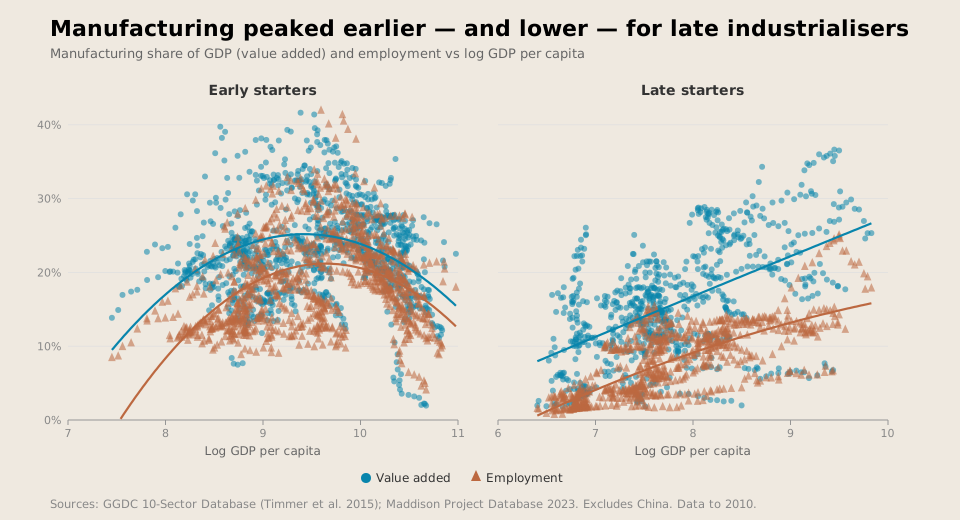
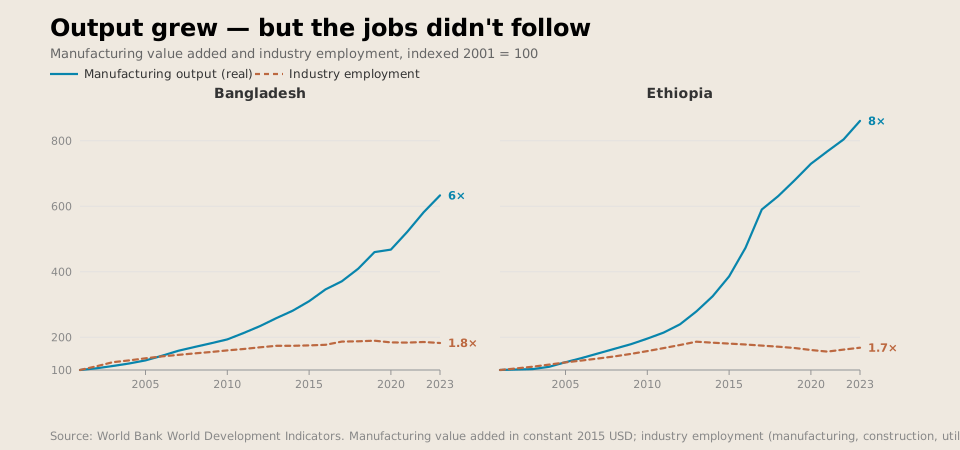
This is borne out in the data, which reveals a growing disconnect between manufacturing output and manufacturing employment. Countries can succeed in attracting modern factories, integrating into global value chains and expanding exports, but that no longer seems to generate the broad-based employment growth that characterized earlier episodes of industrialization.
The figure that follows illustrates this fact. It plots the manufacturing shares of total value added and total employment against GDP per capita from 1950 to 2010. It does so separately for two groups of countries, early vs. late starters, defined according to whether and when they graduated from lower-middle- to upper-middle-income status, a threshold of income per capita of $4,000. In early starters, the manufacturing shares of employment and value added were much closer to one another than in later starters.
Mexico’s experience since joining NAFTA illustrates this tension. It is now a manufacturing powerhouse that is deeply integrated into North American supply chains. Yet the productivity gains generated inside export-oriented firms have spread far less to the rest of the economy than many had hoped. In Ethiopia — one of the few African countries to have pursued an aggressive industrial development strategy — manufacturing employment has expanded, but increasingly through smaller, less productive firms, as opposed to the kind of large-scale industrial transformation that powered East Asia’s rise.2
These experiences have led many economists — including Dani Rodrik, who was once one of manufacturing’s most influential champions — to reconsider an idea that had seemed self-evident. If factories no longer absorb labor on the scale they once did, perhaps they should no longer sit at the center of governments’ development strategies. Instead of trying to recreate yesterday’s model, governments should focus on raising productivity where most jobs are, and will be: in retail, transport, hospitality, construction and other labor-absorbing non-tradable services.
The crux of the argument, however, is this: Can targeted interventions in the space of non-tradable services really allow low-income countries to embark on a transformative development path? Can this sector ever absorb large numbers of unskilled workers into better jobs on a scale comparable to manufacturing in the past?
The Race Between Productivity and Demand
The patterns we have seen unfolding in manufacturing over recent decades force us to confront the question of what comes next. Suppose (and it is a big “if”) that a government succeeds in making retail, restaurants, transport and other labor-intensive service sectors more productive. Firms adopt better technologies, improve their management and organize more efficiently. Workers become more productive and earn higher incomes. The question then becomes: Will these sectors continue to generate large numbers of new jobs? Or will they simply provide the same services with fewer workers?
The answer lies in a surprisingly simple piece of arithmetic. Employment in a sector is determined by a race between two forces, productivity (how much each worker can produce) and demand (how much consumers want to buy). If productivity grows faster than demand, firms eventually need fewer workers. If demand grows faster than productivity, employment expands.
This simple intuition helps explain why productivity improvements do not always translate into more and better jobs. Raising productivity increases incomes and living standards, but it does not automatically create jobs on the scale needed for transforming the lives of millions of people. For that to happen, productivity gains must be accompanied by a rapid expansion in demand.
So, where does that demand come from?
Factories Didn’t Just Make Goods: They Created Customers
The underappreciated reason why manufacturing acted as an engine of growth, beyond the well-known story of how it raised productivity inside factories, was that it fostered demand that allowed the rest of the economy to grow alongside them.
The story of industrialization is a story about ordinary workers earning regular wages. As millions of people left low-productivity agricultural work for factory jobs, they became customers — they bought shoes, clothes, cars and furniture, they rented homes, took buses, ate in restaurants, repaired bicycles, visited doctors and sent their children to school. The productivity gains achieved inside factories spread through the incomes factories generated. Every productive factory job created demand for many other activities, in manufacturing itself but also in local services. Manufacturing workers were the customers of other manufacturing firms and workers, all allowing shopkeepers, transport companies, restaurants, repair services and countless other businesses to expand.
This success was built on combining several features in a single package: access to large markets through trade, rapid productivity growth, stable wage employment for workers with relatively little education and broad-based increases in demand. Those elements reinforced one another. Higher productivity supported higher wages. Higher wages expanded domestic demand. Stronger demand created opportunities for new firms and new jobs throughout the economy.
Can Services Create Customers?
Perhaps surprisingly, the answer might be yes. Recent research has shown that productivity improvements in consumer services can generate self-reinforcing growth.3 As workers move into modern service firms, out of more traditional, lower-productivity activities, they earn higher incomes and spend more on other modern services. Restaurants attract more customers as they improve their quality, retailers lower prices and expand their market as they become more efficient. And rising incomes make households willing to purchase services that were previously unaffordable. Through this feedback loop, with productivity improvements generating new demand that in turn supports further productivity growth and employment, services can play the role manufacturing traditionally played.
If these virtuous cycles are strong enough, labor-absorbing services could become a genuine engine of development. But for governments, that begs the question of whether, and how, they can reliably set these mechanisms in motion.
Governments cannot simply legislate “higher productivity in services.” They must choose concrete policies, whether that’s entrepreneurship training, credit subsidies, management consulting or support for new platforms and technologies. Over the past two decades, development economists have evaluated many of these interventions. Some have produced meaningful improvements for particular firms or entrepreneurs, while others have helped modern businesses to grow or adopt better management practices.
Yet the broader picture is more sobering. Training interventions, for instance, have generated only modest average effects.4 The entrepreneurs who benefit most are often those who were already relatively capable. Microfinance programs also increase profits only among businesses that were already the most profitable, while encouraging the entry of new, less profitable businesses.5 Generally, productivity increases among service/retail-type microenterprises have rarely translated into substantial job creation. Many of them have occurred not because their working owners possess untapped entrepreneurial talent but because they lack better employment opportunities.6 Helping some of these firms become more productive is not the same as creating a new engine of mass employment.
This distinction is key. Manufacturing’s historical contribution was that, in raising the productivity of firms, it raised the productivity of ordinary workers, at scale. It took millions of people with limited formal education and placed them in organizations where technology, specialization and scale made them dramatically more productive. That was the foundation on which the broader multiplier was built. There are reasons to believe that, while present, non-tradable services cannot generate virtuous cycles that are sufficiently large, broad and predictable to anchor a national development strategy.
Could artificial intelligence change this? There is little doubt that AI has the potential to make service-sector workers more productive. Think about health or elderly-care workers becoming capable of performing basic diagnostics. But, as with other technologies, whether this will increase the demand for labour depends on whether the gains are sufficiently diffused to generate additional demand. In the case of robots and manufacturing, for instance, evidence shows that adoption reallocates labour from directly replaced tasks towards complementary ones, with muted overall employment effects.7 The impact of AI will similarly depend on whose skills it complements and whose it substitutes for. And then there is the key question of ownership. A substantial share of the resulting surplus is likely to accrue to the owners of models, computing infrastructure, data and complementary capital located outside low-income countries. To the extent that these gains do not translate into higher local incomes, another potential channel of demand and employment generation is weakened.
What Should Governments Bet on Instead?
Imagine that you are the finance minister of a low-income country. After months of negotiations, you have finally persuaded parliament to fund an ambitious economic development program. The budget you’ve been allocated is substantial. The political support for your agenda may not come again. You have one opportunity to place a big long-term bet on your country’s future.
Where do you put the money?
Looking just to the success stories of the past century, perhaps you’d decide on an industrial park, or an export processing zone, or maybe generous incentives to attract manufacturers from abroad.
But if traditional manufacturing no longer works as the primary engine of development, and if labor-absorbing services are unlikely to become one, governments need to think differently about industrial policy. They should not ask which sectors employ the most workers today but start asking a different question: Which sectors create opportunities for everyone else? The sectors that matter most may not be creating jobs within themselves but can trigger a chain reaction of investment, production and consumption far beyond their own boundaries.
High-value agriculture is one example. Modern exports of premium blueberries or other soft commodities bear little resemblance to traditional farming. They require sophisticated logistics, quality certification, cold chains, financial services, marketing and increasingly complex supply networks. Their success creates demand for a wide range of activities that lie outside agriculture itself. My own research on Uruguay illustrates this.8 During the 2010s, rising demand from China transformed the country’s beef exports. This export boom also generated substantial gains for domestic suppliers, especially in services. Expanding exporters increasingly needed logistics, transport, finance, professional services, maintenance and countless other inputs, all of which increased demand for those operating outside of the beef sector. In fact, firms that never exported anything themselves were often the largest beneficiaries.
The same logic applies to highly sophisticated manufacturing. Modern pharmaceutical production, for example, may never directly employ millions of workers. But what it can do is stimulate an ecosystem of research, engineering, logistics and specialized suppliers, alongside a host of other complementary activities.
The value of these types of sectors lies in the opportunities they generate elsewhere in the economy — and different sectors can perform this same function. By injecting purchasing power into the domestic economy, they create demand beyond those firms that are directly involved, making new forms of business viable across a variety of sectors.
How To Think About Industrial Policy
When seen through this lens, the core questions ministers should ask of industrial policy are: If this sector succeeds, who earns more? Who supplies it? Who spends more because of it? Who gets hired next?
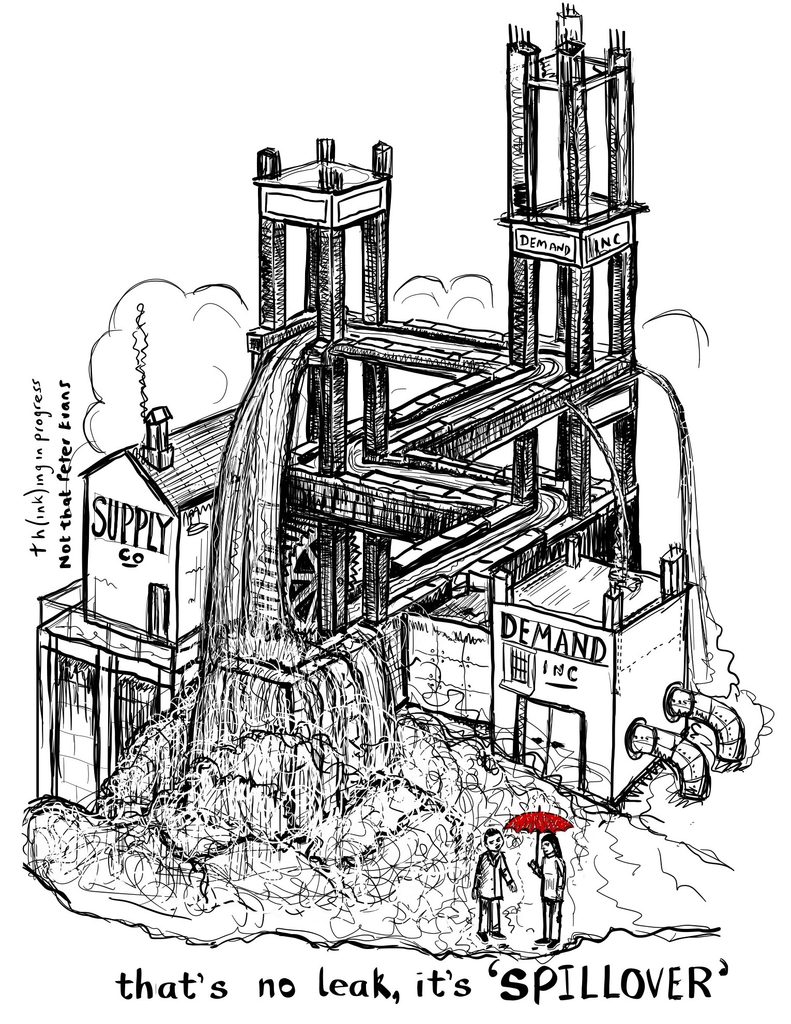
These shift the focus from sectors to spillovers — from direct employment to indirect opportunity — as a sector’s importance lies not only in the jobs it creates within its own boundaries but in the chain reaction it sets off across the rest of the economy.
Historically, manufacturing combined productivity growth, access to global markets, rising wages and strong domestic linkages in a way that no other activity could match. This combination of factors made it a powerful engine of development. But it was never the factories themselves that were sacred; their importance lay in the functions they performed for the wider economy.
Those functions still matter. The question is whether other sectors can perform them just as well and whether development policy can effectively identify, and support, those high-potential sectors.
So debating whether developing countries can “skip the factory” is the wrong place to start. The world has changed. Labor-intensive manufacturing is no longer the reliable escalator it once was, and governments shouldn’t spend the next 20 years betting solely on yesterday’s model. But development has perhaps never been about choosing between manufacturing, services or agriculture. It has really been about identifying the specific activities capable of setting off a chain reaction, by raising productivity, generating incomes and creating customers, thus opening opportunities for the rest of the economy.
The challenge now, for every country, is to find what can do what factories once did.
Francesco Amodio is a development and labor economist and Professor of Economics and International Development at McGill University. His research studies the private sector in low- and middle-income countries, with a focus on firms, productivity, trade, industrial policy, and labor markets, and on how industrial development can generate economic growth and reduce poverty. He is co-founder and co-director of the MONT² Econ Lab, a joint initiative of McGill University and the Universidad de Montevideo, and is affiliated with BREAD, CEPR, IGC, IZA, and the ROCKWOOL Foundation Berlin.
If you have comments on this article, or wish to contribute to the discussion, please email them to letters@indevelopmentmag.com. Responses will be featured in a letters section.
- Francesco Amodio et al., “Industrial Development,” VoxDevLit 22, no. 1 (2026). ↩︎
- Xinshen Diao, Mia Ellis, Margaret McMillan and Dani Rodrik, “Africa’s Manufacturing Puzzle: Evidence from Tanzanian and Ethiopian Firms,” The World Bank Economic Review 39, no. 2 (2025): 308-40; Francesco Amodio, Elia Benveniste, Hoang Pham and Marco Sanfilippo, “Industrial Policy and Local Manufacturing,” Mimeo, unpublished (2026). ↩︎
- Matthew Schwartzman, “From Street Markets to Shopping Malls: The Modern Service Multiplier,” Mimeo, unpublished (2026). ↩︎
- David McKenzie et al., “Training Entrepreneurs,” VoxDevLit 1, no. 4 (2025). ↩︎
- Abhijit Banerjee, Esther Duflo, Rachel Glennerster and Cynthia Kinnan, “The Miracle of Microfinance? Evidence from a Randomized Evaluation,” American Economic Journal: Applied Economics 7, no. 1 (2015): 22-53. ↩︎
- Kevin Donovan, Will Jianyu Lu and Todd Schoellman, “Labor Market Dynamics and Development,” Quarterly Journal of Economics 138, no. 4 (2023): 2287-2325; Emily Breza and Supreet Kaur, “Labor Markets in Developing Countries,” Annual Review of Economics 17 (2025): 747-76. ↩︎
- Rodimiro Rodrigo, “Robot Adoption, Organizational Capital, and the Productivity Paradox,” unpublished manuscript (2022); Gustavo de Souza and Haishi Li (2025), “Robots, Tools, and Jobs: Evidence from Brazilian Labor Markets,” Federal Reserve Bank of Chicago Working Paper (2025): 2023-42. ↩︎
- Francesco Amodio, Giorgio Chiovelli and Serafín Frache, “DP20078 Beefing Up the Service Sector: Commodity Export Booms and Production Network Spillovers,” CEPR Discussion Paper No. 20078 (CEPR Press, 2025). ↩︎